10 Furniture Pieces That Will Give Your Home the Perfect Post-Colonial Charm
Ever walked into an old Indian bungalow and thought, “Why does this furniture have more personality than my entire living room?” You aren’t alone. Colonial-era furniture is having a quiet comeback, but the interesting part isn’t the nostalgia. It’s the craftsmanship, proportion, natural materials, and distinctly Indian adaptation behind these pieces.
As an interior designer, I find the trick is to borrow that character without making your home look like a museum. The right furniture pieces that give homes post-colonial charm should feel collected, lived-in, and unmistakably yours.
What Makes Post-Colonial Furniture Different?
Colonial furniture in India was never simply European furniture dropped into an Indian house. European forms were adapted to local materials, climate, and craftsmanship. Teak replaced woods such as English oak, while cane and rattan offered ventilation in warmer conditions. Indian artisans also brought carving, joinery, and decorative traditions to these forms, which created a European and Indian mix pattern that still makes these pieces fascinating today.

The V&A’s research on Chandigarh furniture also reminds us that the story didn’t end with Independence. Furniture created for Chandigarh in the 1950s combined modernist thinking with local materials and Indian design input.
So, your goal isn’t to recreate a colonial interior. Think of it as a post-colonial home interior design: take the forms, materials, and craft traditions, then give them a contemporary setting.
10 Post-Colonial Furniture Styles That You’ll Love
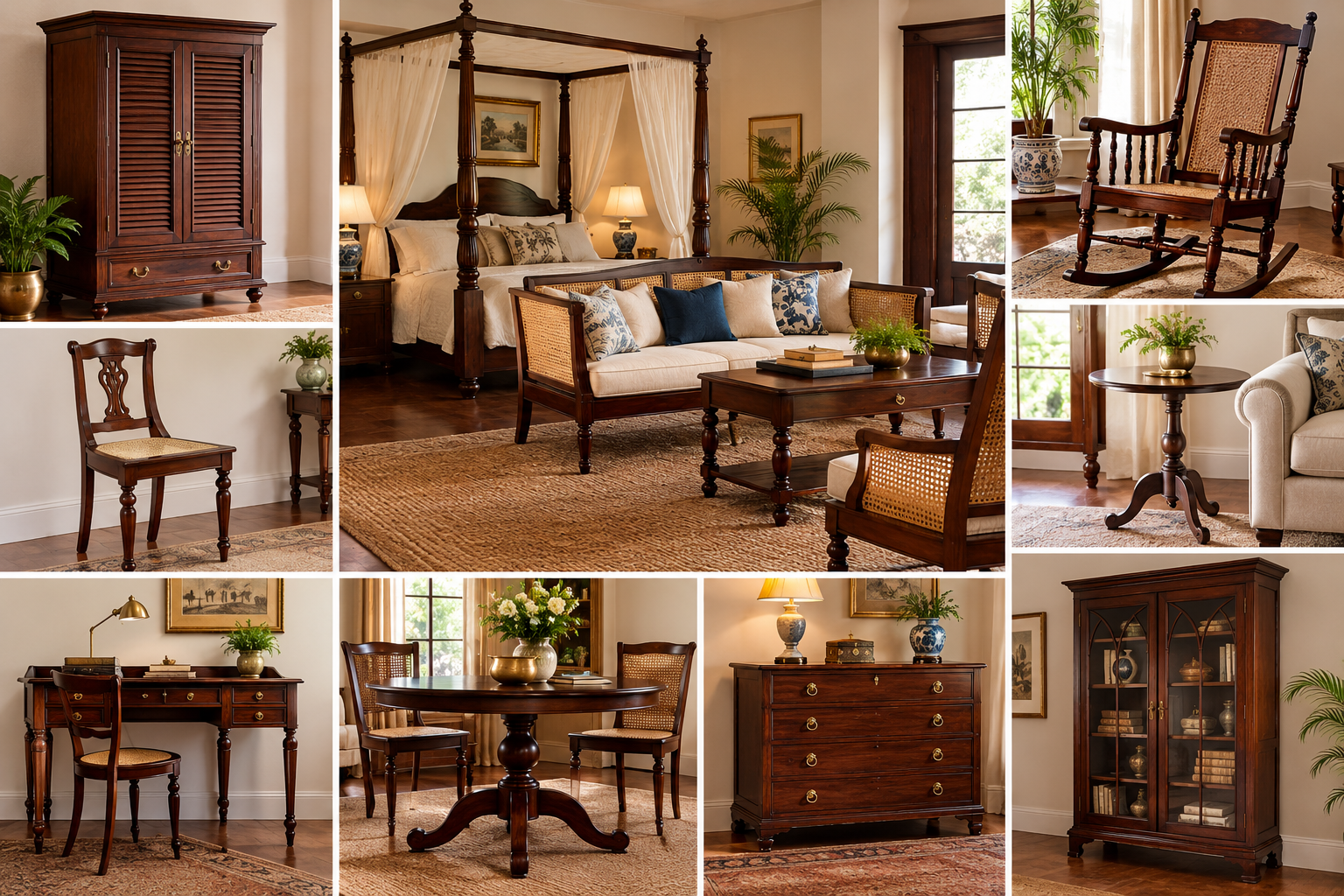
Four-Poster Bed
Few pieces make an entrance quite like a four-poster bed. Tall posts create instant architectural drama and give the bedroom a sense of enclosure. In colonial India, substantial beds also responded to the realities of heat and insects.
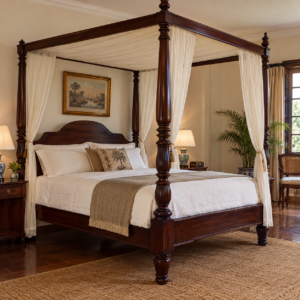
For a modern bedroom, keep everything around it quieter. Crisp cotton bedding, neutral walls, and a simple pendant light let the bed do the talking. A teak version works particularly well in Indian homes because of its warmth and visual weight.
Planter’s Chair
The planter’s chair is probably the poster child of colonial furniture. Its generous arms, reclining proportions, and cane construction were suited to verandahs and warm climates. Today, it makes a wonderfully relaxed reading chair, as seen across certain old homes in Kolkata, Goa, and Parsi clubs in Mumbai.
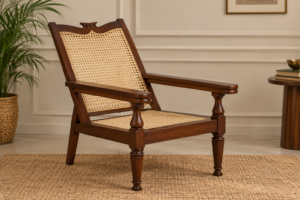
For planter’s chair colonial decor, place one near a window, add a floor lamp, and resist the temptation to cover it with 17 cushions. The chair already knows how to lounge.
Writing Suite
A writing suite brings old-world intellectual charm without requiring a grand study. Think writing desk, companion chair, and perhaps a small side table.
The tradition goes back to European writing furniture, but versions used in India became part of a broader Anglo-Indian vocabulary. Contemporary interpretations can combine a solid timber desk with modern lighting and a laptop. The Collectors, for example, currently offers historically inspired writing suites drawing on Georgian and Chippendale traditions.
Cane Settee
Cane is one of my favorite ways to soften heavier wooden furniture. It adds texture, allows visual airflow, and immediately makes a room feel less formal.
A rattan cane furniture colonial-style settee works beautifully in a living room, bedroom, or covered verandah. Pair it with linen cushions and a contemporary rug rather than matching every piece of furniture to it.
Armoire
An armoire gives you storage while looking like a piece of architecture. Traditionally associated with large cupboards and wardrobes, its tall proportions make it an ideal choice if you’re looking for multifunctional furniture in a bedroom, dressing area, or dining room.
Choose carved panels if you want more visual drama. For a calmer room, pick a simple timber version. This is where solid wood furniture earns its keep. That substantial construction becomes part of the room’s character rather than something you try to hide.
Chandigarh Secretariat Chair
Here’s where the story takes a fascinating turn. The Chandigarh chair belongs to post-Independence India, not the British Raj.
The V&A notes that Chandigarh’s furniture was produced in the 1950s using teak and cane, with contributions from Indian architects including Eulie Chowdhury. Many chairs later became associated almost exclusively with Pierre Jeanneret, even though their design history was more collaborative.
This makes this chair particularly appropriate for a post-colonial interior. Its clean geometry works beautifully beside antiques, contemporary art, or even a very modern sofa.
Salon Suite
A salon suite brings the formal drawing-room tradition into your living space. Think coordinated seating, elegant proportions, and enough structure to make sitting down feel like an occasion.
The historical salon was about conversation and entertaining, so don’t hide the furniture against every wall. Create a proper conversational arrangement around a coffee table.
Contemporary collections still reinterpret this vocabulary, including leather and cane sitting suites inspired by European and colonial traditions.
Glass Hutch
A glass hutch is where storage becomes display. Use it for crockery, books, brassware, ceramics, or objects you have collected while travelling.
Tracing back to 18th-century European homes, hutches were crafted to keep valuable heirloom china and silver secure yet proudly visible. Over time, local craftsmen adapted these designs using local hardwoods and generous glass panels, turning functional kitchen storage into an elegant living room statement.
This piece works particularly well when you want aesthetic vintage furniture without filling the room with ornate carving. The glass keeps the silhouette visually lighter.
Console Side Table
A console side table may be smaller than a four-poster bed, but don’t underestimate it! A carved or turned-wood console can instantly give an entrance, hallway or living room a sense of history.
Use one behind a sofa, beneath artwork, or in an entryway with a mirror above it. Teakwood furniture for Indian homes works especially well here because the grain becomes the decoration.
For more ornate interiors, brass-made furniture or brass detailing can add another layer. Historical examples show how brass ornament was combined with teak and Indian craftsmanship.
Colonial Hall Bench
Finally, give your entrance some personality. A long hall bench is practical, but it also creates that wonderfully one-house feeling of having somewhere to pause before entering the rest of the home.
The Collectors’ Duncan Colonial Hall bench, for example, combines a solid teak frame with three cane-backed panels and turned legs.
Keep the surrounding area simple. A large mirror, one artwork, and a basket are enough.
Colonial Style Home Decor Tips
Firstly, resist buying an entire matching collection. Let the four-poster bed or armoire lead in the bedroom. Combine a cane settee with a modern sofa in the living room. Place a writing suite beside contemporary shelving in the study.
This mix is what makes the room feel collected rather than staged. Here’s a guide to room-wise post-colonial furniture styling.
| Furniture | Best room | Styling approach |
| Four-poster bed | Bedroom | Keep bedding simple |
| Planter’s chair | Bedroom/verandah | Add a reading lamp |
| Writing suite | Study | Mix with modern storage |
| Cane settee | Living room | Pair with linen |
| Armoire | Bedroom/dining | Let it stand alone |
| Chandigarh chair | Study/living | Contrast with antiques |
| Salon suite | Living room | Build a conversation area |
| Glass hutch | Dining/living | Display collected objects |
| Console side table | Entry/living | Pair with artwork |
| Hall bench | Entryway | Keep accessories minimal |
If you’re wondering where to buy post-colonial-style furniture, start by looking beyond generic “antique” labels. Or check out our guide on the best online furniture stores. Some brands we highly recommend include:
- Canovile for handcrafted rattan and woven cane furniture that seamlessly elevates outdoor living.
- Aspen & Terra for an expansive, carefully curated range of mid-century Chandigarh Secretariat-style pieces.
- Curves & Carvings for deeply rich, solid teakwood colonial beds, wardrobes, and decorative console tables.
- Calcuttan for beautifully restored colonial antiques and faithful vintage re-editions.
- The Collectors for heirloom-quality colonial, Anglo-Indian, Art Deco, and Chandigarh-inspired designs.
- Rani Arts & Teak for authentic, post-colonial and South Indian furniture.
The beauty of these pieces is that they don’t need a period-perfect room around them. One beautifully made chair, cabinet, or bed can introduce warmth, history, and character. Mix it with what you already own—or upcycle or repurpose what you have—to let the materials show, and allow the room to evolve. That’s when heritage furniture stops looking borrowed from the past and starts feeling like part of your home.
FAQs:
1. What furniture defines colonial-style homes?
Colonial-style furniture is all about blending classic European craftsmanship with local climate needs and materials. Think sturdy, dark-wood pieces that feel timeless, elegant, and built to last. Key defining pieces include:
- Four-poster beds
- Planter’s chair (or British Officer’s chairs)
- Carved sideboards and armoires
- Cane and rattan seating
2. Where can I buy colonial-style furniture in India?
You can find authentic antique or quality reproduction colonial furniture through several channels in India:
3. Antique markets and local hubs:
- Mumbai – Chor Bazaar and shops around Colaba.
- Kochi – Jew Town is famous for Dutch and Portuguese colonial antiques.
- Puducherry – Antiquarians around the French Quarter offer French-colonial reproductions and vintage pieces.
- Kolkata – Russell Street and Park Street antique dealers specializing in British Raj-era furniture.
4. Online and modern stores:
- The Wooden Street/Pepperfry/Urban Ladder for classic teak and mahogany colonial-inspired furniture.
- The Gulmohar Lane/Phantom Hands specializes in high-end, vintage-inspired handcrafted colonial and mid-century designs.
- The Purple Turtles/Magari is great for bespoke, vintage, or reinterpreted colonial accent pieces.
5. What kind of wood is used in colonial furniture?
Colonial furniture relies heavily on high-density hardwoods native to the tropical regions where colonizers settled, chosen for their resistance to humidity, insects, and rot:
- Teak wood (sagwan)
- Rosewood (sheesham)
- Mahogany
- Satinwood
- Ebony
4. What does postmodern furniture look like?
Postmodern furniture (popularized in the late 1970s and 1980s by design movements like the Memphis Group) was a playful “rebellion” against strict modern minimalism. Instead of plain lines and standard colors, it focuses on:
- Bold and quirky shapes like exaggerated curves or geometric blocks.
- Vibrant and unconventional colors like neon or pastels, or bold patterns like checkerboard or squiggles.
- Mix-and-match materials such as plastic laminates or terrazzo alongside traditional wood.
- Playful and humorous vibe—designs that look like sculptures or toys rather than purely functional furniture.

As a lifelong DIY enthusiast, Alex Barton is never afraid to go the extra mile to save a few bucks! From seamless interior decor hacks to effective DIY home renovation tips, he shares a myriad of his experiences for you to unleash your creativity.