7 Vegetables You Would Never Expect to Use for Cleaning Around Your Home

What if your next cleaning session started in the vegetable drawer instead of the cleaning aisle? Some everyday vegetables can help tackle stubborn marks, loosen grime, polish surfaces, or replace disposable scrubbers. You might already have a few of these ingredients sitting in your kitchen!
The idea behind vegetables used for home cleaning is simple. Certain plant compounds, natural acids, moisture, and fibrous textures can help with specific cleaning jobs. However, not every kitchen hack has strong scientific evidence. Some are traditional practices, while others are simply useful tricks worth testing on a small area.
Let’s look at 7 vegetables and plant-based ingredients that can help you around the house.
Household Cleaning With Vegetables: Can It Really Help?
Yes, but with a few limitations. Vegetables contain organic acids, starches, and natural fibres that may help loosen certain stains, tackle light grease, or provide gentle abrasion.
A 2024 study published in the Bulletin of the National Research Centre discusses traditional Indian cleaning materials, including tamarind and tomato as acid-based cleaning ingredients, and luffa as a natural scrubbing material. It also documents how households have used plant-based resources to clean for generations.
These practices offer eco-friendly cleaning alternatives to conventional products, but they aren’t replacements for disinfectants or specialist cleaners. Think of them as occasional helpers for everyday messes.
The Science Behind Vegetable Cleaning Hacks: Why It Works
Different vegetables work in different ways:
- Natural acids: Tamarind and tomatoes contain organic acids that can help loosen certain mineral deposits and tarnish.
- Fibres: Plant fibres provide mild physical scrubbing without necessarily requiring synthetic scrubbers.
- Moisture and starch: These can loosen or lift light surface dirt, depending on the material.
The trick is matching the ingredient to the surface and not assuming every vegetable can clean everything.
7 Natural Cleaning Hacks For Homes With Vegetables
Potato – Useful For Light Surface Rust
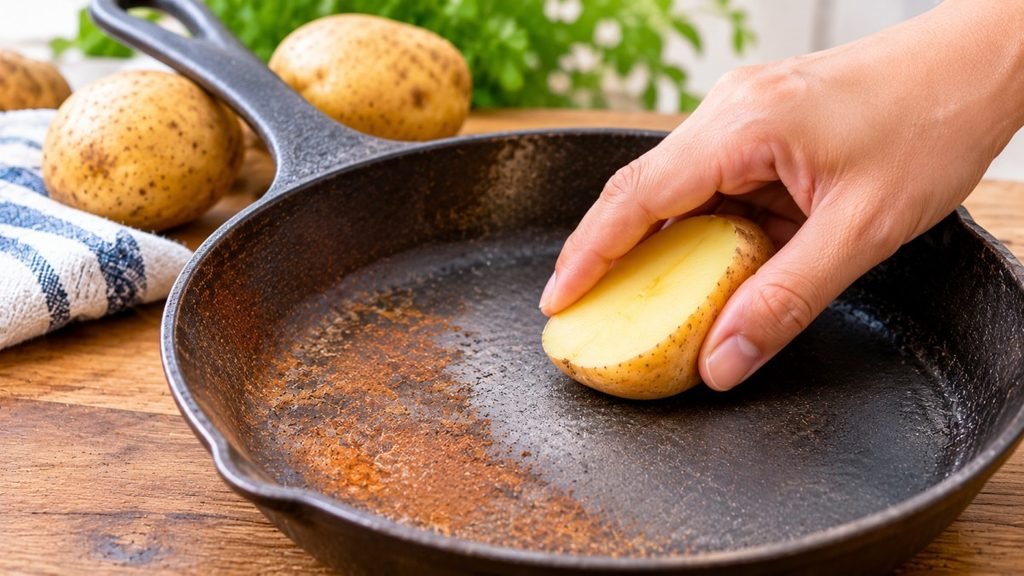
A potato is more than a kitchen staple. Its cut surface can act as a mild natural kitchen scrubber when paired with salt.
Why it works: The salt provides physical abrasion that loosens surface rust. Potatoes also contain oxalates, although controlled studies haven’t established their effectiveness.
How to use it:
- Cut a raw potato in half.
- Sprinkle a little salt over the cut side.
- Rub gently over a small rusty area.
- Wipe clean with a damp cloth and dry thoroughly.
This method is best for minor rust on suitable metal surfaces. Don’t remove rust with potatoes on delicate finishes or heavily corroded items. The New Jersey Department of Health’s oxalic acid safety sheet also explains why concentrated oxalic acid requires careful handling. It doesn’t establish that rubbing a potato is equivalent to using an oxalic acid cleaner.
Cucumber – Tackle Crayon Marks and Bathroom Mirrors
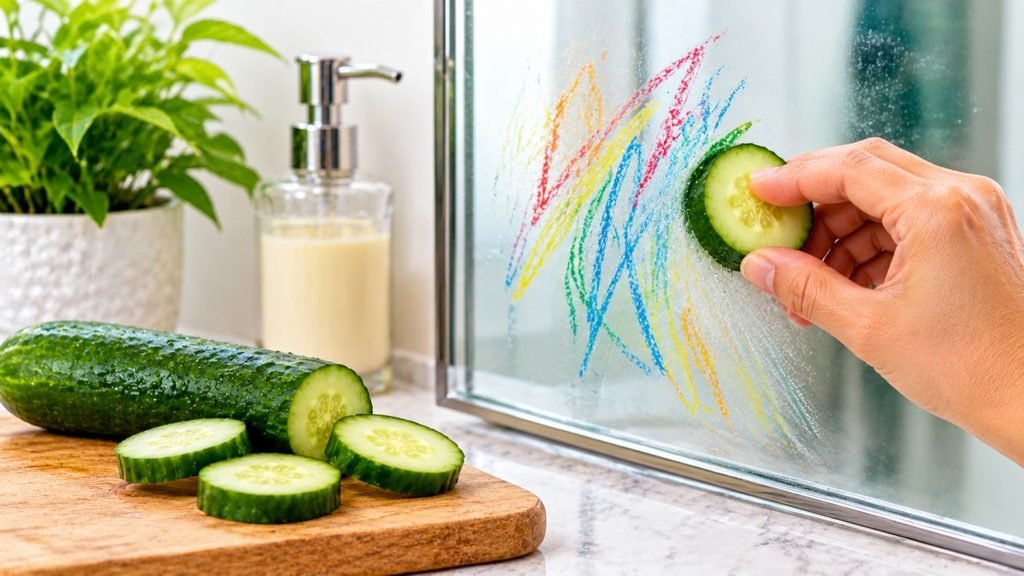
Cucumber is surprisingly useful as a natural cleaning ingredient. Its moist surface can help loosen light marks. Apparently, the peel is also great for removing crayon marks.
Why it works: Its high water content helps soften some surface residue. However, claims that cucumber juice prevents bathroom mirrors from fogging are largely anecdotal.
How to use it:
- Cut a fresh cucumber into thick slices.
- Gently rub a slice over a small crayon mark on a suitable washable surface.
- Wipe away the residue with a clean, damp cloth.
- For mirrors, test a small area and finish with a dry microfiber cloth.
Don’t expect cucumber to remove permanent marker or stubborn stains. Although no studies test cucumbers for household chores, academic research focuses on using cucumber waste for green chemistry and materials science.
Onion – Clean Light Grime From Windows
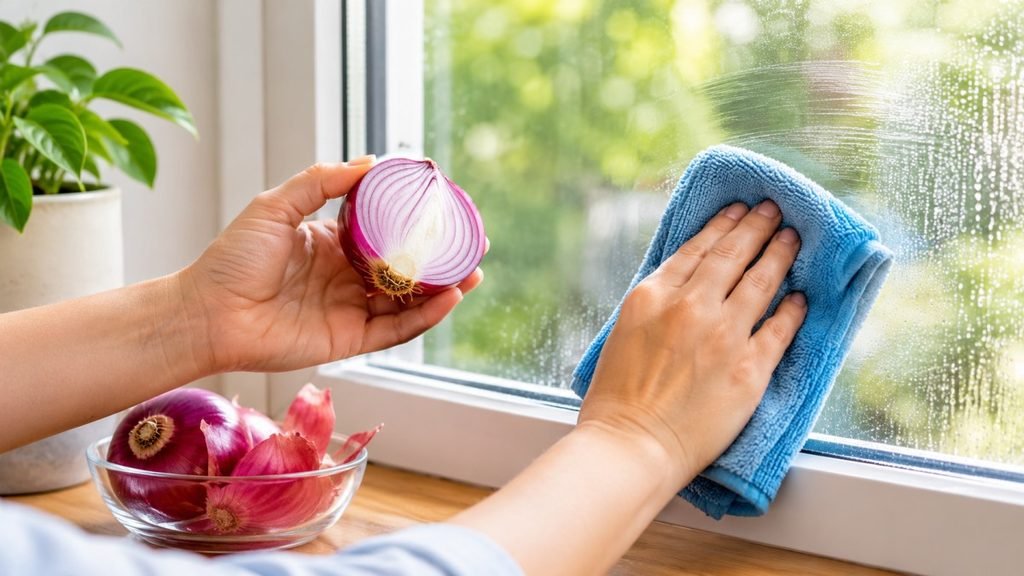
An onion can do more than make you cry while preparing dinner. Some traditional DIY kitchen cleaning hacks use its cut surface to loosen grime on glass and grill grates.
Why it works: Onions contain sulphur compounds and organic acids. These may help loosen certain residues, although there’s no laboratory testing on its cleaning effect.
How to use it:
- Cut an onion in half.
- Gently rub the cut surface over a dirty window.
- Wipe away the residue with a clean microfiber cloth.
- Dry the glass to avoid streaks.
A cleaning experiment by Apartment Therapy tested this trick and found that the window looked cleaner. However, the writer questioned whether the onion or the extra wiping did most of the work.
Cabbage – A Gentle Kitchen Wipe
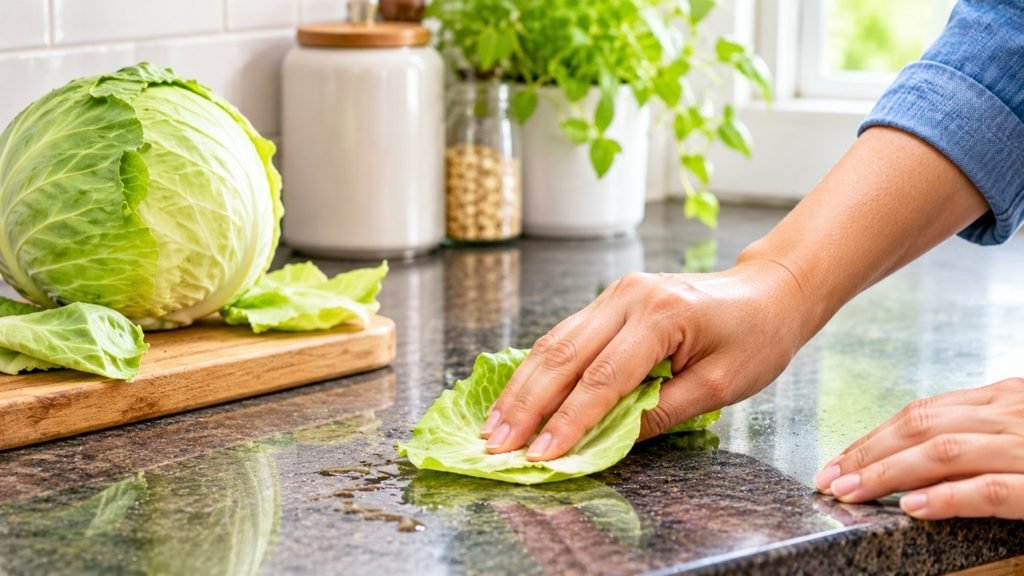
Cabbage leaves are sturdy, flexible, and contain plenty of moisture. You can try using a clean outer leaf to wipe away loose crumbs or light dirt from suitable washable surfaces.
Why it works: Its broad, flexible surface provides a simple physical wiping action. This is a practical reuse idea, not a scientifically proven cleaning treatment.
How to use it:
- Separate a fresh outer cabbage leaf.
- Rinse it thoroughly.
- Fold it into a manageable pad.
- Wipe away loose debris and follow with a clean cloth.
Use it only for light wiping. It won’t remove grease or disinfect kitchen counters.
Carrot – For Light Scrubbing
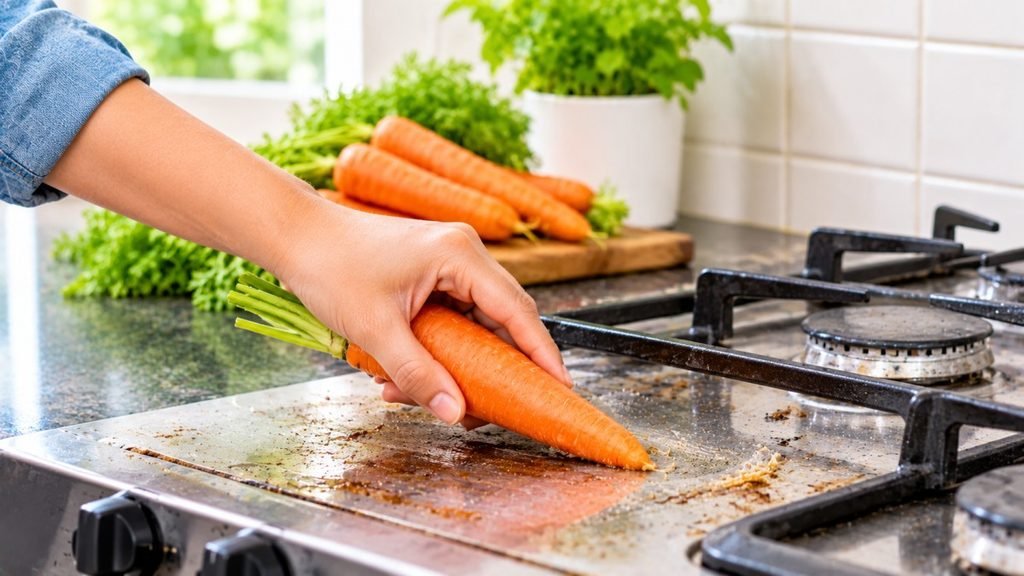
A firm carrot can serve as an improvised scrubber for certain small, washable kitchen items. Its texture makes it useful for gently working around awkward corners.
Why it works: The firm vegetable flesh provides mechanical friction. There’s no strong evidence that carrots are the best natural degreasers to use.
How to use it:
- Wash and cut a firm carrot into manageable pieces.
- Use the cut end to rub a small washable surface.
- Rinse away loosened debris.
- Dry the item properly.
Try this on sturdy kitchen tools, not delicate cookware or non-stick coatings.
Tamarind – Remove Tarnish From Metal Utensils
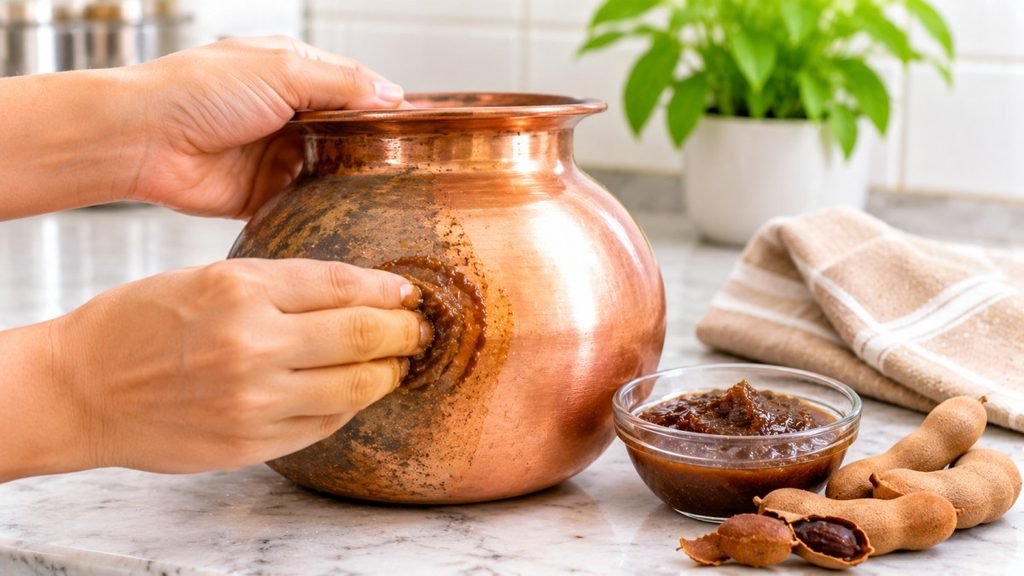
Tamarind has long been used in traditional Indian cleaning methods, particularly for tackling grime and tarnish on certain metal utensils.
Why it works: Tamarind contains organic acids that can help loosen some surface deposits. The National Research Centre identifies tamarind among plant materials traditionally used for their degreasing properties.
How to use it:
- Take a small amount of tamarind pulp.
- Mix it with a little water to make a paste.
- Gently rub over a suitable brass or copper surface.
- Rinse thoroughly and dry with a soft cloth.
Always check the manufacturer’s care instructions first. Avoid using acidic ingredients on aluminium, delicate finishes, or reactive surfaces.
Tomato – Bring Back Shine to Certain Metal Items
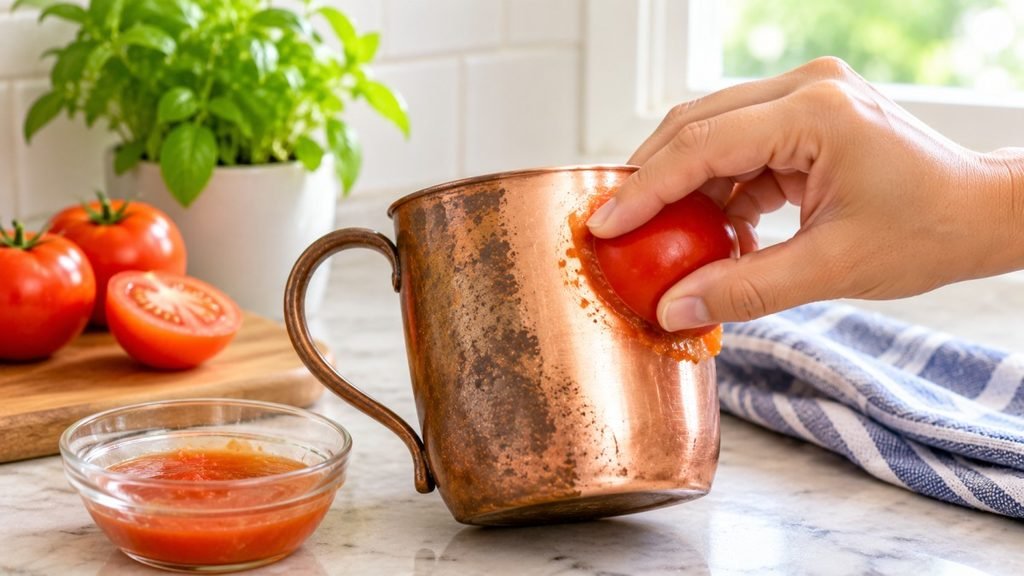
Tomatoes contain natural acids that may help loosen tarnish from certain metal surfaces. This makes them an interesting option when exploring homemade cleaning solutions.
Why it works: Tomatoes contain organic acids, including citric and malic acid. These can loosen certain metal deposits. However, results depend on the metal and the type of tarnish.
How to use it:
- Mash a small piece of ripe tomato.
- Apply a thin layer to a suitable brass or copper item.
- Leave it briefly, then rub gently with a soft cloth.
- Rinse thoroughly and dry immediately.
Former CEO of Hassle (now merged with Helpling), Alex Depledge, has told MailOnline, “When the ketchup is applied to the metal, the natural acid in the tomatoes reacts with the oxidising of the tarnished silver, brass or copper.” However, treat this as supporting practical information rather than definitive experimental science.
A couple of other plant-based materials worth knowing: Corn cobs can provide a rough surface for light scrubbing, while dried luffa makes a reusable natural scrubber. The 2024 Springer review specifically identifies luffa among traditional renewable cleaning materials.
A Few Cautions Before You Start Cleaning With Vegetables
Natural doesn’t automatically mean safe for every surface. Keep these points in mind before using natural household cleaning solutions:
- Test first: Try any vegetable-based cleaner on a hidden spot before using it across a larger area.
- Avoid delicate materials: Acids can damage marble, limestone, and some metal finishes.
- Don’t mix cleaning ingredients randomly: Never combine homemade mixtures with bleach or other chemical cleaners.
- Keep food and cleaning separate: Don’t reuse vegetables that have touched dirty surfaces for cooking.
- Clean up residue: Vegetable pulp and moisture can attract pests or encourage spoilage if left behind.
Also, don’t confuse cleaning with disinfecting. These methods aren’t proven substitutes for products designed to kill harmful germs.
If you’re building a more sustainable household cleaning routine, consider pairing these hacks with eco-friendly upholstery cleaning tips and reusable cleaning cloths.
Key Takeaways
You don’t need to replace every household cleaner with something from your refrigerator. But a few vegetables can be useful for light cleaning jobs, especially when you want to reduce waste and reuse food scraps for household cleaning.
For a more organized approach, combine these ideas with a basic cleaning essentials list and a practical spring-cleaning checklist. Small changes can also support healthier home habits.
The best cleaning routine isn’t necessarily the one with the most products. It’s the one that keeps your home clean while making sensible use of the resources you already have.
FAQs
1. Can tomatoes help remove grease from kitchen utensils?
Yes, tomatoes contain natural acids that help break down and dissolve stubborn grease on kitchen utensils, leaving them clean and shiny.
2. Can onions be used to clean windows?
Yes, onion juice mixed with water can cut through grime and dirt on glass, making windows sparkle when wiped dry.
3. What vegetables can be used as natural scrubbers?
Root vegetables like potatoes, when cut in half and dipped in baking soda, can act as gentle natural scrubbers for surfaces.
4. Is luffa a good alternative to synthetic kitchen sponges?
Yes, luffa gourds are fantastic, biodegradable alternatives to plastic sponges, offering effective scrubbing power without microplastic shedding.
5. Can tamarind be used to clean copper and brass utensils?
Yes, the natural tartaric acid in tamarind effectively removes tarnish and oxidation, restoring the bright shine of copper and brass.
6. Do natural cleaning ingredients kill bacteria?
Some natural ingredients like vinegar and lemon have mild antibacterial properties, but they are generally less effective than commercial disinfectants against pathogens.

As a lifelong DIY enthusiast, Alex Barton is never afraid to go the extra mile to save a few bucks! From seamless interior decor hacks to effective DIY home renovation tips, he shares a myriad of his experiences for you to unleash your creativity.