15 Uncommon Materials for Diwali Décor That Will Make Your Home Stand Out
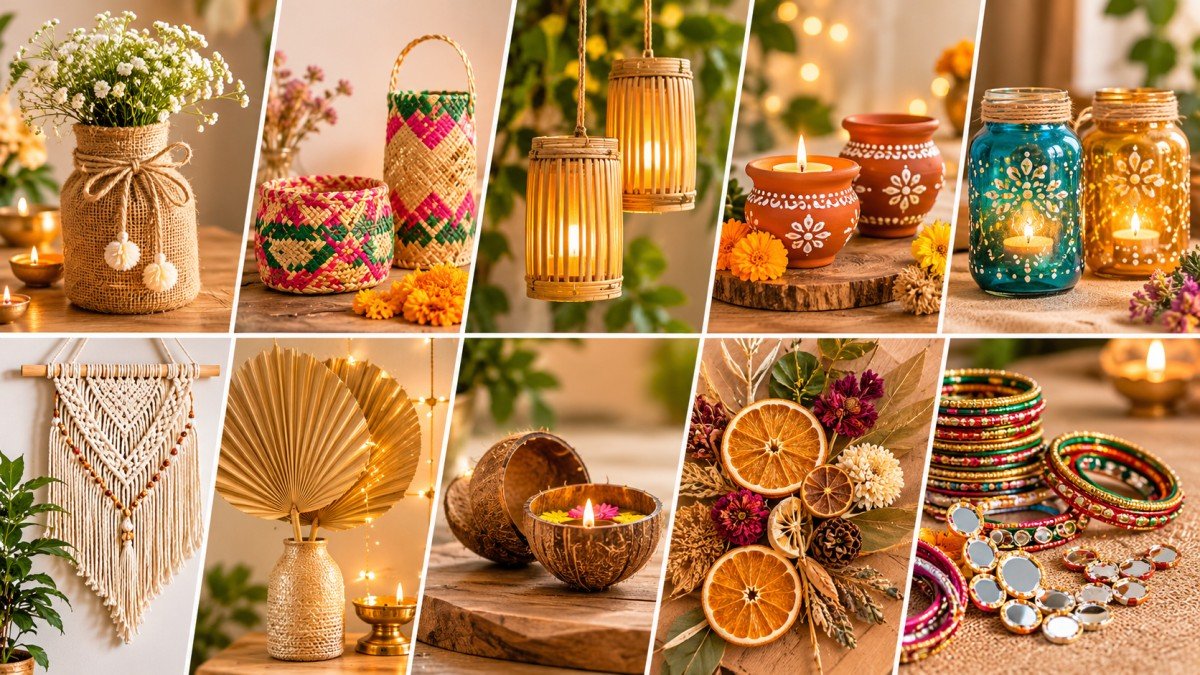
Diwali decor doesn’t always have to mean rows of traditional diyas, marigold garlands, and fairy lights. While these festive favorites never go out of style, experimenting with unexpected materials can give your home a refreshing new look. And the best part? You probably have several of these materials lying around already!
From woven grass and old sarees to coconut shells and discarded glass bottles, there are plenty of ways to create beautiful decorations without spending a fortune. These Diwali decor ideas from uncommon materials bring together traditional Indian craftsmanship, creativity, and a little bit of DIY magic.
Whether you’re decorating your entrance, dressing up your puja room, or creating a cozy festive corner, here are 15 materials worth exploring.
15 Uncommon Diwali Decor Materials to Experiment With
The secret to good festive decorating is knowing how to combine textures, colors, and lighting. You don’t need to use all these materials. Pick 3 or 4 that complement your existing interiors and build your decorations around them.
1. Jute – Rustic charm for your festive corners
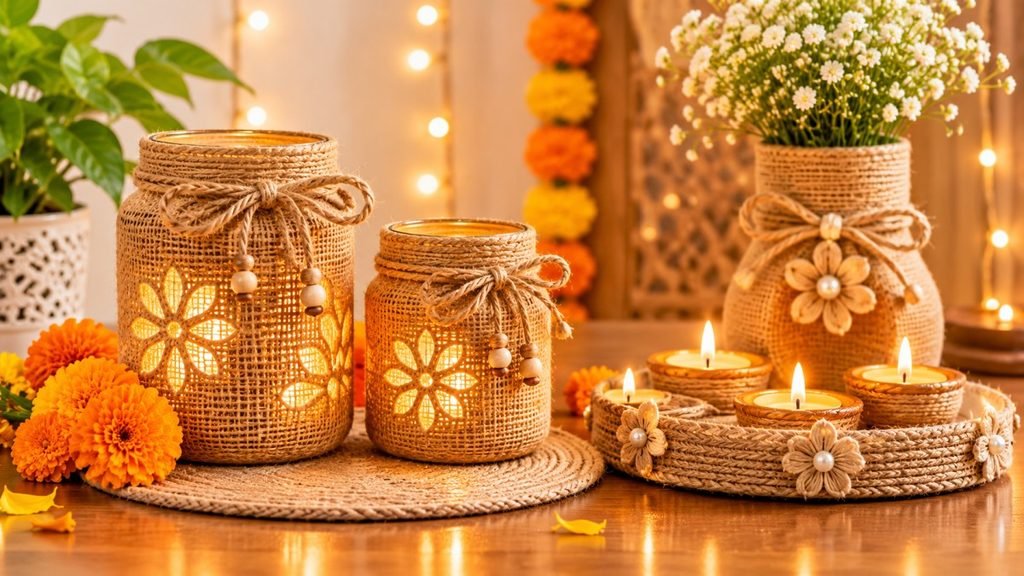
The look: Jute has a natural, earthy texture that makes even simple decorations look thoughtfully handcrafted.
How to style it: Wrap jute rope around glass bottles, make hanging lanterns, or create table runners. Pair it with terracotta, mustard yellow, marigold orange, and wooden accents.
NDTV highlights how jute also makes for excellent goodie bags for your Diwali parties.
Care tip: Keep jute away from open flames and moisture. Use battery-operated tea lights inside decorative lanterns.
2. Sikki Grass – A touch of traditional craftsmanship
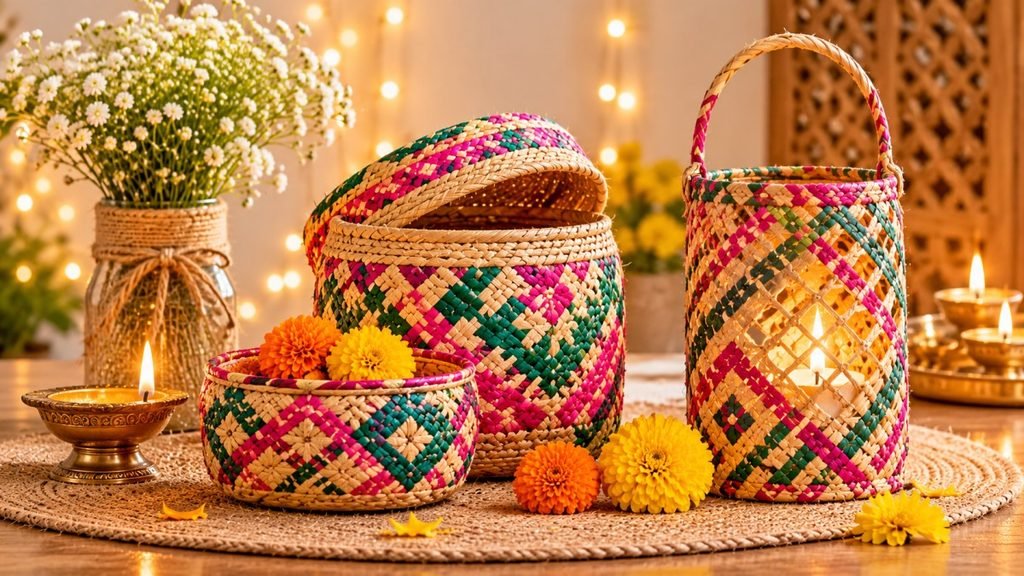
The look: Sikki is a golden-colored natural grass traditionally used in handmade crafts, particularly in Bihar. Its beautiful sheen gives decorations an understated festive elegance.
How to style it: Use sikki baskets as dry flower holders, create small decorative trays, or display handcrafted sikki ornaments near your puja area. Pair them with ivory, red, and brass accents.
Care tip: Keep these pieces dry and dust them gently with a soft brush.
3. Bamboo – Nature-inspired lanterns and wall hangings
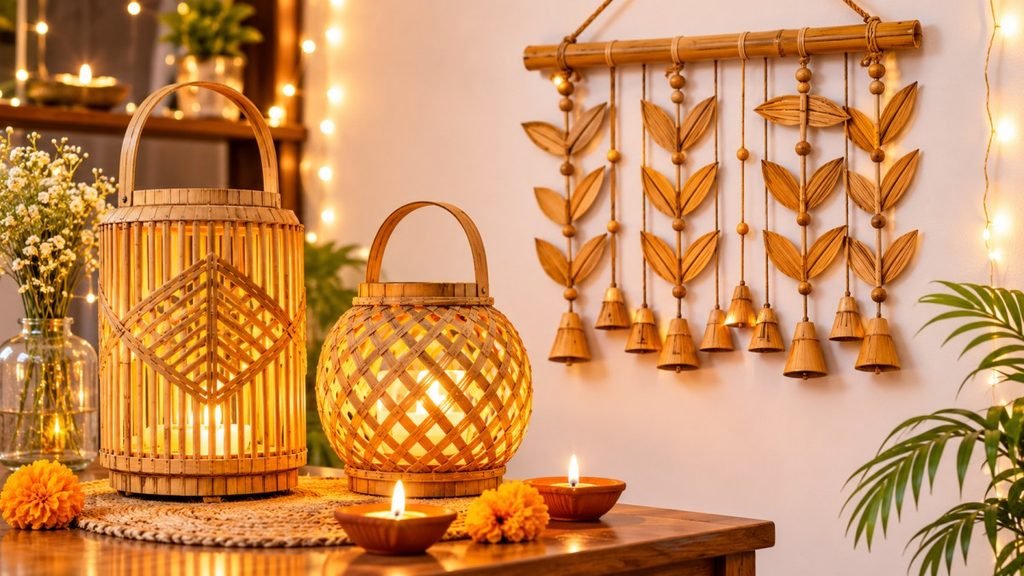
The look: Bamboo brings a clean, organic feel to your interiors without looking overly rustic.
How to style it: Make bamboo lantern frames, wall-mounted torans, or decorative partitions. DIY Diwali decor with jute and bamboo, and warm LED lights, creates a cozy festive atmosphere. Adyasha’s Garden DIYs made a bamboo backdrop for Ganesh Chaturthi, but I think it works well as Diwali decor too!
Care tip: Avoid placing bamboo decorations near diyas or other open flames.
4. Terracotta Kulhad Diwali Decor – Beyond traditional diyas
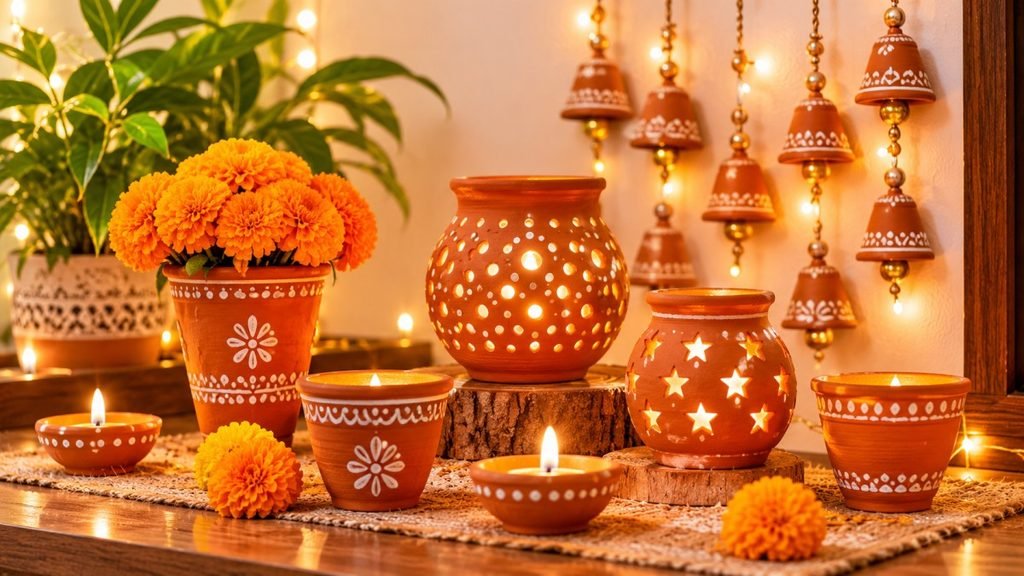
The look: Terracotta offers a warm, earthy finish that instantly adds character to festive spaces.
How to style it: Paint old kulhads in white, red, or metallic gold, like Monika Morwani does in her DIY, and arrange them as miniature planters or holders for dried flowers. Turn small matkas into decorative centerpieces with mirror work and hand-painted patterns. These work well with traditional Indian home decor.
Care tip: Use dry, clean vessels. Avoid placing burning candles directly inside untested painted or decorated kulhads.
5. Brass Urli & Vessels – A festive statement piece
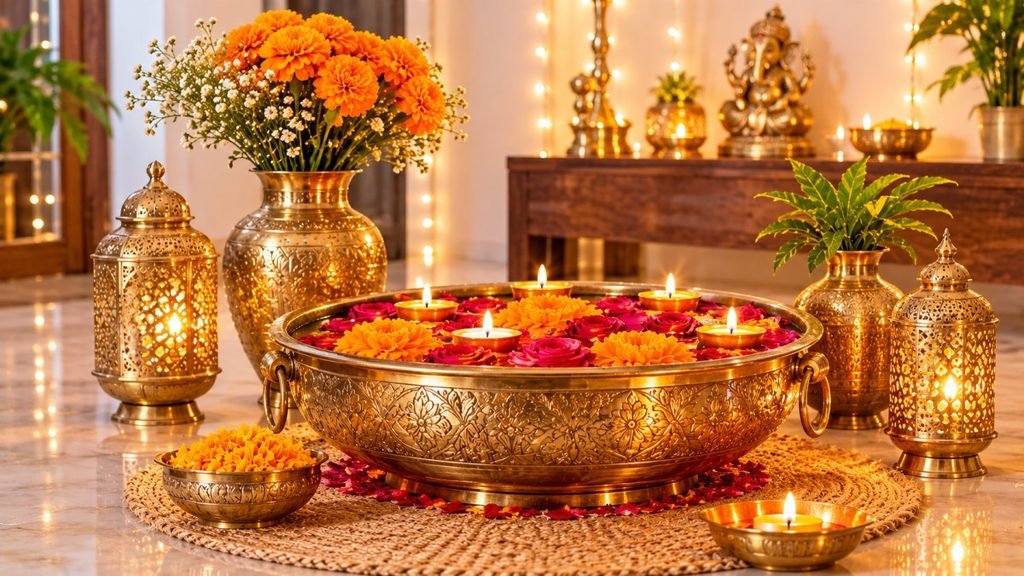
The look: Brass creates a rich, timeless appearance, especially when contrasted with colorful flowers.
How to style it: Fill a brass urli with water, floating marigold and rose petals, and a few floating LED lights. Check out this video from Brown Living to get a better idea! Add mango leaves around the base for a traditional touch.
Brass urli decoration ideas look particularly beautiful in entrance foyers and puja corners.
Care tip: Wipe brass dry after use to prevent water stains. Use electrical lights suitable for water-based arrangements.
6. Old Handloom Sarees & Fabric Scraps – Colorful DIY magic
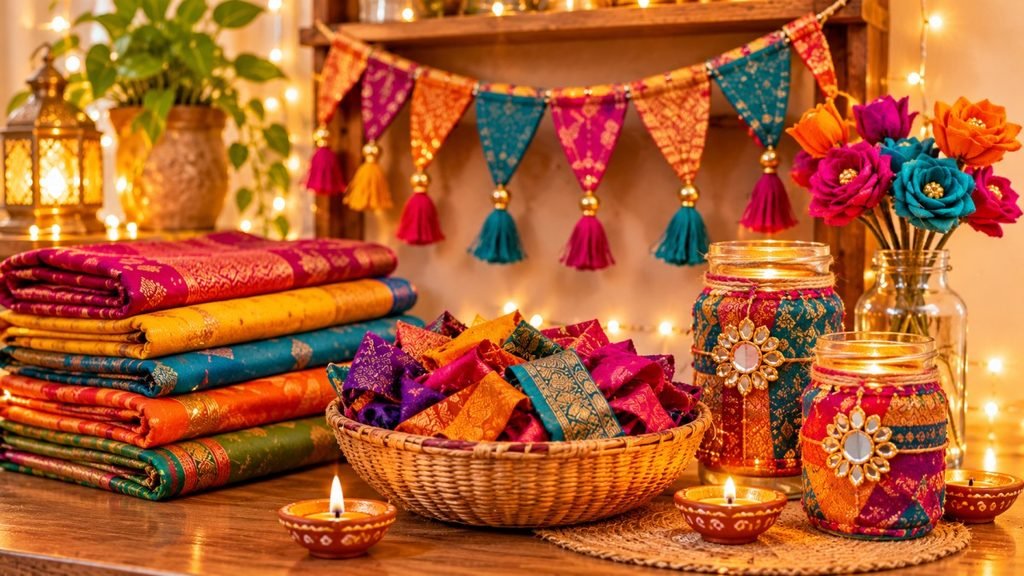
The look: Old tant, dhakai, banarasi, or cotton sarees can introduce beautiful patterns, borders, and colors into your festive interiors.
How to style it: Turn saree scraps into torans, cushion covers, table covers/runners, fabric flowers, or decorative backdrops. Use contrasting borders to create a layered look. This is one of the easiest ways to make homemade Diwali decorations while giving old textiles a second life.
Care tip: Secure loose threads and keep fabric away from diyas and candles.
7. Upcycled Glass Jars & Bottles – Pretty lanterns
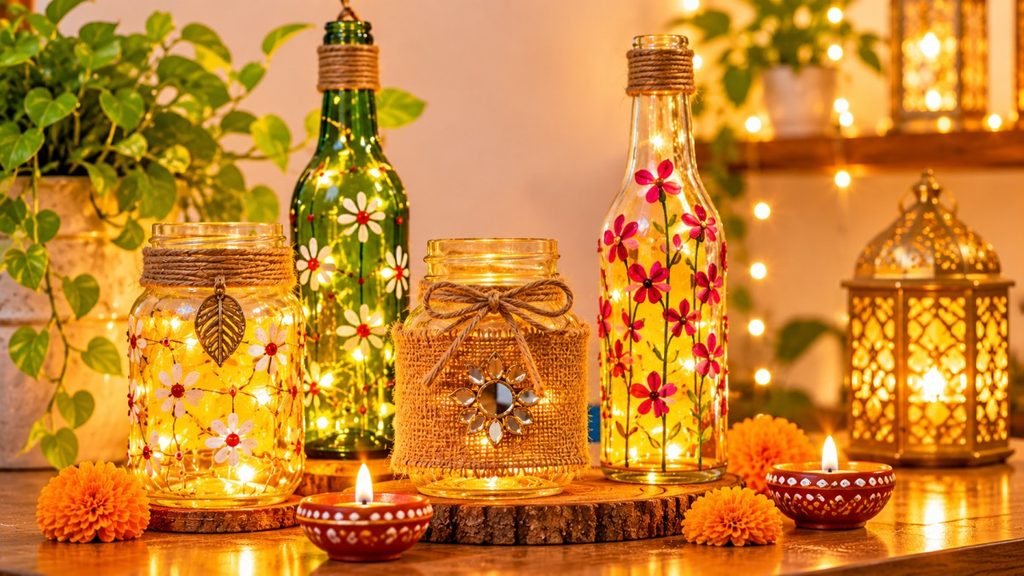
The look: Transparent glass creates a lovely play of light and shadows.
How to style it: Paint old jam jars with translucent colors, wrap them in jute, or decorate them with lace and beads. Place battery-operated tea lights inside to create charming Diwali lantern ideas.
For more creative inspiration, check out these paper craft ideas for interiors.
Care tip: Remove sharp edges, clean bottles thoroughly, and avoid using ordinary glass jars with direct flames.
8. Macramé Cotton Cord – Bohemian festive decor
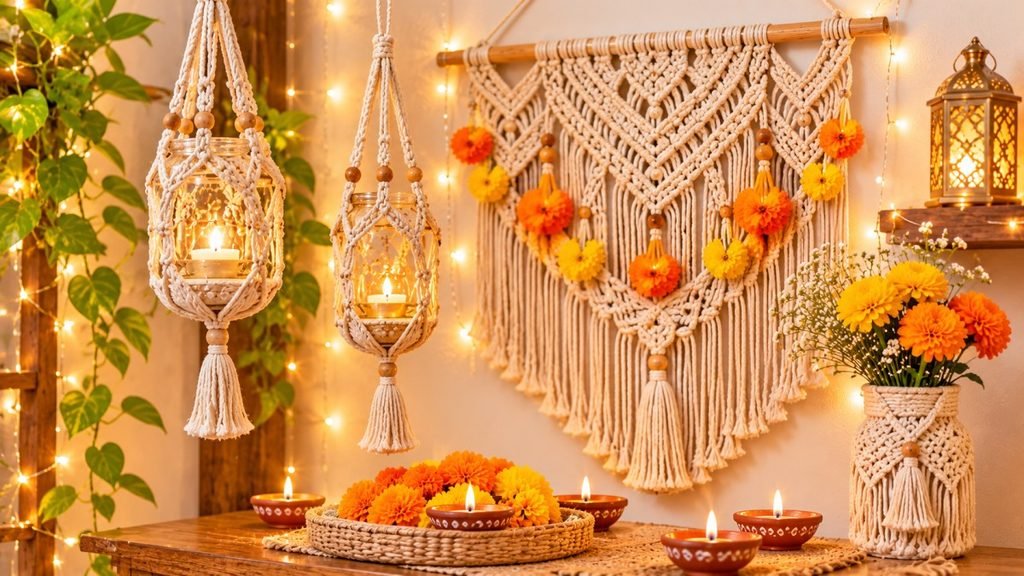
The look: Macramé adds a soft, textured, bohemian touch to your home.
How to style it: Make hanging planters, tea-light holders, wall ornaments, decorative torans, or lampshade covers. Natural cotton, ivory, and beige look especially attractive with brass and wooden accents.
Care tip: Keep cotton macramé away from flames and clean it with gentle dusting.
9. Areca Palm Leaves– Disposable plates turned decor
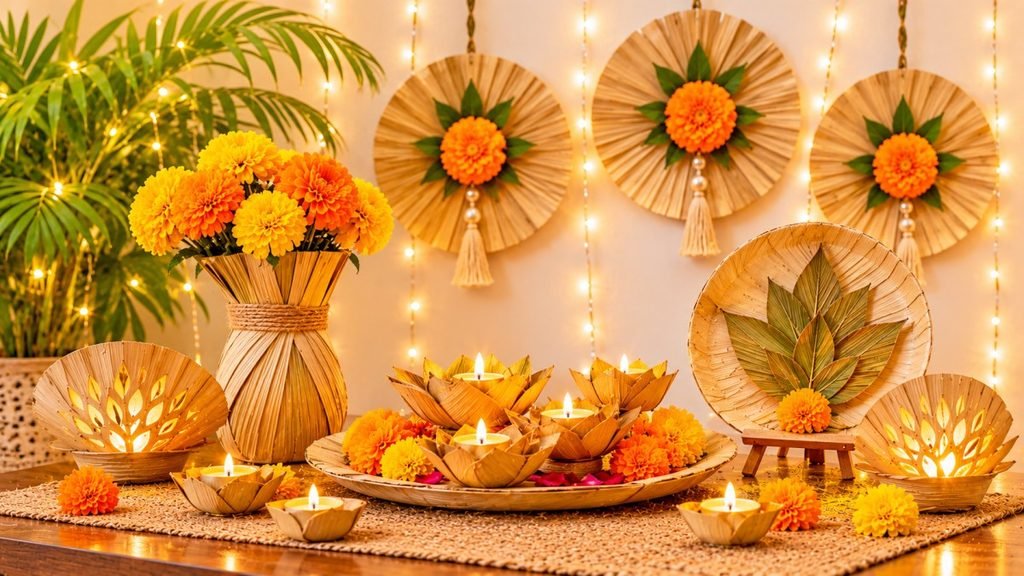
The look: These naturally textured leaves have an understated, organic appearance.
How to style it: Arrange clean, dry areca leaves in overlapping patterns to create wall installations or decorative backdrops, as demonstrated by Instagram user plantskingdom143. You can also paint simple floral motifs on them.
Care tip: Use dry leaves for wall decor and keep them away from water and open flames.
10. Papier-Mâché & Newspaper – Sculptural decorations
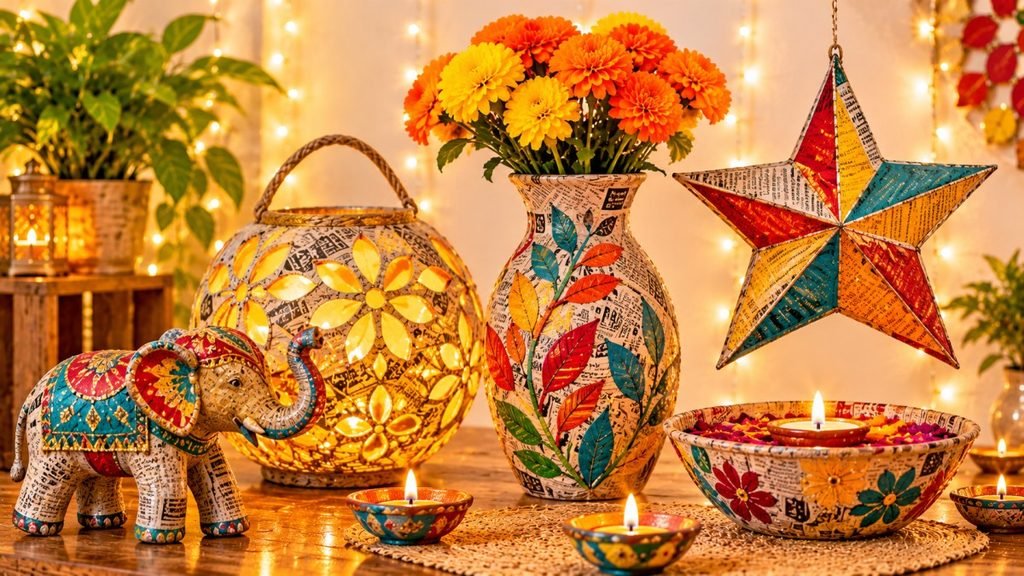
The look: Papier-mâché gives you the freedom to create lightweight, customized decorative shapes.
How to style it: Make hanging stars, floral wall ornaments, or decorative bowls. Paint them in indigo, rust, gold, and ivory for an artistic finish. Ak Arts and Herbals shows how to make tea-light holders with papier-mâché. These make for one of the best out-of-waste Diwali decoration projects.
Care tip: Apply a protective water-based sealant and allow everything to dry completely before displaying.
11. Reclaimed Wood – Warmth and character
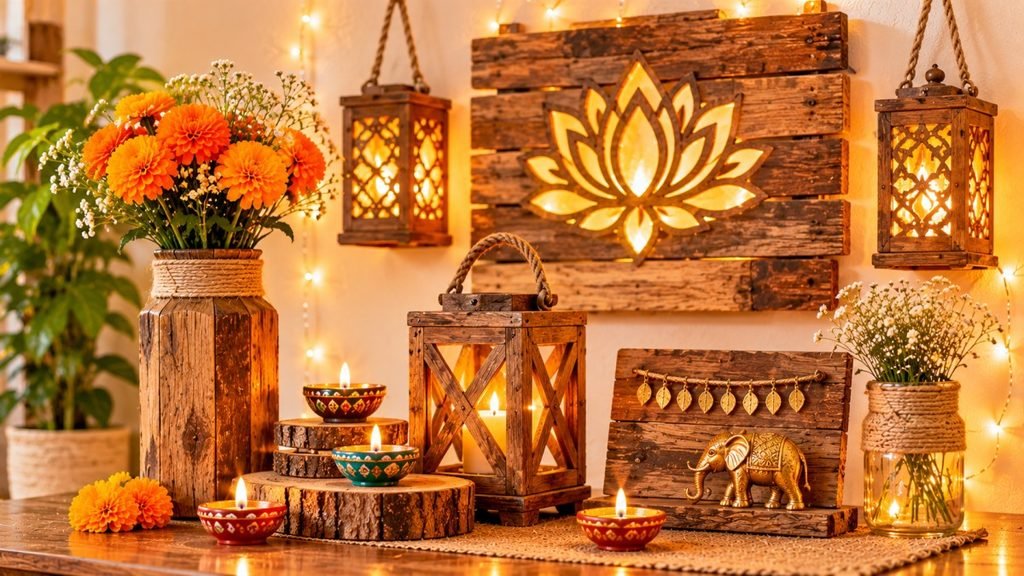
The look: Old wooden planks and discarded furniture pieces bring a warm, vintage character to festive interiors.
How to style it: Turn reclaimed wood into diya stands, nameplates, wall-mounted shelves, or rustic centerpieces. Combine it with brass, jute, and terracotta.
Explore more upcycled and repurposed furniture ideas for inspiration.
Care tip: Sand rough edges, check for protruding nails, and keep wooden pieces away from flames.
12. Old Bangles, Beads, & Mirror-Work Pieces – A little sparkle
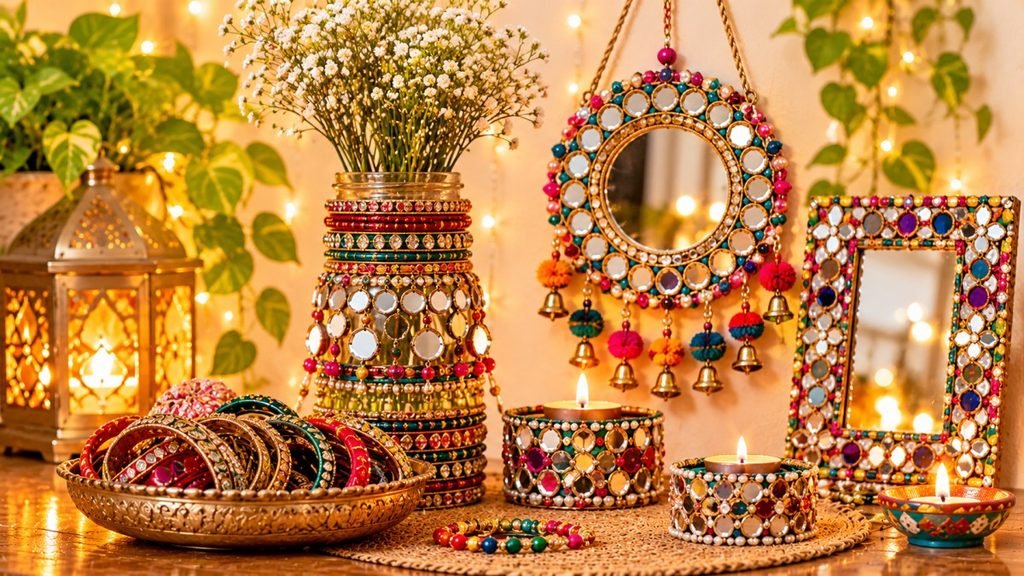
The look: These forgotten accessories can create colorful, reflective decorations without buying new embellishments.
How to style it: Attach old bangles ot cardboard or wooden frames to make hanging ornaments. Or you can make a lamp holder like CraftNest with Fiza did with old bangles. Use mirror and beads to decorate torans, wall hangings, and festive trays.
Care tip: Secure small pieces properly and keep broken glass or sharp mirror edges out of children’s reach.
13. Dried Leaves, Flowers, Seed Pods, & Orange Slices – Nature’s artwork
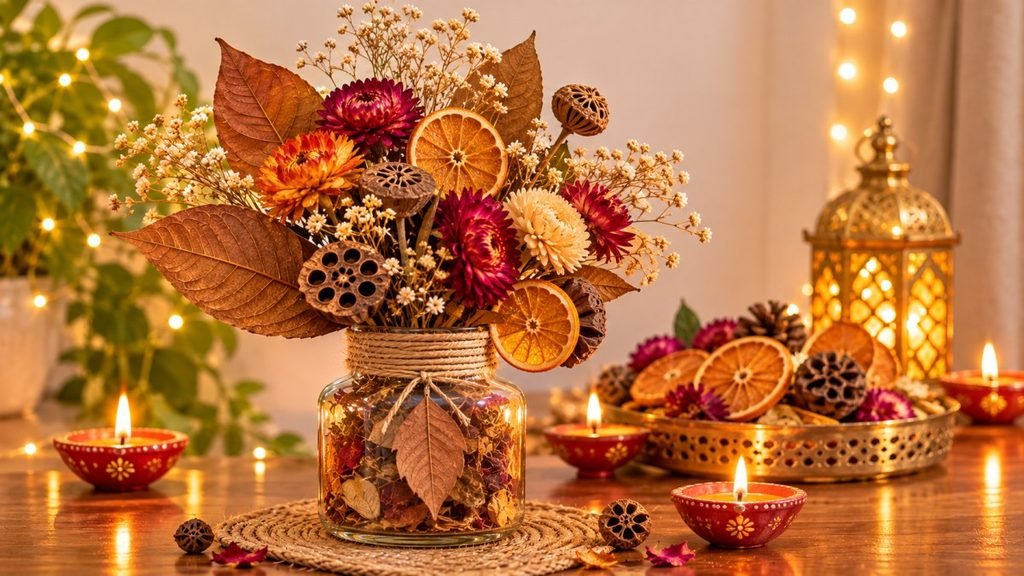
The look: Dried botanicals bring earthy colors, delicate textures, and a slightly rustic appearance.
How to style it: Make wreaths using dried leaves, create garlands with seed pods, or arrange dried rose and marigold petals in decorative bowls. Dried orange slices also make beautiful natural Diwali decoration. If you’re feeling whimsical, make these mango seed birds from Hetal’s Art. Hang them from wall fixtures and watch them become conversation starters at your party!
Care tip: Ensure everything is completely dry to prevent mold. Keep dried botanicals away from candles and diyas.
14. Cane & Rattan – Effortlessly elegant accents
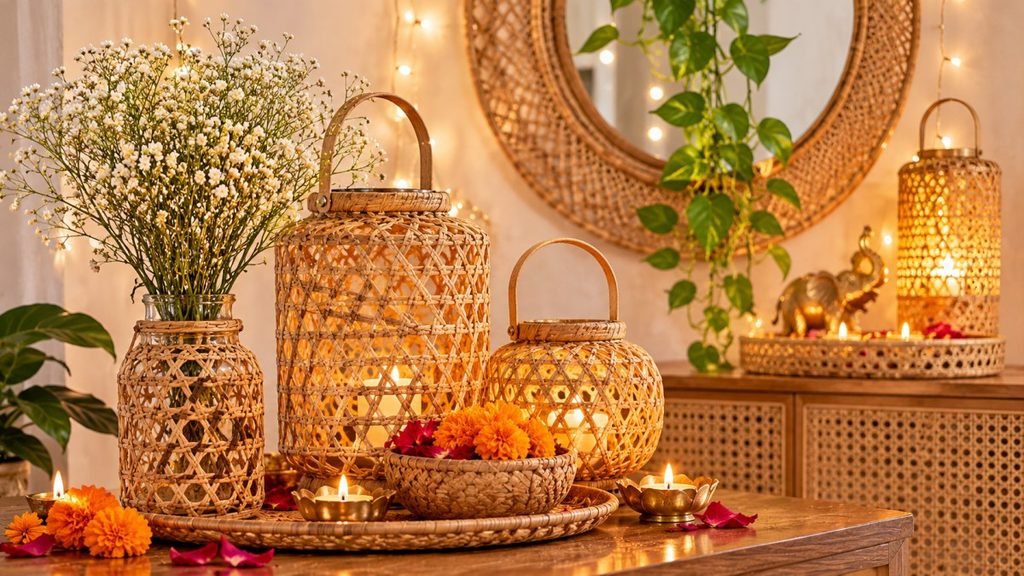
The look: Cane and rattan offer woven textures that look both traditional and contemporary.
How to style it: Use cane baskets for flower arrangements, rattan trays for festive sweets, or woven lampshades with warm LED lighting. Pair them with cream, rust, and muted green.
Care tip: Keep them dry and away from direct heat sources.
15. Coconut Shells – Tiny decorations with big potential
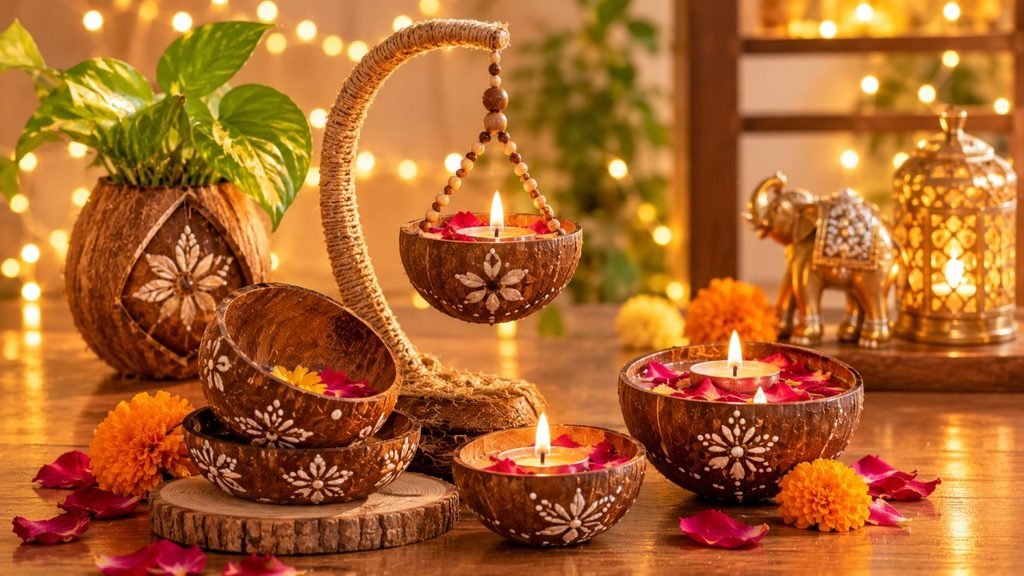
The look: Coconut shells have a naturally curved shape and dark, earthy finish that makes them interesting decorative objects.
How to style it: Clean and polish the shells before turning them into miniature planters, hanging ornaments, or decorative bowls. Add mirror pieces, paint, or dried flowers for a festive finish.
Coconut shells in Diwali decor work well with jute, bamboo, and terracotta.
Care tip: Smooth rough edges thoroughly. Never place an open flame inside a coconut shell.
A Few Practical Tips for Sustainable Diwali Decorations
Beautiful decorations are lovely, but you also want them to survive beyond the festive week!
Keep these points in mind:
- Reuse before buying: Look through old sarees, glass jars, bangles, and wooden items before shopping for supplies.
- Choose reusable materials: Bamboo, brass, cane, and terracotta can become part of your regular home decor.
- Support local artisans: Buy handmade sikki, terracotta, and bamboo products from local craftspeople.
- Be careful with lighting: The Indian government’s fire safety guidelines recommend keeping candles away from anything combustible and extinguishing them before leaving a room or going to sleep.
- Plan the disposal: Compost suitable dried flowers and leaves, and reuse or recycle other materials wherever possible.
An India Today feature on eco-friendly Diwali decor also highlights the growing use of natural fibres, terracotta, recycled glass, and handcrafted decorations. Let’s Think Design First’s associate partner, Natasha N. Kochhar, says, “Now, people are preferring natural fibres, such as jute, cotton and bamboo, for lampshades, wall hangings and table-runners. Similarly, clay and terracotta diyas are replacing plastic versions, blending sustainability with cultural authenticity and supporting local artisans.”
The Indian Express’ guide to alternative Diwali decoration materials offers further inspiration, including coconut-shell lamps, seed rangolis, and natural torans.
Your home doesn’t need an expensive makeover to feel festive. Sometimes, an old saree, a few coconut shells, or a handful of dried flowers can create something far more memorable than store-bought decorations.
Experiment with textures, mix traditional crafts with contemporary styling, and give forgotten household items a new purpose. After all, the most beautiful festive homes aren’t necessarily the ones with the most decorations. They’re the ones that tell a story!
FAQs
1. How can I mix traditional and modern Diwali decorations?
Pair classic brass diyas and marigold flowers with sleek minimalist candle holders, geometric trays, or fairy lights. This creates a balanced, stylish look that honors timeless traditions while keeping your modern home feeling fresh and chic.
2. How can I make a Diwali toran from household materials?
Get creative with leftover cardboard, colorful fabric scraps, wool yarn, or old greeting cards. Cut them into festive shapes like leaves or bells, string them together securely, and hang them on your main entrance door.
3. Is it safe to use natural fibres like jute and grass near diyas?
Natural fibres can catch fire easily if they come into direct contact with an open flame. Safely place your burning diyas on ceramic, glass, or metal trays to protect your lovely rustic decor pieces.
4. What colour combinations work best with natural, rustic Diwali decor?
Earthy tones like warm terracotta, soft beige, sage green, and mustard yellow look stunning together. Accentuate these soothing base shades with subtle touches of antique gold or copper to add a warm, elegant festive glow.

As a lifelong DIY enthusiast, Alex Barton is never afraid to go the extra mile to save a few bucks! From seamless interior decor hacks to effective DIY home renovation tips, he shares a myriad of his experiences for you to unleash your creativity.