Why Is Your Bathroom Still Damp? 7 Reasons and How to Fix Them
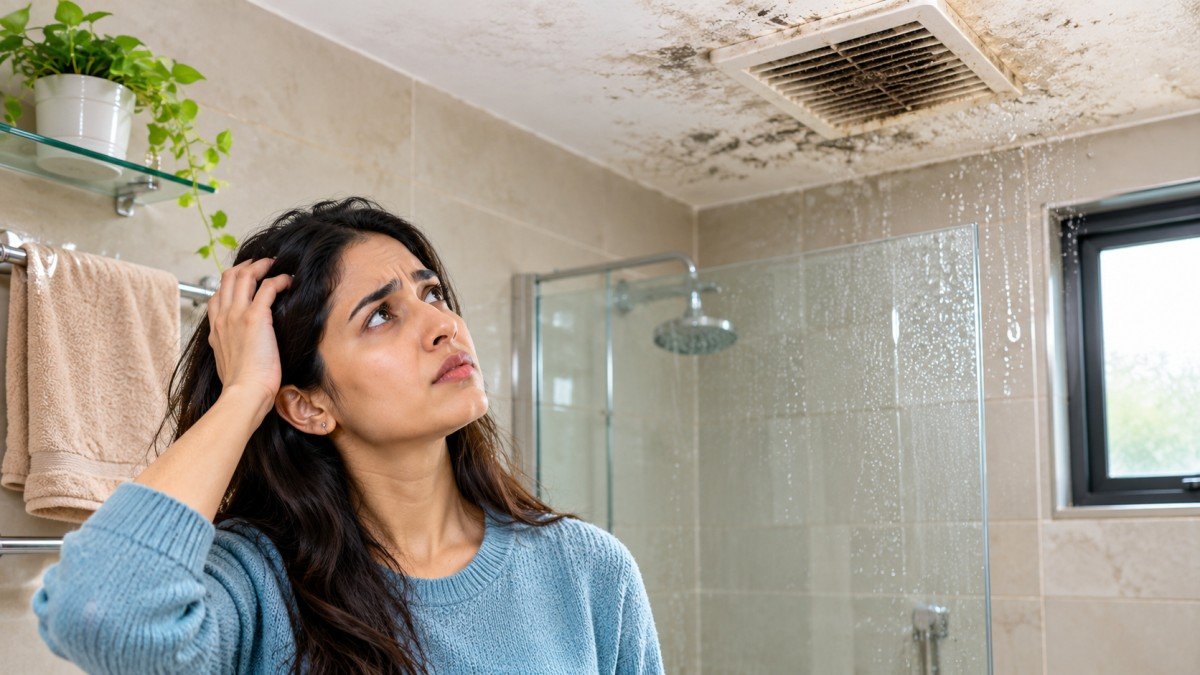
You finish a shower, switch on the exhaust fan, and expect the steam to disappear. But 30 minutes later, the mirror is still foggy, the ceiling feels damp, and water droplets are collecting on the walls. Sound familiar?
There are several reasons behind bathroom fans running, but moisture staying. A faulty fan isn’t always to blame. The problem is attributed to restricted airflow, poor ductwork, insufficient ventilation, and even cold bathroom surfaces.
The good news? You don’t necessarily need to replace your exhaust fan. Let’s look at what might be happening and how you can fix it.
7 Reasons Your Bathroom Stays Damp Despite a Running Fan
Before spending money on a new ventilation system, check these 7 common causes.
Dust and Dirt are Blocking Your Exhaust Fan
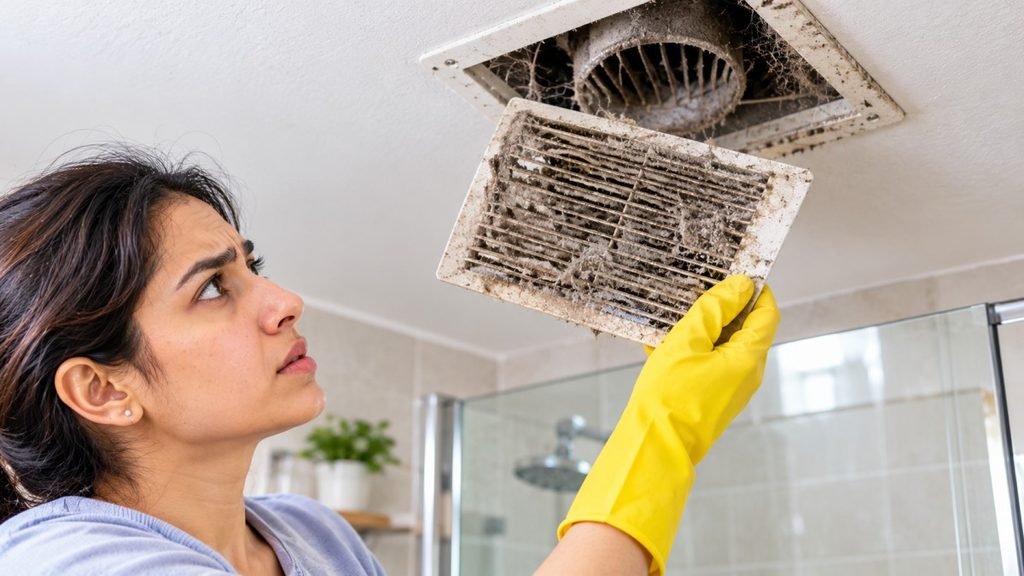
When did you clean your bathroom exhaust fan? If you can’t remember, accumulated dust, hair, and lint might be restricting airflow.
A clogged bathroom exhaust fan cannot pull humid air out as effectively as a clean one. You might hear the motor running, but that doesn’t mean it’s removing enough moisture.
How to fix it:
- Switch off the fan at the circuit breaker before cleaning.
- Remove the cover according to the manufacturer’s instructions.
- Wash the removable plastic cover with warm, soapy water, and let it dry completely.
- Use a vacuum with a brush attachment to remove dust from the housing and blower.
- Check the outside vent cover for visible obstructions.
The Lifey Guy’s bathroom exhaust fan cleaning tutorial demonstrates how to clean the cover, housing, and blower safely. Weekly Home Check’s maintenance video also recommends cleaning the fan every 6 months.
Are you planning a bathroom makeover? Keeping your built-in bathroom storage clean and organized also makes routine bathroom maintenance easier.
Your Exhaust Fan Isn’t Powerful Enough
A small exhaust fan might work perfectly in a compact powder room but struggle in a large bathroom with a bathtub and shower.
A fan’s airflow capacity is rated in cubic feet per minute (CFM). It tells you how much air the fan can move. If its capacity is too low for your bathroom, steam can build up faster than the fan removes it.
The Home Ventilating Institute (HVI) recommends a minimum of 50 CFM for bathrooms under 50 sq ft, and 1 CFM/sq ft for spaces measuring 50-100 sq ft.
How to fix it:
Measure your bathroom and check your fan’s CFM rating. Keep ceiling height, shower location, and duct resistance in mind when choosing your replacement.
If you need an upgrade, look for the best bathroom exhaust fan with adequate CFM, quiet operation, and a low sone rating. Choosing an ENERGY STAR-certified model ensures proven energy savings and lower noise levels.
Your Bathroom Doesn’t Have Enough Fresh Air Coming In
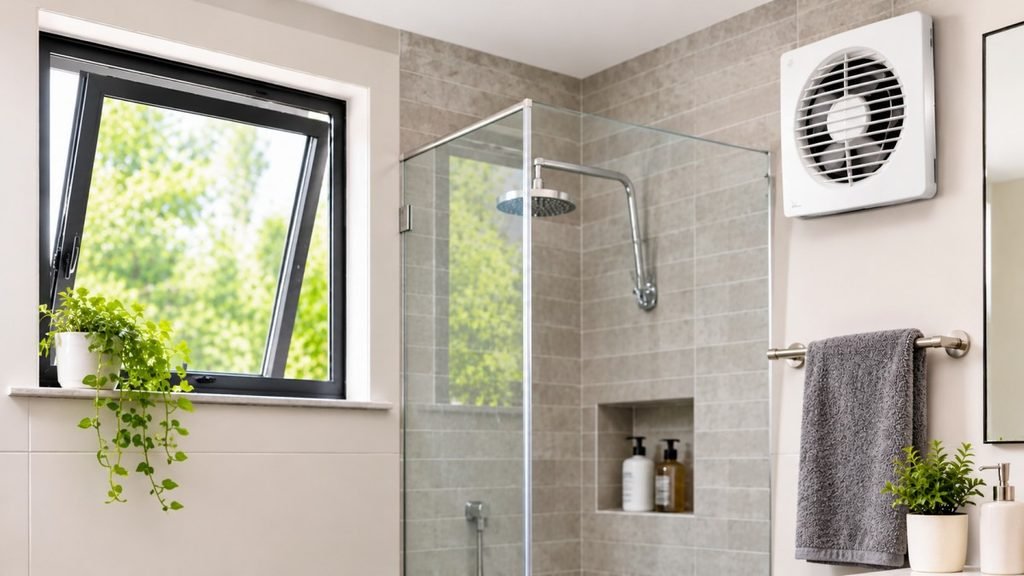
It’s easy to forget that your exhaust fan needs fresh replacement air from somewhere to do its job right.
Think about it. Your fan pulls humid air out of the bathroom, but where does the incoming air come from? If the door seals tightly against the floor and there are no other suitable air pathways, airflow can become restricted.
How to fix it:
- Leave the bathroom door slightly open after showering.
- Check whether there’s sufficient clearance beneath the door.
- Avoid blocking air pathways with rugs or other objects.
The Abbotsford Appliance Repair Pros video recommends maintaining approximately 12 mm of clearance beneath the bathroom door. This is particularly important if you’re considering a bathroom renovation. Even attractive design features, such as marble basin installations, should be planned without compromising practical ventilation.
Your Exhaust Duct is Blocked or Installed Incorrectly
Your fan might be working, but where is the extracted air going?
An exhaust fan must send humid air outside your home. If its duct terminates in the attic, crawlspace, or another enclosed area, moisture can accumulate there instead of escaping. Airflow can also be restricted by:
- Long ducts
- Sharp bends
- Crushed sections
- Undersized pipes
How to fix it:
Ask an HVAC professional to inspect the ductwork and check:
- Whether the duct reaches an exterior wall or roof vent.
- Whether its diameter matches the fan manufacturer’s requirements.
- Whether there are unnecessary bends or damaged sections.
- Whether the exterior vent flaps open freely.
The US Department of Energy’s Building American Solution Center recommends direct outdoor venting with properly sized ducts and as few bends as possible.
If you notice water dropping from the fan housing, don’t ignore it. Condensation inside uninsulated or poorly insulated ducts may run backward into the bathroom space.
You’re Switching the Fan Off Too Soon
One of the simplest explanations for a bathroom still humid after fan operation is insufficient run time.
Your shower might last 10 minutes, but moisture doesn’t disappear when you turn off the water. Wet towels, shower curtains, tiles, and bathtubs continue releasing moisture into the air.
How to fix it:
Keep the fan running for at least 20-30 minutes after showering. Some situations may require longer.
In a video explaining bathroom fan installation, licensed electrician Kevun Kalupa discusses timer controls and humidity-sensing features. A countdown timer switch is an inexpensive way to avoid forgetting. You can also install a humidity sensor bathroom fan that automatically adjusts when moisture levels rise.
Cold Walls and Ducts are Causing Condensation
Sometimes, the bathroom fan not working isn’t the main problem. The temperature inside your bathroom could be contributing to excessive condensation.
Water droplets form when warm, moisture-heavy shower air meets cold walls, ceilings, or duct surfaces. This explains why you might notice bathroom condensation on the ceiling/walls even after running the exhaust fan.
A Reddit discussion about a 70 CFM fan struggling with moisture highlighted this issue. The homeowner also reported water collecting inside the fan housing. Community suggestions included warming the bathroom slightly and insulating cold exhaust ductwork to reduce condensation.
How to fix it:
- Maintain a comfortable bathroom temperature during showers.
- Ask a professional to inspect and insulate ducts running through cold spaces.
- Check for water stains or recurring condensation around the fan.
- Look for plumbing or roof leaks that could be adding moisture.
How to reduce bathroom humidity then? The EPA’s guide to mold, moisture, and your home also recommends increasing air circulation, insulating cold surfaces, and reducing indoor humidity.
Poor Positioned/Installation Problem Is Why Your Bathroom Fan Is Not Removing Steam
Even a powerful fan can struggle if it’s too far from the shower or installed incorrectly.
For instance, if your shower is at one end of the bathroom and the exhaust fan is near the opposite wall, steam might spread across the room before reaching the fan.
How to fix it:
If you’re renovating, position the exhaust fan close to the shower or bathtub, provided the model is approved for that location and installed according to electrical and wet-area safety requirements.
If your existing fan vibrates, makes unusual noises, or has weak suction despite cleaning, have its motor, damper, and electrical connections inspected.
You may also find useful design inspiration in these timeless bathroom color schemes. Just remember that aesthetics should never come at the expense of ventilation.
Quick DIY Checks You Can Try For Bathroom Ventilation
Before calling a professional, try these simple checks to identify possible problems.
| DIY check | What to look for |
| Tissue test | Hold a single tissue square against the fan grille. It should stay in place while the fan runs. |
| Door clearance | Check whether air can enter beneath the bathroom door. |
| Fan cleaning | Look for visible dust and debris around the grille. |
| Exterior vent | Check whether the outdoor vent flap opens and is free of visible obstructions. |
| Humidity levels | Use a hygrometer to track how quickly humidity drops after showering. |
Important: The tissue test only indicates that the fan is pulling some air. It doesn’t confirm whether the system is delivering its rated CFM or correctly venting.
If these checks don’t reveal the problem, arrange a professional airflow and duct inspection.
When Should You Replace Your Bathroom Exhaust Fan?
Cleaning and minor repairs can solve many ventilation problems. A bathroom humidity fix might need a fan replacement if:
- The motor is failing
- The fan is damaged
- The capacity isn’t sufficient for the room
Here are a few signs to watch for:
- The fan makes loud buzzing or grinding noises.
- Airflow remains weak after cleaning.
- The motor overheats or repeatedly stops working.
- The fan cannot handle the bathroom’s moisture load.
If you’re replacing it, choose a model with suitable CFM, a low noise rating, and a timer or humidity-sensing option. A double vanity or larger bathroom layout may also need a more carefully planned ventilation arrangement. See these double vanity bathroom ideas for inspiration when planning the space.
A damp bathroom doesn’t always mean you need a new exhaust fan. Sometimes, cleaning the existing unit, allowing better airflow, correcting ductwork, or giving the fan more time can make a noticeable difference.
Start with the simple checks, but don’t ignore recurring condensation, water leaks, or visible mold. If the problem persists, get a qualified professional to inspect the ventilation system and identify the underlying cause. Keep your bathroom dry, comfortable, and protected from long-term moisture damage!
FAQs
1. Should the bathroom door be open or closed with the fan on?
Keep the door slightly ajar. This allows fresh intake air to circulate, helping the exhaust fan efficiently push moisture outside rather than trapping it indoors.
2. Why is there water dripping from my bathroom exhaust fan?
Warm, humid air hits a cold exhaust duct, causing condensation. This moisture collects and drips back down, often worsened by poor insulation or a blocked vent.
3. How do I reduce humidity in a bathroom without a fan?
Leave the door open after showering, wipe down wet surfaces with a squeegee, crack a window, or run a portable dehumidifier to clear moisture quickly.
4. Can a dehumidifier help in a bathroom?
Yes, a portable dehumidifier effectively pulls excess moisture from the air, preventing mold growth and damp odors, especially in windowless or unventilated bathrooms.

As a lifelong DIY enthusiast, Alex Barton is never afraid to go the extra mile to save a few bucks! From seamless interior decor hacks to effective DIY home renovation tips, he shares a myriad of his experiences for you to unleash your creativity.