Concrete Dreams: Brutalism Around the World
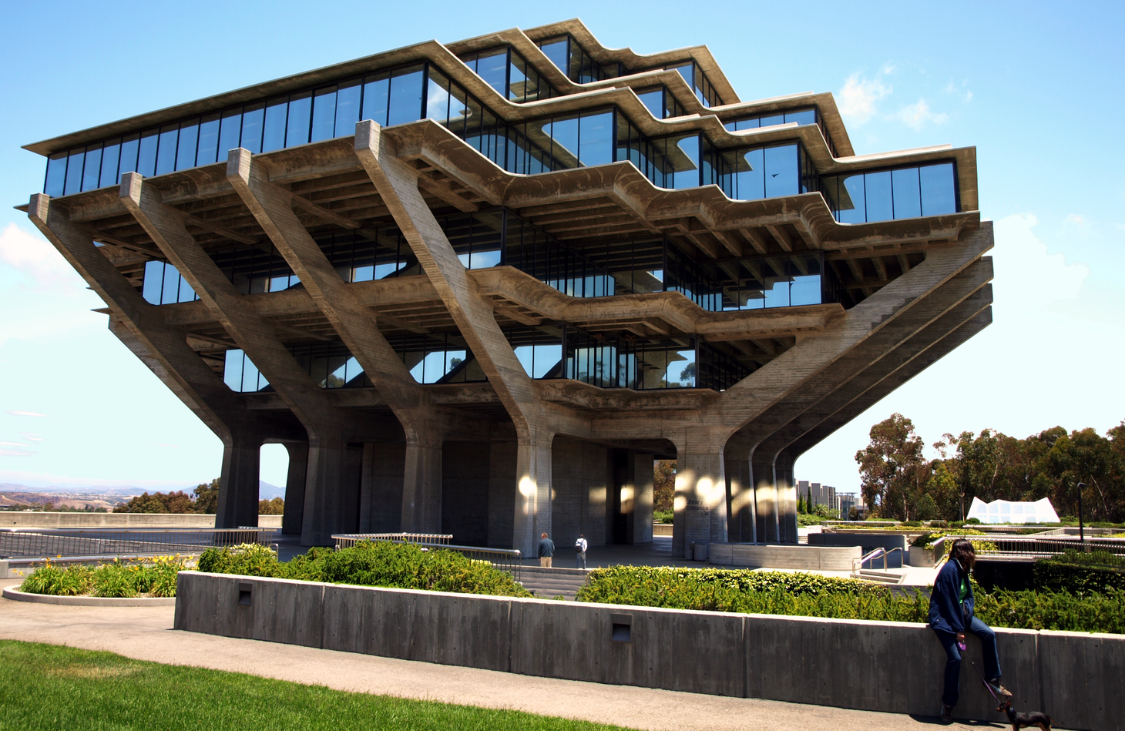
Have you ever looked at a building that made you pause and think, “Why does it look so unfinished?”
There can be many ways to answer that. But a simple way to tell is this:
If a building is made of bare concrete, with heavy, bold shapes and little to no decoration or paint, it’s likely Brutalist architecture!
Brutalist architecture and architects would define this style as something that doesn’t try to soften its presence. Instead, it puts structure and material front and center.
So, let’s take a deep dive into this fascinating architectural style that dominated the 1950s to the 1980s.
What is the Brutalist Style of Architecture?
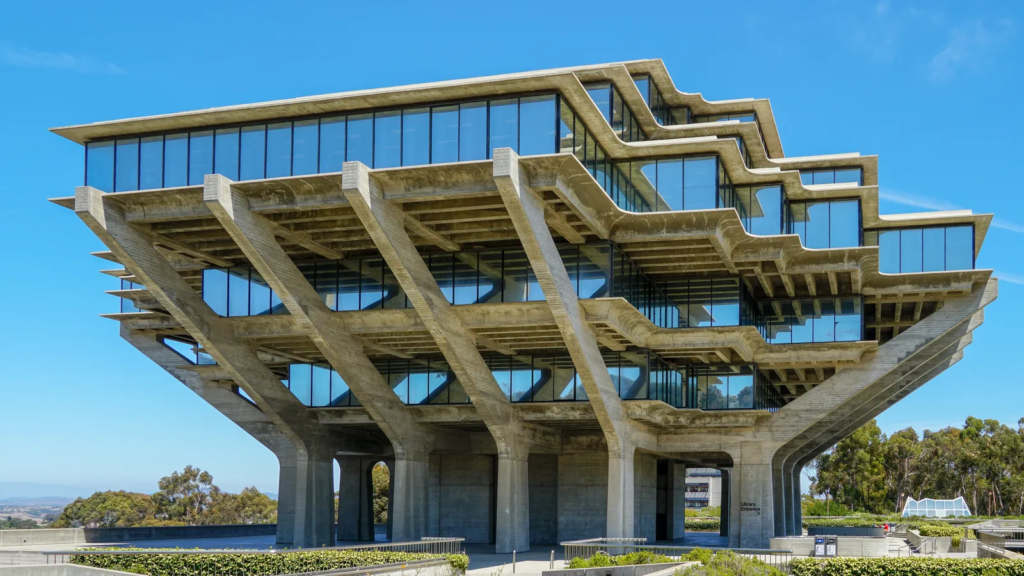
Brutalist architecture is a style that developed in the mid-20th century, especially after World War II. It focuses on simple forms, exposed materials, and practical design.
The term comes from the French phrase, “béton brut”, meaning raw concrete. That tells you exactly what the Brutalist architecture definition is!
At its core, Brutalism is about honesty. A building shows how it stands and what it’s made of, without trying to hide anything.
Brutalism was shaped by architects who believed in clarity, structure, and purpose. Their projects helped define how the style evolved across different countries. Influential brutalist architects include Le Corbusier, Alison and Peter Smithson, Paul Rudolph, Ernő Goldfinger, Marcel Breuer, and Moshe Safdie.
They followed this style with a few clear principles:
- Function comes first.
- Materials are used in their natural state.
- Structure is visible.
- Decoration is minimal or absent.
This made Brutalism especially suitable for public buildings like housing complexes, universities, and civic centers.
Brutalist Architecture’s Key Characteristics:
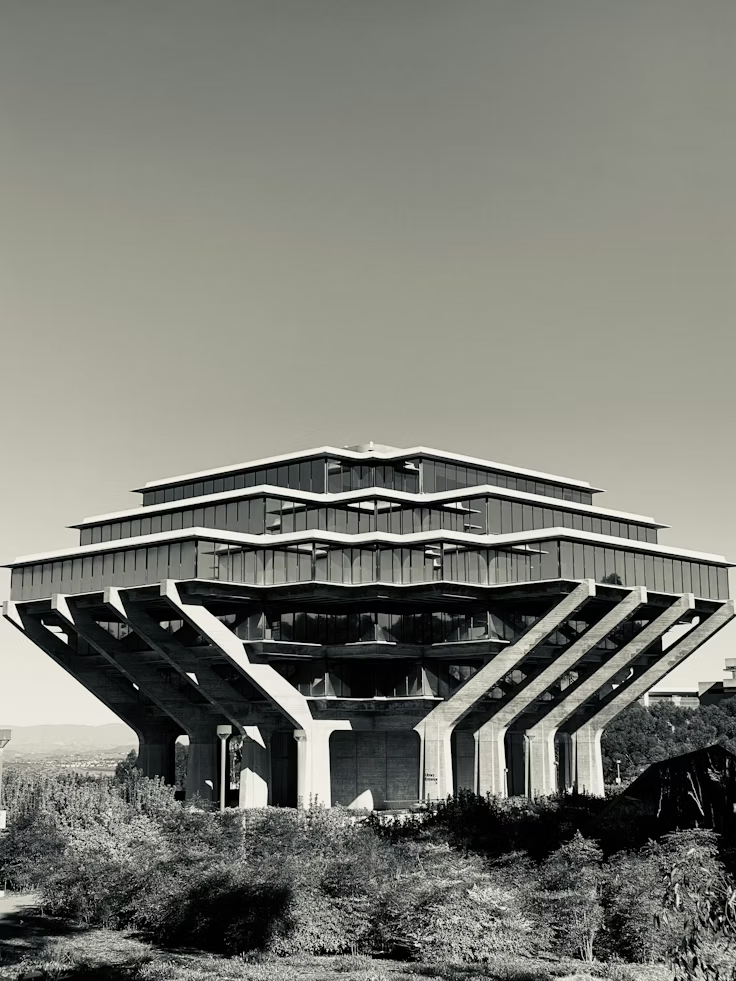
You can usually recognize a Brutalist building by these features:
- Raw concrete
Concrete is often left unfinished, showing texture and construction marks.
- Strong geometric forms
Buildings rely on bold shapes—blocks, grids, and sharp angles.
- Repetition
Windows and structural elements are often repeated in a consistent pattern.
- Large scale
Many Brutalist buildings are designed to serve large populations, so they tend to be massive.
- Exposed structure
Structural elements like beams and supports are visible.
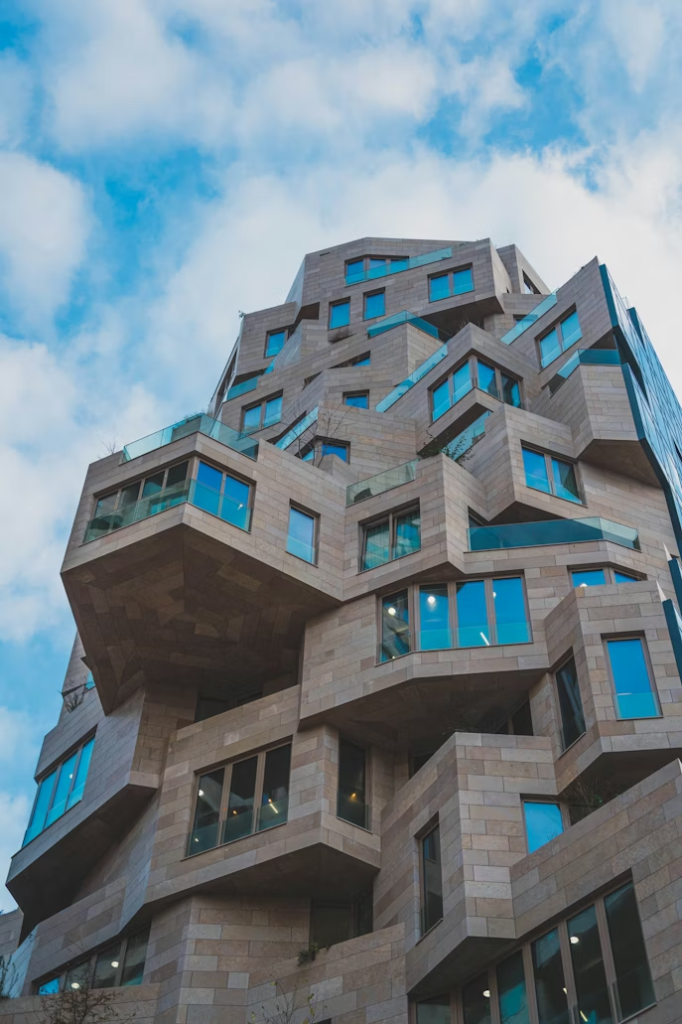
The Origins of Brutalism
Brutalism emerged during a period when cities needed to rebuild quickly after World War II. Architects needed cost-effective solutions that were durable and efficient to construct. Concrete became the natural choice.
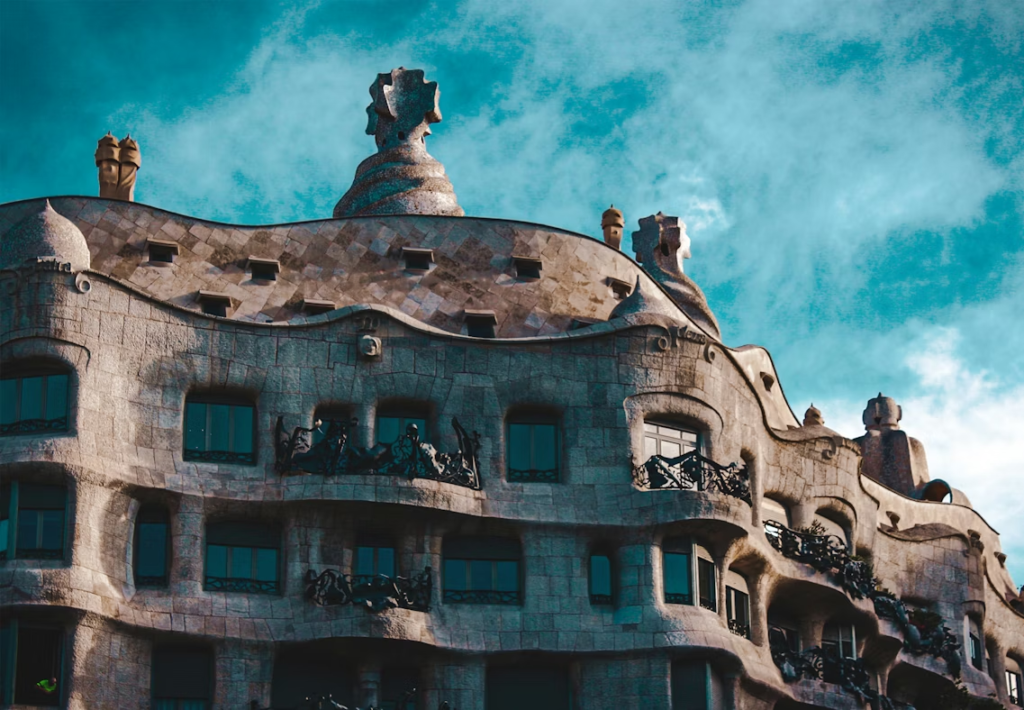
Influence of Soviet Brutalist Architecture
The Soviet Union played a key role in shaping the visual and cultural direction of Brutalism.
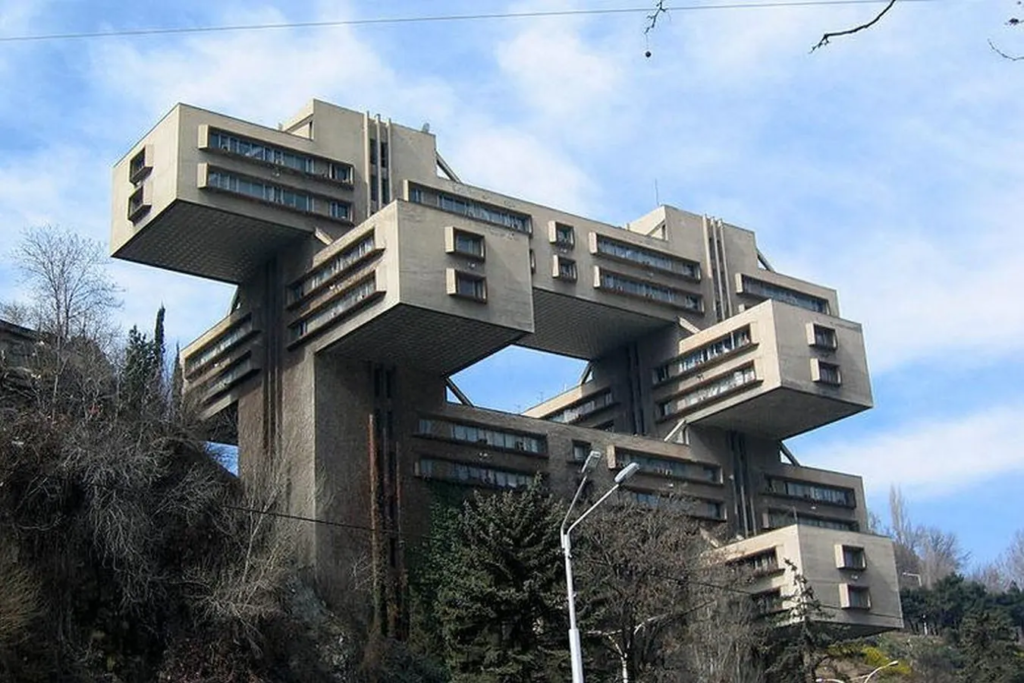
Architecture in the former USSR wasn’t just for function, but also to express political and social ideals. Buildings often reflected strength, unity, and permanence. This led to large-scale housing blocks, monumental civic buildings, and bold, experimental forms.
- Famous Brutalist Architecture in the World
Brutalism slowed down in the 1980s, but it left behind some great examples of Brutalist architecture. Here are our favorites.
- Unité d’Habitation, France – Le Corbusier, 1952
Rising on massive concrete stilts to detach itself from earth, this titan of concrete is the definitive blueprint for self-contained urban living.
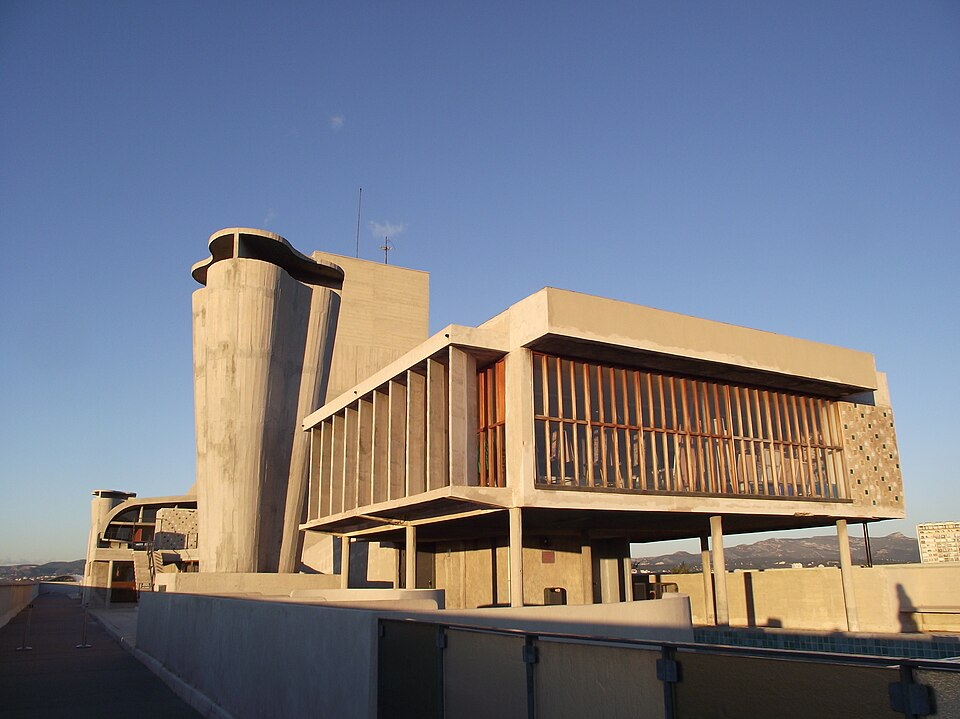
By integrating apartments, shops, a gym, and a school into a single modular frame, it embodies a post-war utopia that feels both historic and distinctly sci-fi. It’s repetitive geometry, dictated by Le Corbusier’s Modulor scaling system, lends the structure a Ballardian edge. It’s unnerving and strangely cinematic, setting it apart from any traditional neighbourhood.
- Barbican Estate, UK – Chamberlin, Powell & Bon, 1960s-70s
Known to locals simply as the Barbican, this landmark of Brutalist architecture in London is a sprawling fortress of textured, gray concrete.
Beyond its rugged Brutalist exterior lies a “city within a city”—a vertical labyrinth of apartments linked by high-level walkways. It’s a self-contained ecosystem where residents share sun-drenched green spaces, a library, schools, and a world-class independent arts center.
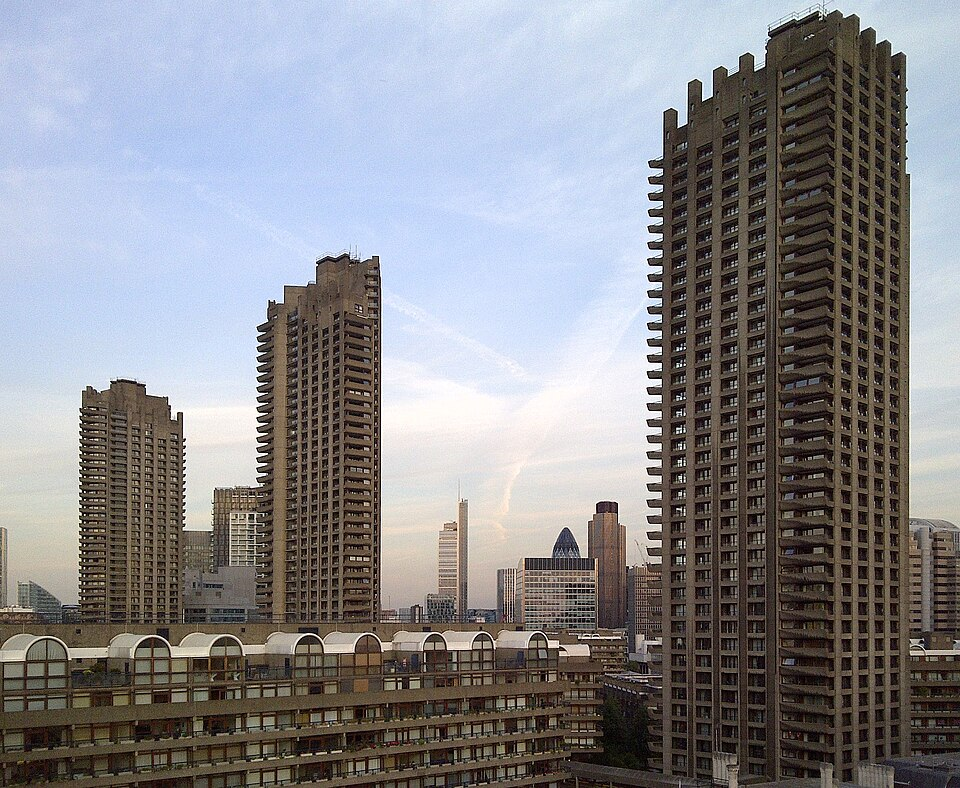
Much like Corbusier’s Unité d’Habitation, the Barbican represents a bold vision for post-war urbanism. It was designed to foster a radical sense of community and not just to house people. The estate proved that high-density living could be both functional and culturally rich.
- The Marcel Breuer Building, USA – Marcel Breuer, 1966
The Breuer Building at Madison Avenue and 75th Street is the architectural equivalent of a sharp, bespoke wool suit paired with heavy steel-toed boots.
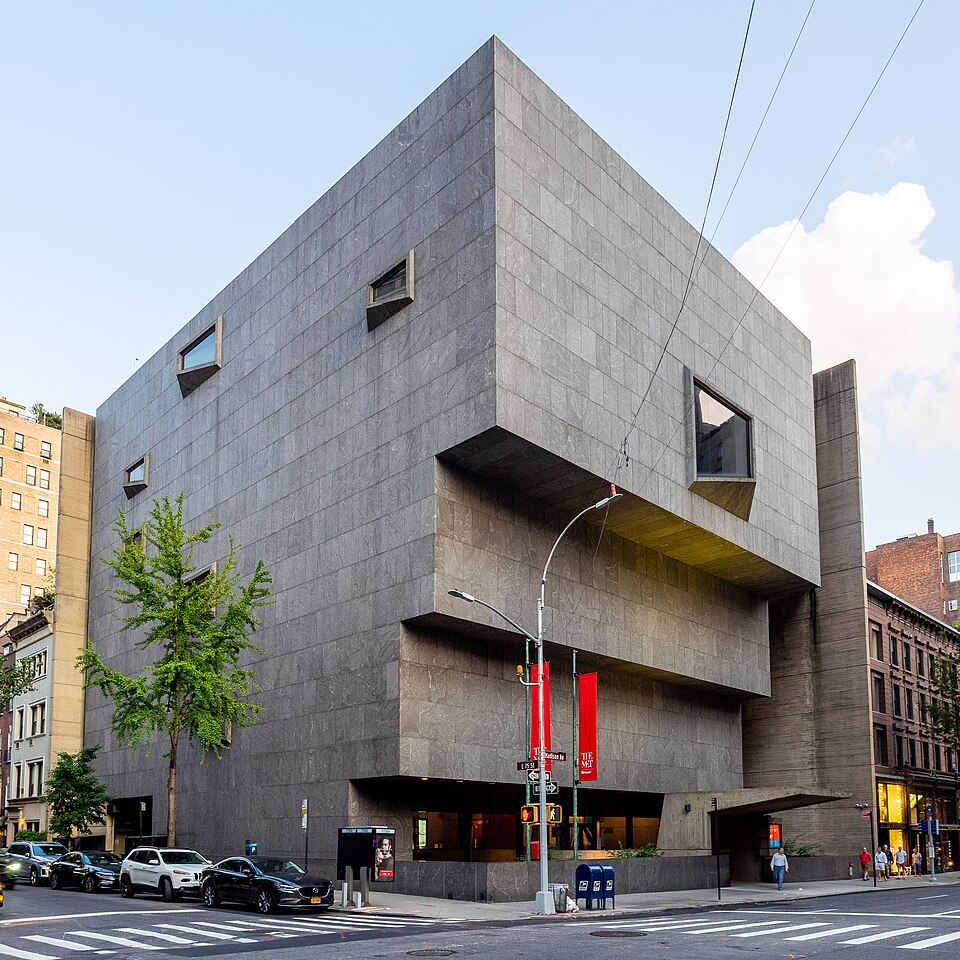
This piece of Brutalist architecture in New York is a structure of raw power and granite-clad authority, looking over the Upper East Side with a muscular swagger. Defying the typical “wedding cake” setback of New York skyscrapers, the building actually tapers inward as it rises. It uses the inverted-Ziggurat shape and recessed, asymmetrical windows to create a sense of dramatic tension.
The Breuer wasn’t built to make friends. Designed to be provocative and deliberately disruptive, it stands in stark, stony contrast to its more polite neighbours. It remains one of the rarest examples of urban architecture that prioritizes confrontation over conformity, forcing every passerby to have an opinion.
- Palace of Assembly, India – Le Corbusier, 1962
This iconic Brutalist building stands as the crown jewel of Indian Brutalism. Serving as the shared legislative seat for the states of Punjab and Haryana, the structure is a masterclass in “monumental concrete.” It’s defined by its sweeping, rhythmic curves and bold, angular geometries that command the horizon with a sense of eternal solidity.
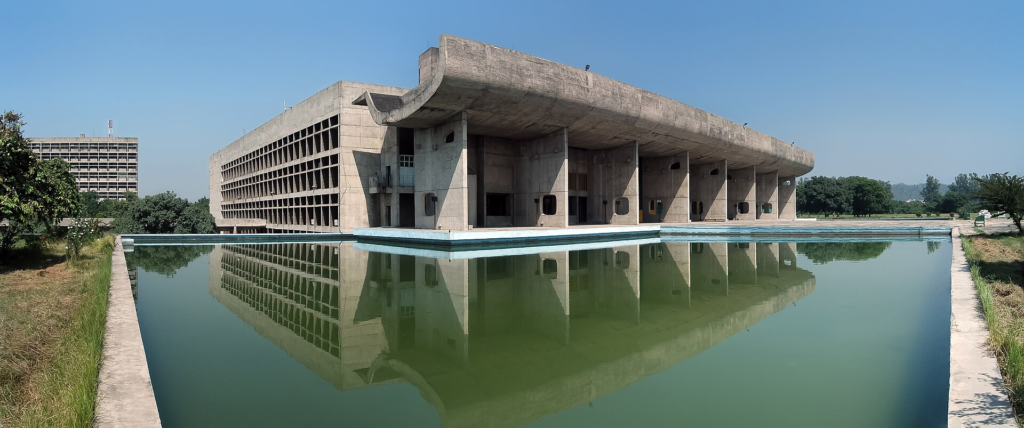
The design is a living manifesto of Corbusier’s Five Points of Architecture. It seamlessly integrates reinforced concrete stilts, a functional roof garden, an open floor plan, ribbon windows, and a free facade. Inside, the rigid exterior gives way to a fluid, democratic space featuring a dramatic circular assembly chamber and a vast forum designed for political discourse.
- Habitat 67, Canada – Moshe Safdie, 1967
Completed in 1967 during the peak of the Brutalist style, this landmark structure is an icon of modular design. Its interlocking prefab concrete units are a geometric feat, embodying a utopian Modernist vision for city life. By ensuring every residence enjoys its own private garden and a generous wash of natural light, the design prioritizes the individual within the collective.
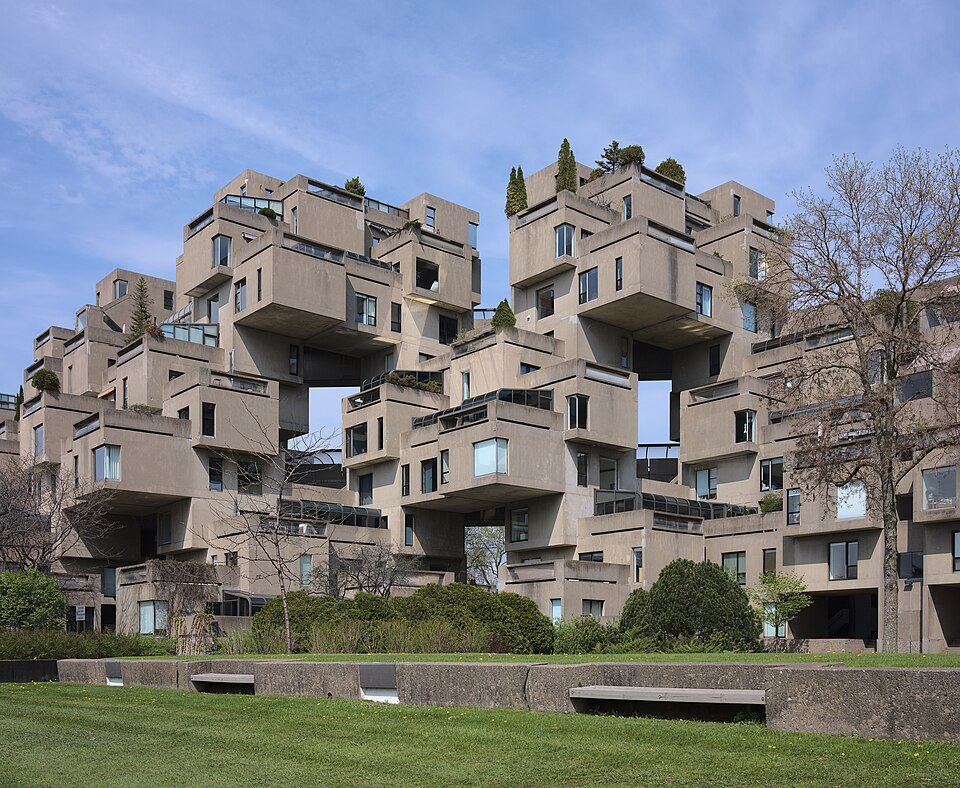
Habitat 67 feels both monumental and intimate. It successfully softens the edges of raw concrete by injecting a sense of playfulness and human-centric design, proving that high-density urban living can still feel sculptural and organic.
- Boston City Hall, USA – Kallmann, McKinnel & Knowles, 1968
Defined by its sharp geometric lines, raw concrete, and exposed brick, this structure was designed to be a literal manifestation of democratic ideals. Every functional choice—open layouts or unadorned materials—was intended to symbolize political transparency and accessibility.
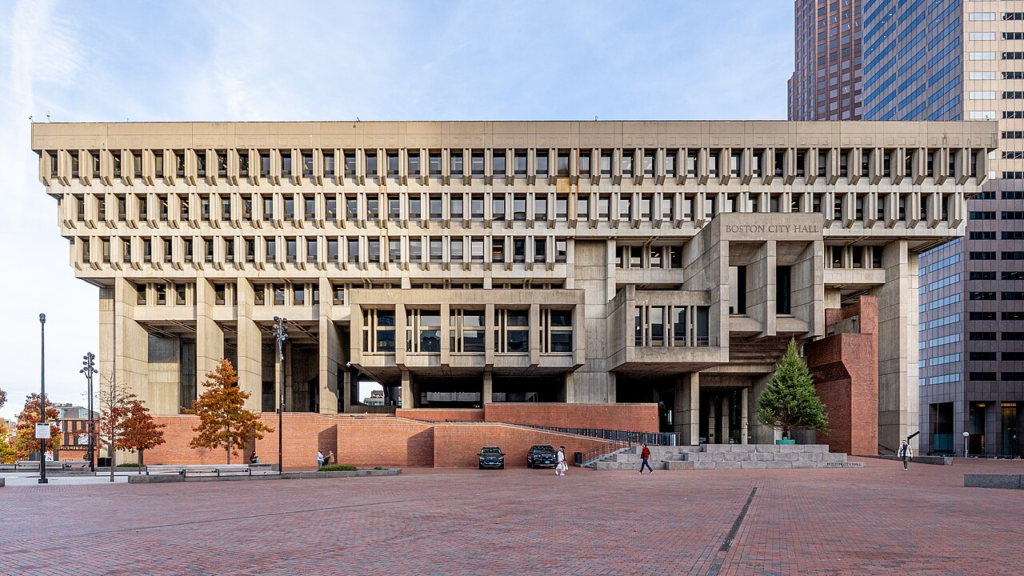
More than 50 years after its debut, it remains one of the most polarizing examples of American Brutalism. Much like the political process it represents, the building invites fierce debate. Its aesthetic is uncompromising; you love it or hate it.
- Trellick Tower, UK – Ernõ Goldfinger, 1972
Rising 31 stories above the West London skyline, this concrete behemoth arrived just as the Brutalist dreams were beginning to sour. In its early days, the tower was a grim landmark of mismanagement and crime, earning the chilling moniker “The Tower of Terror.” Fast-forward to the present, and the building has undergone a total reputation transplant. It’s now cleaned up, meticulously maintained, and celebrated as a pillar of British Brutalist heritage.
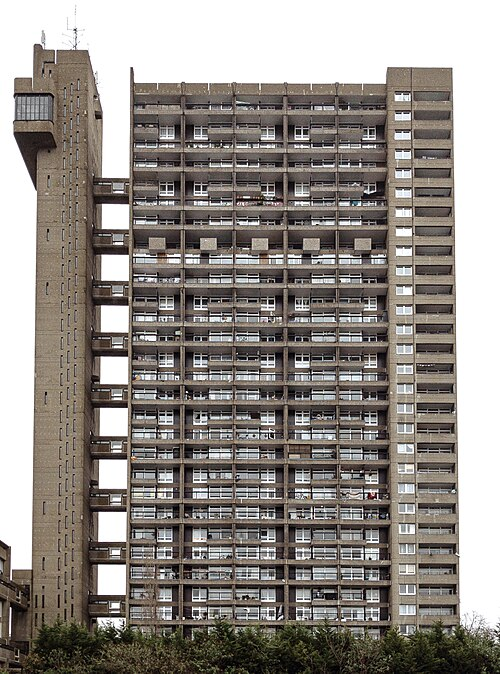
Trellick Tower serves as a hauntingly beautiful case study in the lifecycle of social housing. It captures both the soaring ambition of the era and the harsh realities of urban neglect, ultimately emerging as a redeemed icon of high-rise design.
Brutalist architecture doesn’t rely on decoration or surface appeal. It focuses on structure, material, and purpose. At first, it might feel heavy or unfamiliar. But once you understand the ideas behind it, the design becomes easier to read.
It’s a style built on clarity—where nothing is hidden, and everything has a reason to exist.
FAQs
- What countries have Brutalist architecture?
Brutalist architecture can be found in the UK, France, the USA, India, Brazil, and Australia.
- Are there any famous Brutalist architects?
Famous Brutalist architects include Le Corbusier, Branko Radovanović, Paul Rudolph, Denys Lasdun, and Moshe Safdie.
- Why is it called Brutalist architecture?
Brutalist architecture gets its name from the French term “béton brut” (raw concrete), reflecting its raw, unfinished look. The style emphasizes honest, functional design with exposed materials.
- Who invented Brutalist architecture?
Brutalist architecture was popularized by Le Corbusier, a Swiss-French architect, though the term wasn’t coined by him.

As a lifelong DIY enthusiast, Alex Barton is never afraid to go the extra mile to save a few bucks! From seamless interior decor hacks to effective DIY home renovation tips, he shares a myriad of his experiences for you to unleash your creativity.