Small Bathroom? 6 Marble Basin Hacks to Create the Illusion of Space
Living in urban centers like Brisbane often means contending with compact living quarters. Among all the rooms in a modern home, the bathroom is frequently the most challenging to design when square footage is limited. Many homeowners feel they must choose between high-end luxury and functional space. However, natural stone remains one of the most effective tools for tricking the eye into perceiving more room than actually exists.
Marble, with its unique light-reflecting properties and organic veining, is not just for grand foyers or sprawling master ensuites. When applied correctly, a marble basin can become the focal point that defines a small space rather than cluttering it. By understanding how light, material, and placement interact, you can transform a cramped powder room into a sophisticated sanctuary.
1. The Power of the Wall-Hung Silhouette
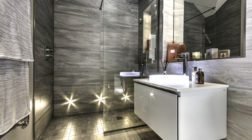
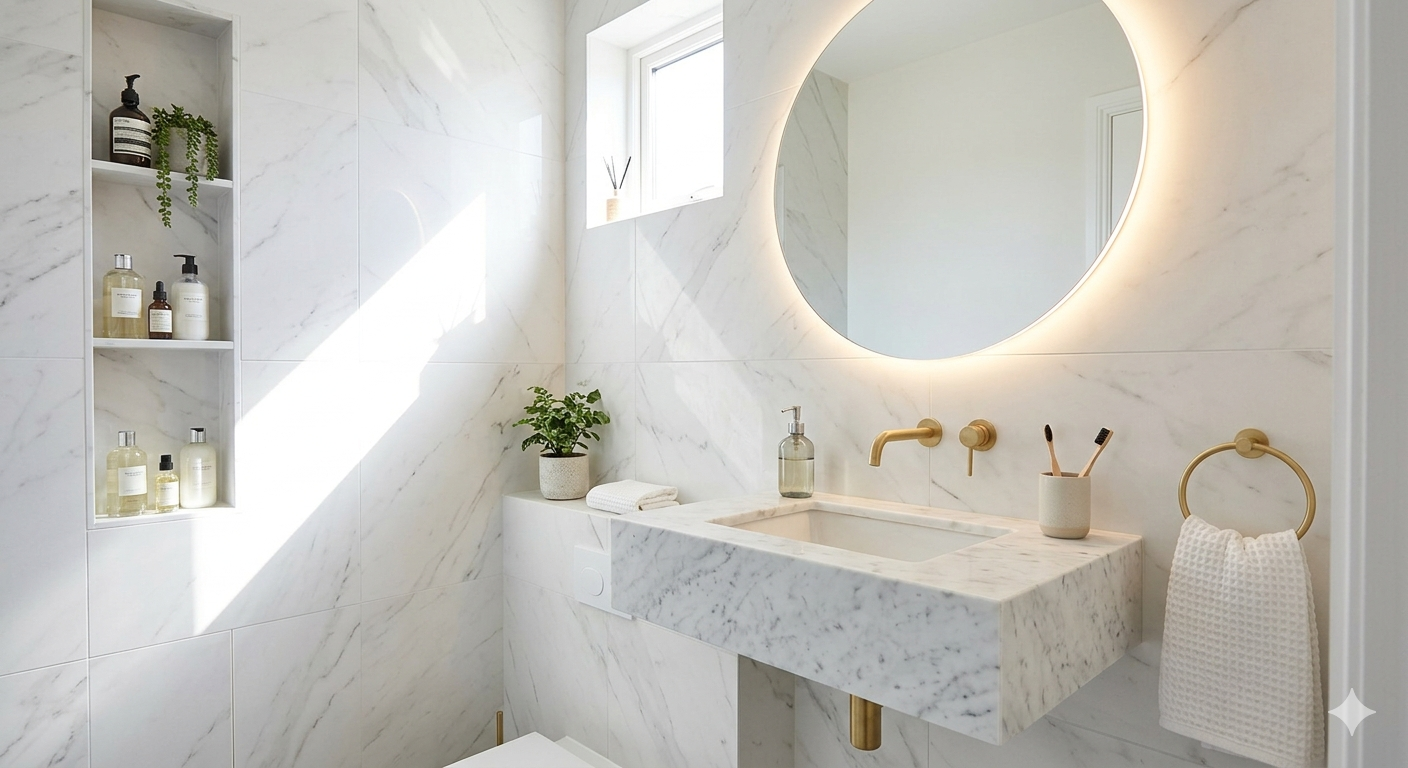
The most effective way to make a small bathroom feel larger is to maximize visible floor space. Traditional vanities that sit flush against the floor create a visual “block” that stops the eye and makes the room feel truncated. By opting for a wall-hung marble basin, you expose the floor tiles all the way to the wall, which immediately creates an airy, open feel.
When you select marble basins that are mounted directly to the wall, you eliminate the bulky cabinetry that often dominates small rooms. This allows for a sleeker profile and provides a sense of “hovering” luxury. In a Brisbane renovation, where light and airflow are highly valued, this floating aesthetic is particularly effective.
2. Integrated Stone Vanities for Seamless Flow
Visual clutter is the enemy of small spaces. When a bathroom features too many contrasting materials—a ceramic sink, a laminate countertop, and tiled splashbacks—the room becomes fragmented. One of the best hacks for spatial design is the use of an integrated marble vanity.
This design involves a single piece of stone where the basin is carved directly into the countertop material. This eliminates the “rim” or “lip” of a standard sink. Because the eye can travel across the surface without interruption, the vanity feels like one continuous, expansive element. Working with specialists in marble stone work allows for this level of precision, ensuring that the veining flows naturally from the counter into the bowl, further enhancing the illusion of continuity.
3. Prioritizing Light-Reflecting Hues
While dark marble like Nero Marquina is undeniably striking, it can sometimes absorb too much light in a windowless ensuite or a tight corner. To open up a space, look toward lighter varieties such as Carrara or Statuario.
The crystalline structure of light-colored marble reflects both natural and artificial light. In a small bathroom, this reflection helps to brighten dark corners and soften the boundaries of the walls. When combined with a large, frameless mirror, a white marble basin acts as a light source in its own right, bouncing brightness around the room and making the ceiling feel higher and the walls feel further apart.
4. Scale and Proportion: The “Hero” Strategy
A common mistake in small bathroom design is choosing tiny fixtures to match the room’s size. Ironically, a collection of small items can make a room look “bitsy” and disorganized. Instead, designers often recommend the “Hero” strategy: choose one significant, high-quality piece to anchor the room.
A bespoke marble basin serves as this anchor. By choosing a slightly larger, well-proportioned basin and keeping the surrounding elements—such as tapware and towel rails—minimalist and slimline, the room gains a sense of grandeur. This redirects the observer’s attention toward the beauty of the marble coffee tables or furniture-inspired stone pieces nearby, rather than the lack of floor space.
5. Utilizing Corner Placements
Corners are frequently underutilized in bathroom layouts. If a standard wall placement feels too tight for movement, a custom-carved corner marble basin can be a game-changer. Corner basins allow for more central floor space to remain clear, facilitating better “traffic flow” through the room.
Because marble can be custom-fabricated to specific dimensions, you aren’t restricted to the standard sizes found in big-box retail stores. A triangular or curved corner stone basin provides all the functional surface area you need while tucking the plumbing into a zone that would otherwise be wasted space.
6. Thin-Rimmed Profiles and Minimalist Edges
In a tight space, every millimeter counts. Heavy, thick-walled ceramic basins can look cumbersome and take up valuable physical and visual volume. Natural stone, however, can be honed down to surprisingly thin profiles while maintaining incredible strength.
Ask for a “pencil edge” or a thin-rimmed basin design. These slim profiles look delicate and sophisticated, taking up less “visual weight” than a standard chunky sink. This minimalist approach allows the natural beauty of the stone to speak for itself without overwhelming the surrounding area.
Technical Maintenance for Longevity
Investing in marble for a high-use area like a bathroom requires a basic understanding of stone care. In Brisbane’s humid climate, moisture management is essential.
- Sealing: Ensure your basin is professionally sealed upon installation. This creates a barrier against water, soap scum, and oils.
- pH Neutral Cleaners: Avoid harsh chemicals or acidic cleaners (like lemon or vinegar), as these can etch the surface of the marble.
- Wipe Down: Simply wiping the basin with a soft cloth after use prevents water spots and mineral buildup, keeping the stone’s reflective quality at its peak.
Frequently Asked Questions
Is marble too heavy for a wall-hung installation in a small bathroom?
Not at all. While marble is dense, modern bracket systems and professional masonry techniques ensure that wall-hung stone basins are perfectly secure. It is essential to have a professional assess the wall stud or masonry strength before installation.
Does marble stain easily in a bathroom setting?
Natural stone is porous, but when sealed correctly, it is highly resistant to moisture. Standard bathroom items like toothpaste or soap won’t cause immediate issues, though it is best to avoid leaving colored hair dyes or heavy oils on the surface for extended periods.
Can I use marble in a bathroom with no windows?
Marble is actually one of the best materials for windowless bathrooms. Its ability to reflect light from vanity lamps and overhead fixtures helps to mitigate the “closed-in” feeling often found in internal ensuites.
What is the best marble finish for a basin?
A “honed” finish (matte) is often preferred for bathrooms as it is more forgiving with water spots and provides a soft, contemporary look. However, a “polished” finish offers maximum light reflection, which is ideal for the “illusion of space” hacks mentioned above.
How do I choose between a vessel basin and an integrated one?
A vessel basin sits on top of a counter and acts as a sculptural piece, which is great for aesthetics. An integrated basin, where the sink is built into the stone slab, is better for saving space and creating a seamless, easy-to-clean environment.

As a lifelong DIY enthusiast, Alex Barton is never afraid to go the extra mile to save a few bucks! From seamless interior decor hacks to effective DIY home renovation tips, he shares a myriad of his experiences for you to unleash your creativity.