Move Out or Make It Yours? The 2026 Money Test
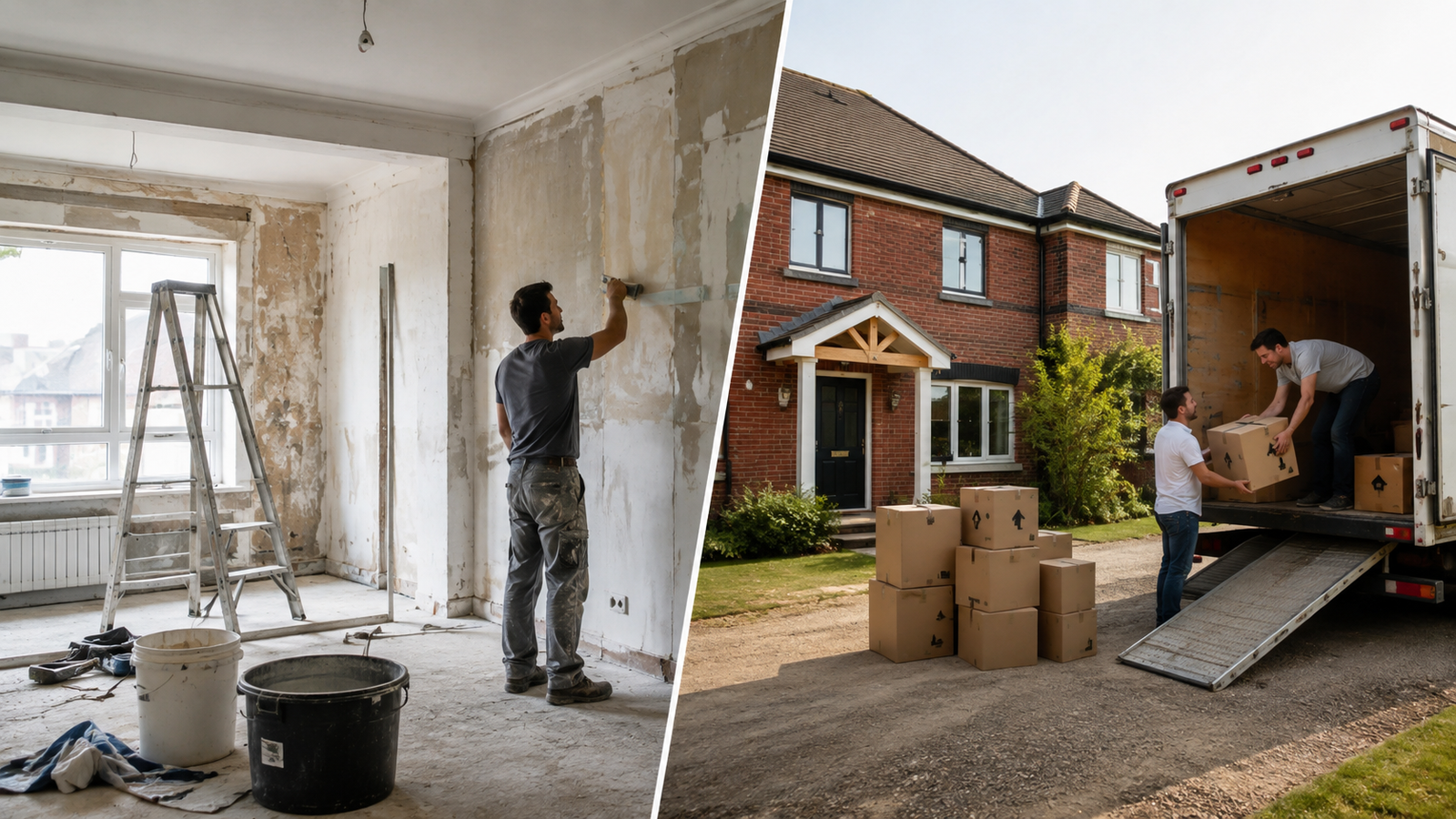
I have been oscillating between the comfort and discomfort of my current home. There is not enough room in the kitchen, the second bedroom isn’t functional, and all the little imperfections say, “Maybe it’s time to move?” But there’s a bigger question: Would it be cheaper to move, or repair what I already have?
It is too easy to think about new rooms, new layouts, perhaps a new neighborhood. However, there is a price to moving. Selling costs, closing costs, moving costs, and all the little things quickly add up. I compared renovation budget vs down payment and looked beyond the obvious price tag before making my final decision. It may seem easier to renovate, but there are many expenses to consider.
Is it really a financial question when it comes to renovating or moving in 2026? Before restumping or using a hammer, take a look at the larger financial picture.
To Sell or Fix Your Home: Why It’s Worth a Second Look
Here are some reasons why homeowners are thinking about giving it a second look before making the final decision.
- Reviewing Your Options: It is very easy to think about a fresh start in a well-furnished house while scrolling through your mobile phone at midnight. Don’t just consider the sticker price. See if your renovation costs will be outpaced by the potential home value, mortgage costs, selling expenses, and how long you plan to live in the home before you make the decision.
- The Bigger Picture: If you love your neighbourhood and plan to stay for several years, renovating may make more sense. If your home doesn’t have the capacity to meet your needs, then you might want to move instead.
Renovating your Home
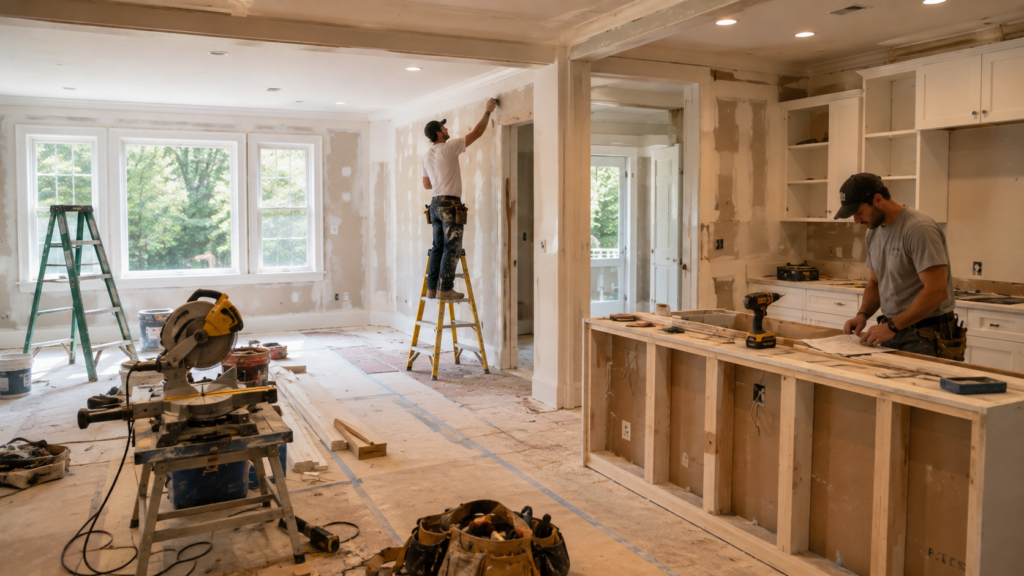
While home renovation can help to make a difference, the expenses can be much more than initially planned.
- Renovation and contractor costs: If you’re asking, “should I fix up my house or sell it?”, begin by getting detailed estimates from qualified contractors. Don’t guess what it will cost. A qualified contractor can give you a realistic estimate for materials, labour, and the work involved
- Surprises, permits, and design fees: Be sure to allow for the cost of permits, architects and designers, and unexpected repairs. Always keep extra money handy so that you can tackle unexpected expenses that can pop up suddenly. Try giving your home a makeover in a budget-friendly way.
- Estimate your return: There is no such thing as a 100% return from a 100% improvement. Consider how much the improvements could increase your home’s value, while also factoring in expenses such as temporary housing during renovation, storage, and maintenance. A real estate pro will be able to assess whether your proposed improvement will be valuable for you in your location or not.
The True Expense of Relocating to a New Home
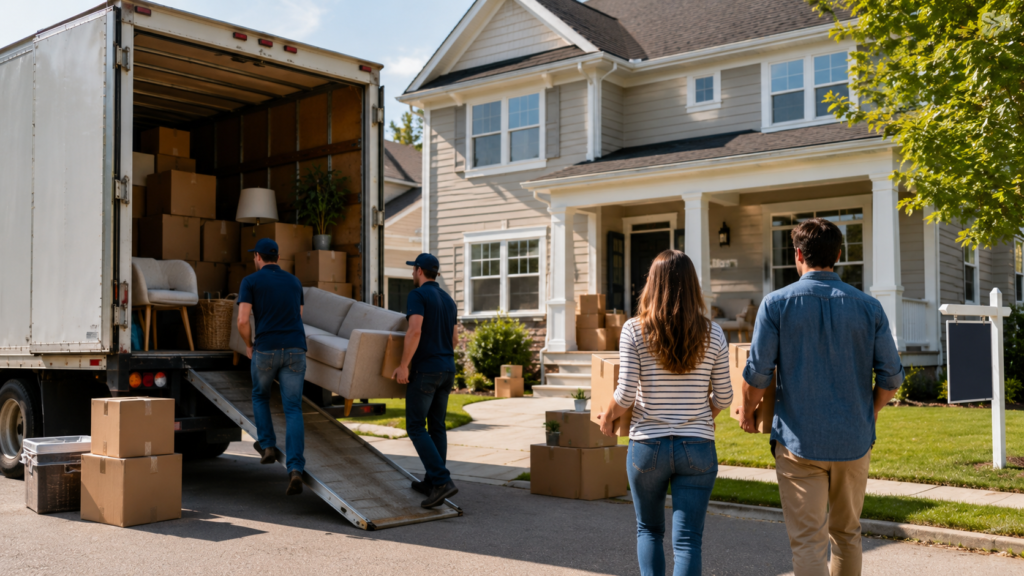
You’ll get a new start when you move, but you may also end up with a surprisingly extended receipt. Moving to a new place can feel like a fresh start, but it can also come with a surprisingly long list of expenses.
- Selling and closing costs: When you sell your home, you may have to pay agent fees, closing costs, taxes, and other selling costs. Then, the fun part about buying another property comes in.
- Moving and setup costs: Hiring movers, fixing up the place, buying new furniture, appliances, paint, storage solutions, and other “small” items can quickly add up and become a significant expense.
- Additional Expenses: If you’re buying a new home, it will come with a larger mortgage, higher monthly payments, or a larger down payment. Do the math on the costs and compare your home renovation vs a new home purchase before assuming that moving automatically gives you the better value. For example:
Renovating costs:
- Renovation: $80,000
- Contingency: $10,000
- Temporary accommodation: $5,000
- Total: $95,000
Meanwhile, moving can cost:
- Selling costs: $30,000
- Buying and closing costs: $20,000
- Moving expenses: $5,000
- Repairs and furnishings: $15,000
- Total additional cost: $70,000
This calculation-based value report will strengthen your decision-making and clear your doubts.
Factors That Can Change the Renovate-or-Move Decision
The decision to renovate or move can be affected by many factors. They are as follows:
- Home equity can help you decide whether a renovation is financially worthwhile. Consider your current home equity, mortgage rate, renovation cost, expected post-renovation value, and how long you plan to stay in the home. Comparing these factors can help you determine whether renovating makes more sense than moving. Explore local real estate listing prices and mortgage rates.
- When you are considering moving and you understand that your new home is going to be more expensive, renovating could seem like the better choice. Question how much value renovation adds before executing the plan.
- Materials, contractor availability, and labor rates all play a significant part in the renovation cost. Moreover, know if your home would be attractive for resale. If demand for homes remains strong in your area, a well-planned renovation can improve your quality of life while potentially increasing your home’s resale value.
Renovating is more likely to make sense when:
- You like your current neighbourhood.
- The home’s structural condition is sound.
- Your problems are mainly cosmetic or functional.
- Renovation costs are comfortably below the cost of moving.
- You plan to stay for several years.
Moving is more likely to make sense when:
- You dislike the location.
- You need significantly more land or space.
- The existing layout cannot reasonably be changed.
- Major structural work would be required.
- Renovation would push the home above comparable properties in the area.
Renovating vs. Moving: Key Cost and Benefit Comparison
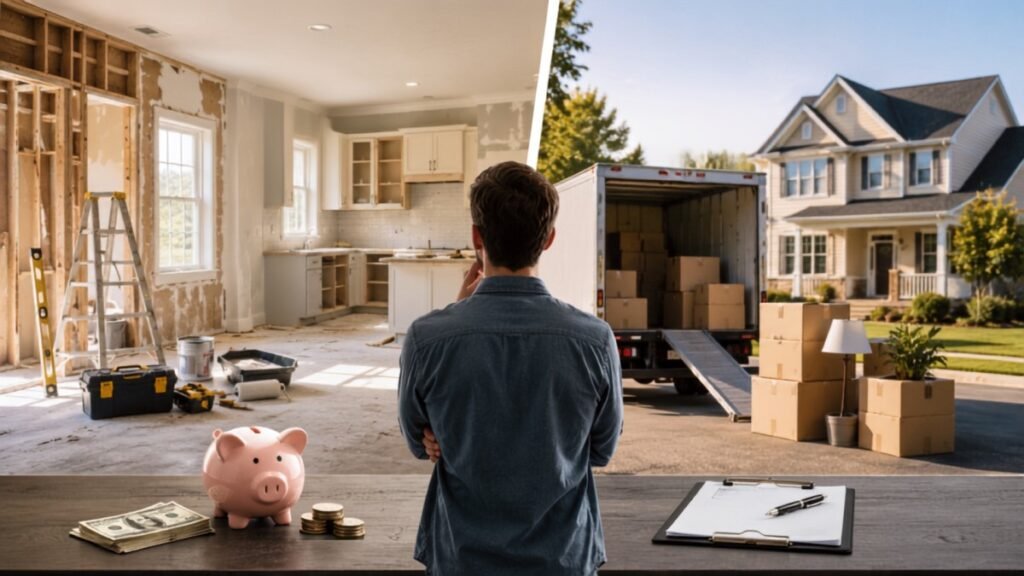
The following table compares the key costs, benefits, risks, and situations where renovating or moving may make more sense.
| Factor | Renovating | Moving |
| Main cost | Contractor, materials and labour | New property, down payment and purchase costs |
| Additional costs | Permits, temporary accommodation, unexpected repairs | Selling costs, closing costs, moving and furnishing |
| Main advantage | Keeps you in your existing location | Gives you a fundamentally different property |
| Main risk | Budget overruns | Higher purchase and financing costs |
| Best suited to | Fixable home problems | Location, size or layout problems |
Renovating can win
Redfin’s 2026 research showed that roughly 65% of homeowners who recently renovated chose to upgrade their current home instead of moving. Change the wording and make it clear this is a US stat, not a universal 2026 trend. The statistic suggests that renovation can be an attractive alternative when homeowners like their location. Whereas, if a homeowner needs a larger lot, a different school district, a fundamentally different location, etc →then renovation cannot solve the underlying problem.
Sometimes proper home renovation planning can help you save a lot of money by not shifting to a new place. Compare the total costs of staying and renovating with selling and moving. Consider your budget, home value, renovation costs, selling expenses, and long-term needs before making the decision.
Final Takeaway
The better option will depend on your overall costs, mortgage, housing market, area, and length of stay. Renovating can solve the issues in your home and still provide you with the space you are looking for, without the hassle of selling and purchasing a home. However, if the location, design, or layout simply refuses to accommodate your needs, perhaps it’s time to start looking elsewhere.
FAQ
1. Does renovating add more value than buying a new home?
While a good strategy can enhance the value of your home, larger remodels might not be worth the expense. Before investing in the renovation, compare the value of the property in detail to avoid future hazards.
2. When does it make more sense to move instead of renovate?
Moving may make more sense when your main problem is the location, lot size, school district, commute, or a fundamental limitation that renovation cannot solve. Compare the full renovation cost with the cost of selling, buying, and financing another property before deciding.
3. Is it worth renovating an old house instead of moving?
It can be, particularly if you adore the location and the house’s issues are manageable. In some cases, however, making all the necessary repairs, dealing with outdated systems, and the rising costs of renovations can make moving a more practical choice.
4. How does housing inventory affect the decision to move?
When people have a limited amount of space available, moving can be difficult because it may be harder to find a home that’s a good match. Limited inventory can make moving harder, but high inventory doesn’t automatically make moving better either.
5. How does renovating affect my property taxes?
Major renovations may increase your property’s assessed value, which could lead to higher property taxes. The impact varies by location and project, so check with your local tax assessor before starting a major renovation.

As a lifelong DIY enthusiast, Alex Barton is never afraid to go the extra mile to save a few bucks! From seamless interior decor hacks to effective DIY home renovation tips, he shares a myriad of his experiences for you to unleash your creativity.