How Smart Home Technology Is Changing Modern Interior Design
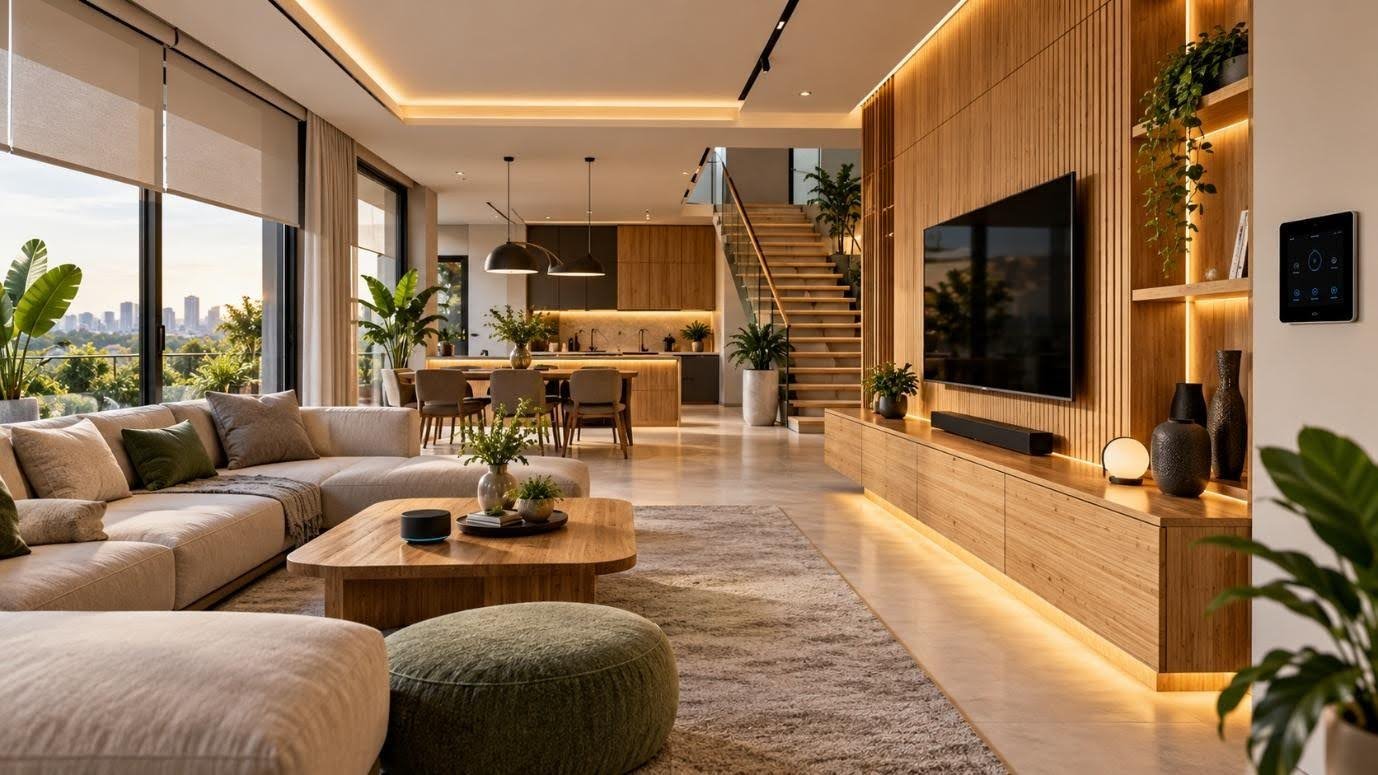
A few years ago, a smart device usually meant a gadget you plugged in and tolerated. It sat on a shelf, trailed a cable, and clashed with the sofa. That’s changing. Designers now plan for connected systems from the first sketch, the same way they plan for windows or storage.
Smart home interior design isn’t about stuffing rooms with screens. It’s about spaces that look good and respond to the people living in them. Aesthetics and technology are increasingly drafted together, and the results show up everywhere, from lighting layouts to the furniture people choose.
The Rise of Smart Home Technology
Connected home technology has moved well past the novelty stage. Smart lighting, thermostats, motorised blinds, security cameras, video doorbells, voice assistants, connected appliances and home entertainment systems now turn up regularly in new builds and renovations. Not every home has all of them, of course. Plenty of people start with one smart speaker or a few bulbs and build from there.
What matters for design is the shift in mindset. These devices used to be add-ons. Now they’re part of the room’s plan: where the hub lives, which walls need power, how a window treatment will be motorised. When technology is considered early, it looks intentional rather than bolted on.
Smart Lighting Is Transforming Interior Spaces
Lighting may be the most visible change. With smart lighting, brightness and colour temperature can be adjusted from an app, a wall panel or a voice command. Motion sensors switch lights on in hallways and bathrooms without anyone fumbling for a switch.
Why does this matter for interiors? Because light changes how everything else looks. Warm, low light makes timber and textiles feel softer, while cooler, brighter light suits kitchens and desks. A matte wall can look flat at noon and rich at dusk.
Designers usually layer ambient lighting with task and accent lighting, then let a control system manage the mix. The trick is keeping the fixtures attractive, or invisible, so the technology supports the look instead of competing with it.
Minimalism and Hidden Technology
Modern interior design leans toward clean lines and clear surfaces, and technology has had to adapt. Wiring runs inside walls. Speakers are built into ceilings or shelving. Charging points sit inside drawers or under countertop edges. Control panels are flush-mounted, and a single slim smart switch can replace a bank of bulky plates.
Motorised blinds are a good example. Tucked into a recessed pocket, they vanish when open and move quietly on a schedule. Nobody sees the mechanism; they just notice the light.
Hidden doesn’t mean hard to use, though. The best installations keep controls obvious and leave access panels for maintenance. A beautiful room that nobody can repair isn’t much of a design success.
Smart Furniture and Flexible Spaces
Furniture is catching up too. Height-adjustable desks remember sitting and standing positions. Some beds adjust firmness or incline, and side tables come with wireless charging built in. Modular sofas, fold-away tables and built-in storage with integrated lighting round out the mix.
The real value shows up in smaller homes. In a compact city apartment, one room often has to be an office by day and a living room by night. Multi-functional pieces make that possible without the clutter.
A few questions are worth asking before buying:
- Does it replace two other pieces, or just add one more?
- Can the electronics be repaired or updated?
- Will it still look good once the tech ages?
Sustainable Materials and Smart Interior Design
Technology isn’t the only force shaping interiors. Material choices matter just as much, and interest in sustainable interior design keeps growing. People want renewable or low-impact materials, finishes that last, and furniture that won’t end up in a skip after five years. Longevity is a form of sustainability, after all.
Bamboo is one option that comes up often. Bamboo plywood can be used for furniture, cabinetry, flooring, wall panels and countertops, and its warm grain pairs nicely with the sleek, neutral look of a connected home. Manufacturers and investors weighing up this market can look at resources like Bamboo Plywood Production Cost Reports to understand production costs and manufacturing requirements. For homeowners, the takeaway is simpler: ask where a material comes from and how long it’ll last.
Wood-based panels also work well alongside smart features, since cable channels and sensor mounting points can be planned into cabinetry from the start.
Smart Homes and Energy Efficiency
Smart thermostats learn routines and adjust heating and cooling to match. Occupancy sensors turn off lights in empty rooms. Smart plugs cut standby power from entertainment units, and energy monitors show which appliances are the hungry ones. Some appliances can even run during off-peak hours where tariffs allow it.
Savings depend on the home and on how people actually use the system, so it’s wise not to expect miracles. Still, energy-efficient homes benefit when design and technology cooperate. Thermostats need sensible placement away from direct sun, sensors need clear lines of sight, and scheduled blinds can reduce heat gain. All of it can be done without making a living room feel like a control room.
Personalisation in Modern Interior Design
Smart home design lets one room do several jobs. A “work” scene might brighten the lights, cool the colour temperature and lower the blinds to cut glare. A “relax” scene dims everything and warms the tone. A bedtime routine might close the curtains, drop the temperature and switch off the living room in one go.
Entertainment settings, voice commands and individual temperature preferences add to this. Two people sharing a home rarely want the same thing, and a responsive interior can handle that. The room stops being fixed. It adjusts to the day.
Technology and the Future of Interior Design
Where next? Probably nothing dramatic overnight. AI-assisted automation is already learning household routines, and voice interfaces are getting better at understanding natural speech. Predictive automation, smart glass that changes tint, integrated sensors and connected furniture are all developing, though adoption will vary by budget and region. The more realistic trend is discretion: technology that does its job quietly.
Taken together, smart home technology is changing interior design by blending functionality, comfort and personalisation with energy efficiency, minimalism and better use of space. Add thoughtful, sustainable materials and the picture is fuller. Future interiors will likely be planned with technology and materials side by side, and the best of them will feel less like a showcase and more like a home.

As a lifelong DIY enthusiast, Alex Barton is never afraid to go the extra mile to save a few bucks! From seamless interior decor hacks to effective DIY home renovation tips, he shares a myriad of his experiences for you to unleash your creativity.