Pavitra Rajaram: The Creative Mind Behind Aditi Rao Hydari & Siddharth’s Chennai Home
Some interior designers follow rules. Some bend them. And then there are designers like Pavitra Rajaram, who looks at the rulebook, raises an eyebrow, and quietly puts it back on the shelf.
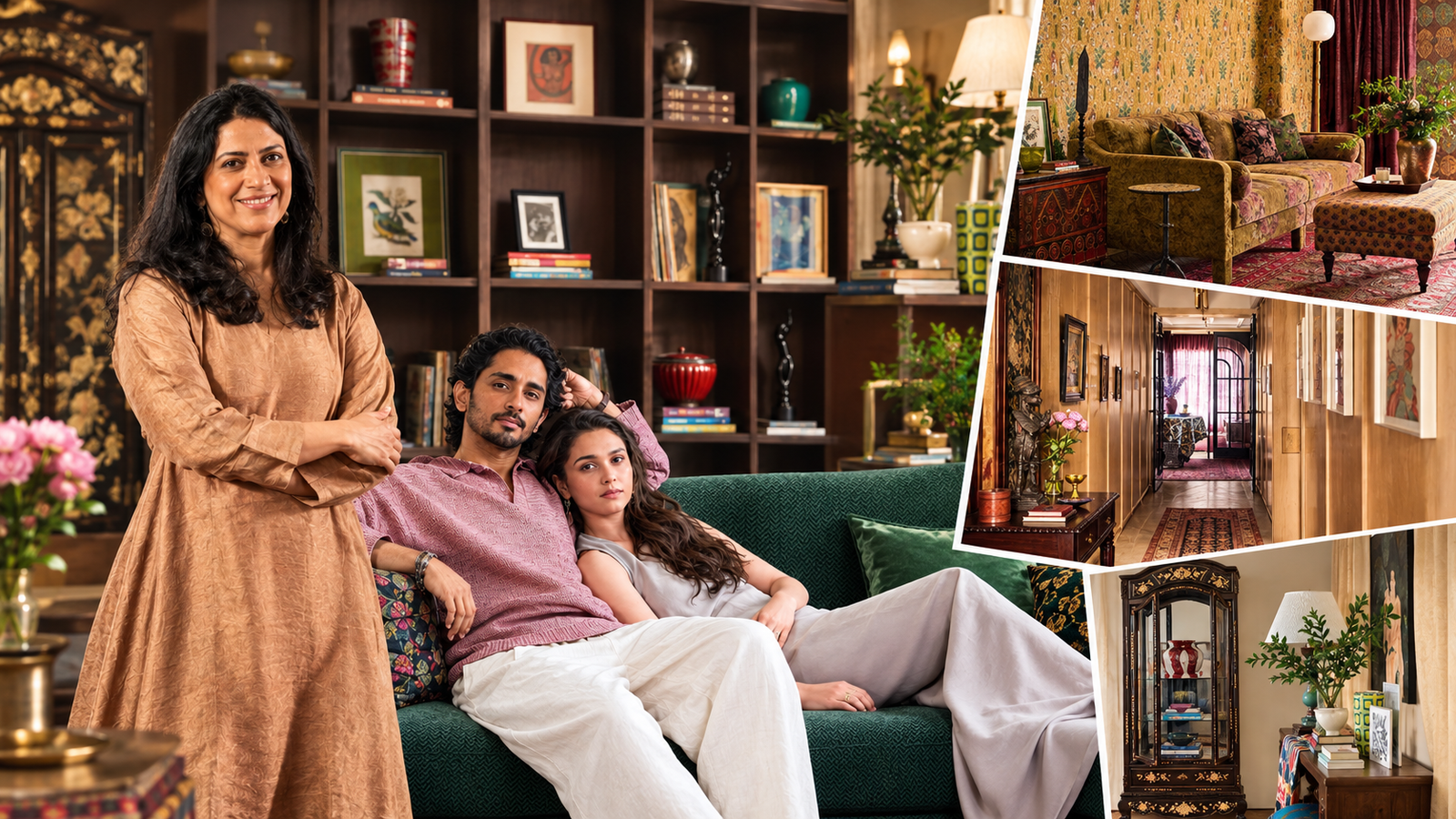
Her interiors are colourful, yet balanced, richly layered without clutter, and classic yet modern. She blends art, craft, vintage items, and personal memories with the effortless confidence of someone who knows beautiful homes need no set formula.
This philosophy shines in one of her recent Chennai residential projects—an apartment originally designed by architect Sruthi C. Reddy and later personalised by Rajaram. It offers a glimpse into the creative thinking of the interior designer of Aditi Rao Hydari and Siddharth’s house.
But this isn’t really a story about a celebrity address.
It’s about why Rajaram’s interiors feel so personal—and what her approach can teach anyone who wants a home with character.
Pavitra Rajaram Believes in Designing Around Stories
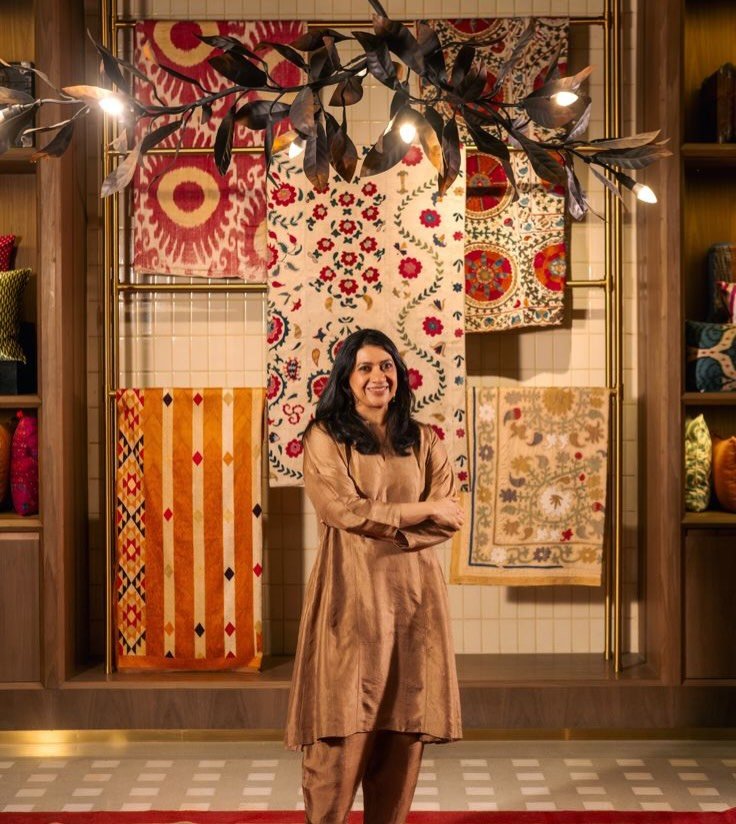
Rajaram’s design practice is rooted in a deceptively simple idea: interiors should tell stories.
Her studio describes its approach as sitting at the intersection of architecture, interiors, and storytelling, with influences ranging from history and craft to contemporary Indian art and global design traditions. The focus is not simply on making a room attractive. It’s about creating spaces where objects, materials, and cultural references develop meaning.
This philosophy immediately separates her work from the kind of decorating where every piece is selected because it happens to be “in.”
Home renovation trends come and go. Stories tend to stay. This is why her work is especially interesting when viewed alongside celebrity home interior design. A famous client’s house could easily become a catalogue of expensive furniture. Rajaram’s approach pushes in the opposite direction. The people’s personality living there remains central.
A room should tell you something about its occupants before it tells you what furniture brand they bought.
The Designer Who Doesn’t Take Colour Rules Too Seriously
Rajaram’s relationship with colour is one of the easiest ways to understand her design philosophy.
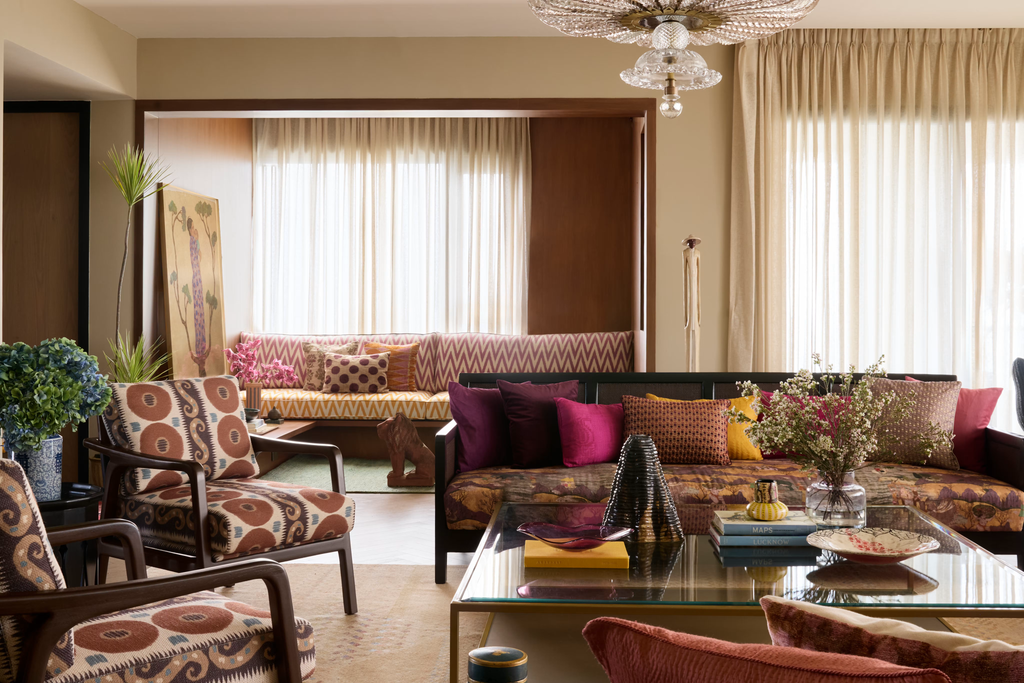
In her conversation with Le Mill, she challenges the idea that colour needs to be used sparingly. She argues that a generous use of colour can bring depth, personality, and interest to a space without automatically creating visual chaos.
This isn’t simply permission to paint your entire house pink. It’s permission to stop being frightened of colour.
Rajaram treats colour as part of a room’s personality. Blue can create calm. Green can bring an earthy quality. Pink can make a dining space feel more intimate. A rich yellow can energise a room.
The important thing is how the colours relate to one another.
That thinking is visible in the celebrity home in Chennai, where individual rooms move through different palettes while still feeling connected. Architectural Digest notes the use of blue, green, pink, yellow, and dusty rose across different spaces.
It’s a useful lesson for anyone exploring traditional South Indian decor too. Heritage-inspired interiors don’t have to be restricted to predictable palettes. Colour can reinterpret tradition rather than simply reproduce it.
And Yes, Dark Walls Can Work
Here’s another design rule Rajaram is happy to question: dark colours make rooms feel smaller.
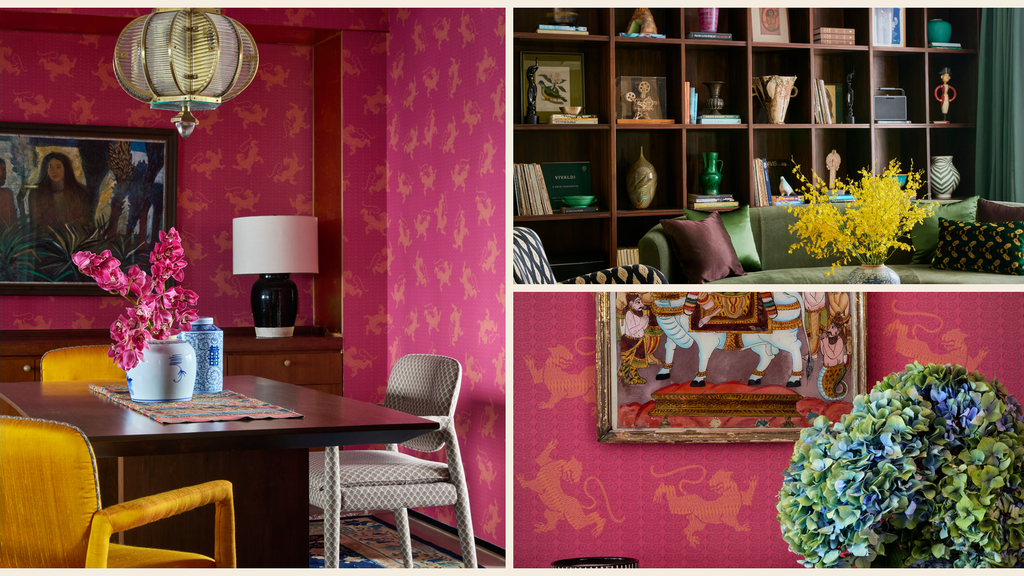
Not necessarily. In her Le Mill interview, she explains that dark walls can create atmosphere and provide a sophisticated background for artwork. The real consideration is lighting.
That’s a far more useful way of approaching interiors than declaring certain colours universally “good” or “bad.”
A small room can have a dramatic wall. A large room can be soft and muted. A home with lots of natural light can handle a deeper palette. It all depends on context.
This idea also explains why Rajaram’s work doesn’t fit neatly into one decorating category. She’s not trying to create a universally acceptable interior. She’s creating the right atmosphere for a particular space and its occupants.
Why Rajaram Mixes Old With New?
One of the strongest characteristics of Rajaram’s work is her ability to make different eras coexist.
She has spoken about combining classical and contemporary pieces rather than treating them as opposing styles. And this approach is central to her wider design vocabulary.
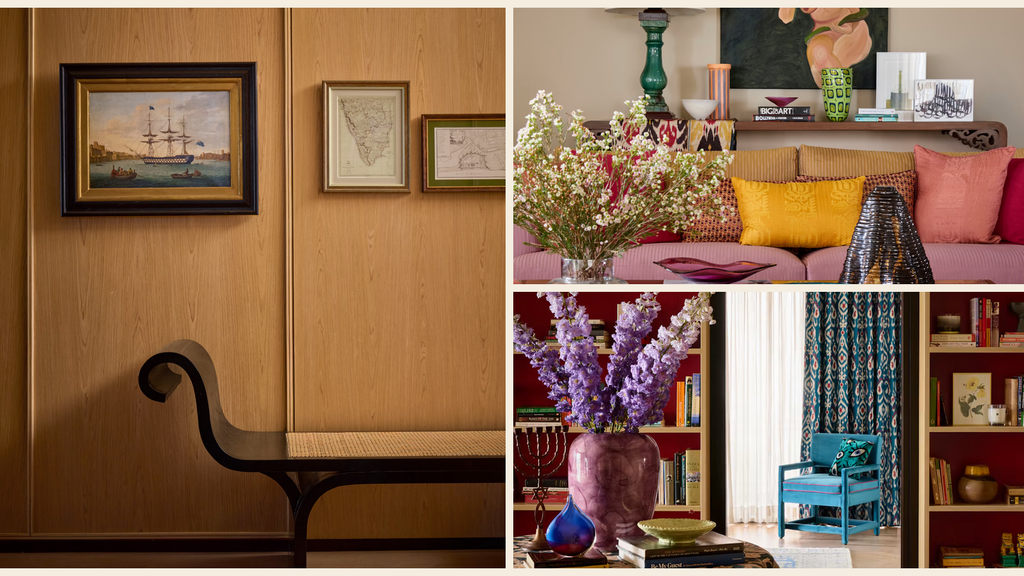
A vintage chair can sit beside a contemporary table. An old painting can share a wall with modern art. In modern home decor , Indian textiles can live comfortably alongside international influences.
The celebrity home interior design conversation becomes more interesting here. The appeal of a designer like Rajaram isn’t simply that she can source beautiful objects—we have enough proof of that in her design showroom, Nilaya Anthology, in Mumbai. It is that she knows how to make seemingly unrelated things belong together.
Her studio’s work draws on cultural histories, crafts, and artistic traditions, creating spaces that feel layered rather than themed. There’s a fine line between “eclectic” and “everything I’ve ever bought.” Rajaram stays on the right side of it.
Pattern-on-Pattern Without the Panic
If you have ever been told that 2 patterns should never compete for attention, Rajaram has a different opinion. She has described pattern-on-pattern as a way of creating warmth and intrigue. Her approach isn’t throwing every print into the room and hoping for the best. Scale, colour, texture, and repetition still matter.
A patterned wallpaper can work with a printed chair. A busy rug can sit beneath a more restrained piece of furniture. A bold textile can become the bridge between two otherwise different colours. The result feels collected rather than coordinated. And honestly, that’s often what separates memorable celeb homes from a perfectly styled showroom.
Collecting, Rather Than Decorating
Rajaram’s attitude towards objects may be the most relatable part of her philosophy.
She has spoken about collecting things that bring joy rather than obsessing over trends. She also believes beautiful and expensive objects should actually be used rather than treated as untouchable museum pieces.
This philosophy is visible throughout Siddharth and Aditi Rao Hydari’s Chennai house. Architectural Digest highlights vintage furniture, a Turkish runner, Japanese woodblock prints, Murano glass ceramics, artwork, and other collected objects.
That’s what makes celebrity lifestyle and home decor particularly fascinating when viewed through Rajaram’s work. The interesting question is not, “How expensive is this object?” It is, “Why is this object here?”
An inherited cabinet has a different emotional weight from a cabinet purchased yesterday. A travel find carries a different story from something chosen because it appeared in a catalogue. The home becomes an archive of experience.
Architecture Provides the Foundation
Before Rajaram’s colours, patterns, and collected objects entered the picture, there was the architecture.
Chennai-based architect Sruthi C. Reddy of CeeBroS Design Works originally designed the apartment. Her practice works across architecture, interiors, and related design disciplines, with an interest in contemporary spaces informed by heritage, craft, and context.
The nearly 4,000-square-foot apartment occupies the 18th floor and has views toward Chennai and the sea. Architectural Digest describes a long corridor that acts as the residence’s spine, connecting its major spaces.
While the architectural foundation is important, Rajaram’s contribution is where the home acquires much of its visual personality.
Think of it this way: architecture gives a home its bones. Interior design gives those bones a wardrobe—and, in Rajaram’s case, a rather fabulous one.
A Lesson in Chennai Home Architecture
How Rajaram approaches a Chennai residence is worth noticing. The design doesn’t attempt to create a stereotypical version of the city. Instead, references to place appear through objects, art, materials, and personal associations.
That makes the home styling of Aditi Rao Hydari and Siddharth’s Chennai home a useful example of how storytelling works without becoming too literal.
Historical references, Indian craft, and vintage objects blend seamlessly with modern living, international design, and contemporary furniture. The outcome feels deeply rooted in its location without turning the home into a cultural theme park.
As the interior designer of Aditi Rao Hydari and Siddharth’s house, this distinction is especially valuable. Regional identity doesn’t have to mean reproducing a catalogue of recognisable motifs. It can be quieter and more personal.
The Chennai Home as a Case Study in Personal Design
The celebrity couple’s house offers a particularly clear example of personal design because its interiors aren’t built around a single aesthetic.
The colour changes. The pattern changes. The furniture moves between periods. The objects come from different cultural influences. Yet the spaces still feel connected. That’s because Rajaram isn’t designing each element in isolation. She’s creating relationships between them.
This is also why searching for the “perfect” design style can be misleading. A home doesn’t necessarily need to be entirely contemporary, traditional, minimalist, or maximalist. It needs to make sense as a whole.
What Rajaram Teaches Us About Celebrity Homes?
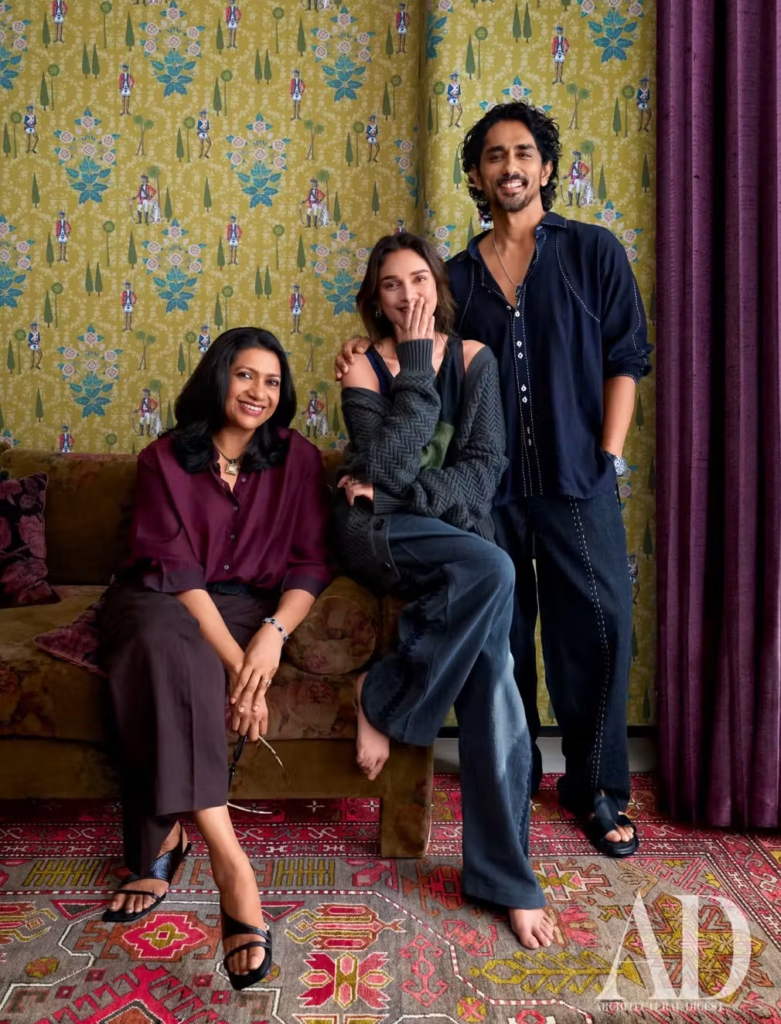
The interior designers behind celebrity homes often become part of the fascination surrounding a property, but the most useful home interior lessons from their work rarely involve copying a particular room.
Rajaram’s approach offers a different takeaway. So –
- Collect what you love
- Use colour with confidence
- Mix periods
- Let patterns interact
- Don’t be afraid of dark walls
- Give old objects a place beside new ones
- Design for the people who live in the space
These principles are surprisingly democratic. You don’t need an 18th-floor apartment or a collection of Murano glass to use them. A second-hand chair can work. Your grandmother’s old cabinet can work. A strange painting you bought on holiday can work. Even that slightly questionable lamp you refuse to throw away can work. If it tells your story, it has earned its place.
Rajaram’s work is worth studying—whether that’s a South Indian celeb’s home or an art foundation. She’s not interested in making every home look like a Pavitra Rajaram interior. Instead, she creates a framework in which the client’s personality, memories, and objects can take centre stage.
For anyone following Chennai celebrity house designers, Rajaram’s work is a reminder that luxury doesn’t have to mean uniformity. A sophisticated interior can be playful. A heritage reference can feel modern. A room can be packed with pattern and still feel calm.
And a home can be beautifully designed without looking as though a designer has just left the building. Perhaps that’s Rajaram’s greatest trick. She designs the space. Then she lets the people, objects and stories take over.
FAQs
- Who designed Aditi Rao Hydari and Siddharth’s Chennai home?
The residence was originally designed by architect Sruthi C. Reddy. The couple later collaborated with interior designer Pavitra Rajaram to personalise the home with custom patterns, vintage pieces, and artwork.
- What is the interior style of Aditi Rao Hydari’s new home?
The interior style is a vibrant, old-world maximalist design that blends traditional charm with modern elegance. It features warm, earthy tones alongside bold, colourful palettes (such as pink dining walls and a yellow TV lounge), layered textiles, custom patterns, and curated vintage furnishings.
- What inspired the design of Aditi Rao Hydari’s home?
The design was inspired by the couple’s personal histories, travel memories, and artistic instincts. Key design highlights include a primary bedroom inspired by Srinagar’s Shalimar Bagh with floral patterns, historical artwork, and old Chennai maps reflecting Sidharth’s connection to the city, and personal archives, including vintage vinyl records and Japanese woodblock prints.
- How big is Aditi Rao Hydari and Siddharth’s Chennai house?
The home is a 4,000-square-foot apartment located on the 18th floor.

As a lifelong DIY enthusiast, Alex Barton is never afraid to go the extra mile to save a few bucks! From seamless interior decor hacks to effective DIY home renovation tips, he shares a myriad of his experiences for you to unleash your creativity.