Making Your Task of CCTV Security Camera Installation Easier
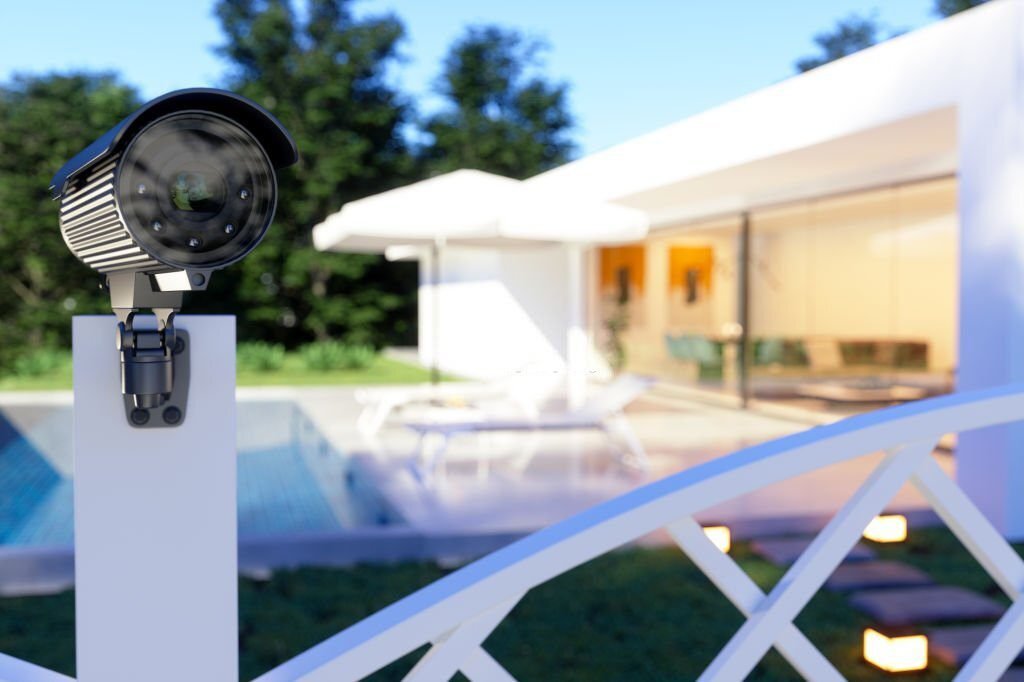
As per official records, there were 192,060 cases of burglary in homes registered across England and Wales in the year that ended in March 2022. In other words, the record says there were 526 home burglaries per day, and a house was burgled every 164 seconds. These statistics are scary, but unfortunately, you cannot deny the truth. In this intimidating atmosphere, what can one do? This question seems to be most relevant. One of the sensible steps that homeowners can take in the wake of rapidly increasing incidents of home burglaries is investing in additional security measures like motion detectors and CCTV cameras. CCTV home camera installation discourages burglars from breaking into your home. Moreover, these closed-circuit cameras make it easier for you to report the matter to the police. As such, identifying the miscreants also becomes easier in that circumstance thanks to CCTV footage.
The latest range of CCTV cameras is designed in such a way that it is easy to install. You do not need professionals to install the device within your property.
Where to mount your CCTV cameras?
Do you know what the first step is in installing security cameras? According to professionals trained in CCTV installation in London, it is planning the right positions for the cameras. Other than that, the range of the cameras is important. The cables of these devices must be long enough to connect to the nearest electrical sockets within your property. On the other hand, if you want to avoid the mess of wires, there is the option of wireless devices for you. Choosing the perfect CCTV camera installation location is crucial to ensure maximum security. Setting up the cameras at definite angles and spaces calls for maximum coverage and also deters potential intruders.
In the following section of this blog post, let us explore a few ideal places in homes where you can place your security cameras.
Entrances at the front, side, and back
You should put your security cameras on the driveway or walkway. This way, you can capture the faces of every individual who walks up to your door. To make sure people cannot tamper with the camera or throw items at it, put a wire cage around it. It is even better if you mount it at a height that is difficult to reach from the ground level. It is important to install cameras at patios and French doors. These two are the most vulnerable areas of any home for break-ins.
Windows on the ground floor
Usually, burglars prefer breaking in through windows that do not face the street. To prevent burglary in your home, install security cameras in these areas. You should even consider installing smart window locks to reinforce your security.
Detached buildings and garages
A large number of homeowners consider that there is no need to reinforce security in detached buildings and garages. As a result, burglars often prefer these detached structures to break into your property. But your WI-Fi range may not cover these remote locations of your property. In that case, you may make use of a range extender. Alternatively, consider installing a camera here that does not require an Internet connection.
Backyard
Your outdoor cameras should not leave any blind spots in your backyard. The security devices must cover every square inch of the backyard. You should provide your security cameras installed in the backyard with security lights. Illumination further deters burglars from going anywhere near your property. This proves how outdoor security camera installation can keep your property safe and secure from potential intruders.
Second floor
Professionals who deal in CCTV installation in the UK suggest securing the main hallway on the second floor with an indoor camera. This helps safeguard your valuables. This also proves helpful by providing more video evidence in case of a burglary.
What You Need Before CCTV Installation?
Before you start, gather the CCTV camera installation requirements you need to avoid interruptions during setup. Having the right equipment and tools ready can also make your installation smoother and help you position each camera correctly.
- CCTV cameras: Choose cameras based on where you plan to install them, such as indoor areas, entrances, driveways, or other vulnerable spots.
- DVR or NVR: A DVR works with compatible analog cameras, while an NVR records footage from network-based IP cameras.
- Hard drive/storage: Install a suitable surveillance hard drive with enough capacity to store your recordings for the required number of days.
- Power supply: Make sure you have compatible power adapters or a suitable power source for all your cameras.
- Ethernet/Cat6 cables: Use Ethernet or Cat6 cables to connect IP cameras to your network, NVR, or PoE equipment.
- BNC cables: Analog CCTV systems may require BNC cables to connect cameras to the DVR for video transmission.
- PoE switch: A PoE switch can supply both power and data to compatible IP cameras through a single Ethernet cable.
- Drill and drill bits: Keep a drill and suitable drill bits handy for making clean holes through walls or other mounting surfaces.
- Wall anchors/screws: Use appropriate anchors and screws to securely attach camera brackets to walls or ceilings. These are some of the most important CCTV camera accessories to use, but people often forget to consider them until the last moment.
- Cable clips/conduits: Secure exposed cables with clips or protect them inside conduits to keep your setup neat and reduce cable damage.
- Monitor: Connect a monitor to your DVR or NVR so you can view live footage and adjust camera positions during installation.
- Router/network connection: An internet-connected router is needed for network cameras and for remotely accessing footage through compatible apps.
For better coverage, consider the best places to install CCTV cameras before drilling or fixing any brackets.
Installing a CCTV camera – the procedure
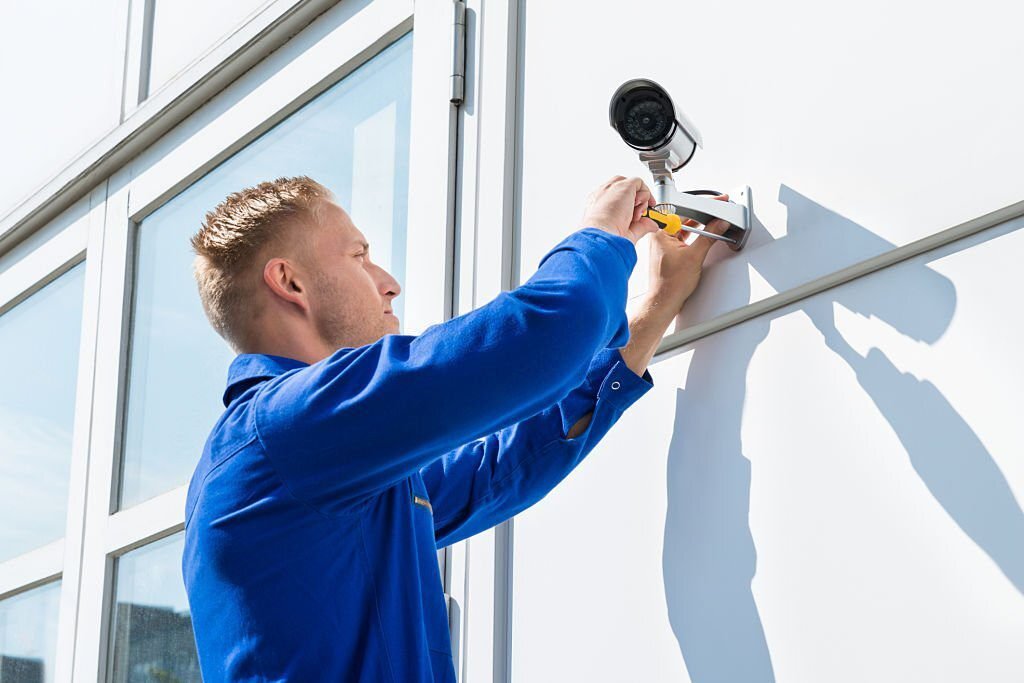
Home security camera installation is easier if you have professionals to help you out!
Step 1: Assess Your Security Needs
Start by identifying areas that need monitoring, such as entrances, driveways, hallways, and other vulnerable spots. This helps you decide how many cameras you need.
Step 2: Choose the Right Camera Type
Choose between wired, wireless, analog, or IP cameras based on your property and setup. Consider features such as night vision, motion detection, and the required CCTV camera viewing angle.
Step 3: Plan Camera Locations
Position cameras where they provide clear coverage without major blind spots. For indoor security camera placement, avoid pointing them directly at bright windows or lights.
Step 4: Test Camera Locations
Connect each camera temporarily to its power source and DVR or NVR to check the video feed. Testing first can help you spot faulty equipment before mounting.
Step 5: Mark and Drill Mounting Points
Mark the bracket positions on the wall or ceiling, ensuring they’re stable and suitable for the camera. Drill holes large enough for the required plugs and cables.
Step 6: Mount the Cameras
Secure the brackets using suitable screws and wall anchors, then attach each camera firmly. Adjust the camera direction to cover the intended area.
Step 7: Run and Secure Cables
Plan neat cable pathways between the camera and recording device. Use cable clips, conduits, or wire moldings to protect cables and prevent tampering.
Step 8: Connect Cameras to DVR/NVR
Connect analog cameras using compatible BNC cables and IP cameras using Ethernet or Cat6 cables. Then connect the DVR or NVR to your monitor.
Step 9: Configure Recording and Storage
Install the surveillance hard drive and configure recording settings on your DVR or NVR. Check that every camera is recording properly.
Step 10: Connect Remote/Mobile Viewing
Connect the system to your router and follow the manufacturer’s app instructions for remote access. This lets you view camera feeds from your smartphone when you’re away.
CCTV Camera Installation Cost
The CCTV camera installation cost varies depending on several factors, like-
– The type of camera that you’re installing. – The number of cameras that you need. – Are your cameras wired or wireless? – The complexity of installing the cameras. – Labor charges for the entire procedure.
The estimated cost of a camera ranges from $50 to $200, while professional installation adds another $100 to $200 per camera.
Once each of the steps mentioned above is carefully executed, it is time to switch the power on to check the video feed. Make sure each camera is capturing feed from its intended area of operation. You may have to adjust the camera angles to sort out blind spots. In case some of the cameras are not working, you should check the connections as well as the network cables.
Feature | Wired Cameras | Wireless Cameras |
Installation | More complex | Easier |
Reliability | Very stable | Depends on Wi-Fi |
Power | Continuous | Battery/plug-in |
Best for | Permanent setups | Flexible placement |
Maintenance | Lower | Battery charging may be needed |
Wired vs Wireless Security Cameras: Which is Better?
Choosing between wired and wireless cameras depends on your property, budget, and preferred ways to set up security cameras.

As a lifelong DIY enthusiast, Alex Barton is never afraid to go the extra mile to save a few bucks! From seamless interior decor hacks to effective DIY home renovation tips, he shares a myriad of his experiences for you to unleash your creativity.