How to Protect Your Garden from Frostbite: Useful Tips for Winter?

If you’re a phytophile, the winter season might just bring in more troubles rather than happiness in your life!
Why so?
Because all it takes is a snap of cold wind, and some frost deposits, and your favorite lush green oasis can turn into a graveyard overnight! The sudden temperature drop happens to be a dreadful enemy for your green friends. And unless you’re aware of the garden protection tips for winter season, you’ll have to face this issue every year!
So, if you’re searching for ways to make your planters survive the freezing months, this blog is for you. Here, we’ve discussed some of the essential hacks and tips that can help you save your garden from the dreadful clutch of frostbite.
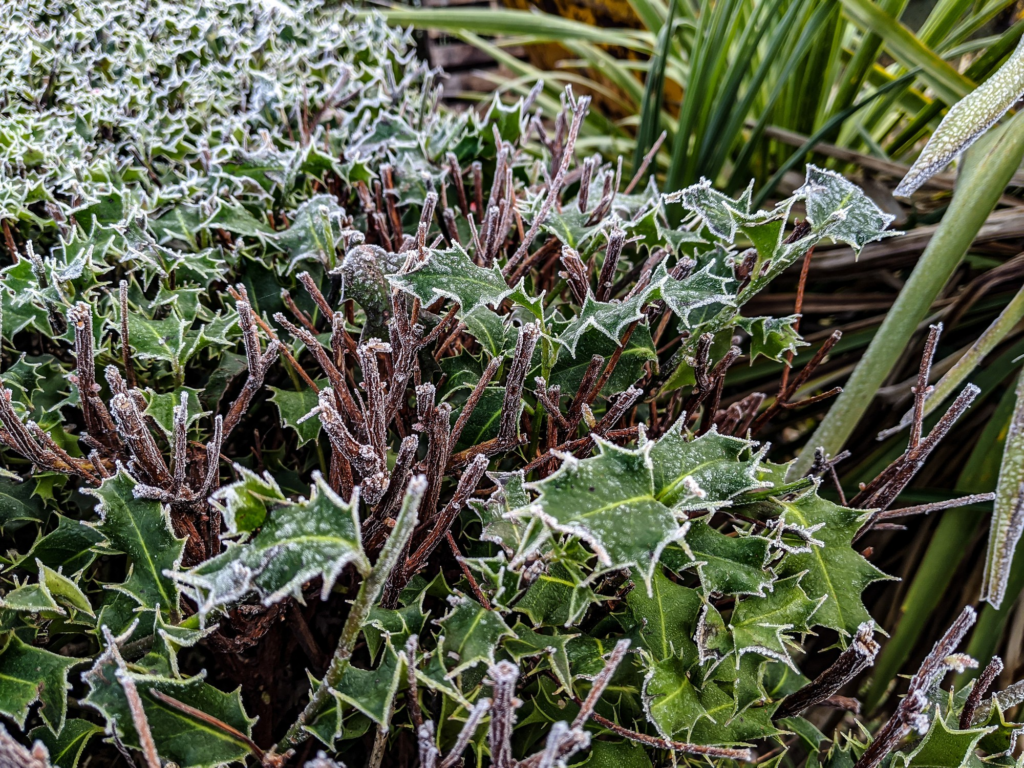
Frost: A Deadly Threat to Your Beloved Planters!
A thin sheet of ice over the leaves and branches might look beautiful. But what you might not realize is that they pose a deadly threat to plants.
What happens is that when frost settles on the leaves, it sucks away the moisture from the cells, which causes the plants to die. You might’ve seen that the leaves turn black and crispy after a cold night. Well, that’s exactly what a ‘frostbite’ looks like!
So, what are the ways to save your garden from frost? It turns out that you don’t need to have a degree in botany to do so! All you need to do is understand the cold-tolerance threshold of your plants. Half of the battle is won there only.
For instance, if you’ve planted seedlings in your garden, they might not be able to grow if the temperature drops below 32- 33°F. In fact, some tropical plants have low-temperature thresholds, as they become limp when the thermometer shows 40°F!
Note: If you have a bougainvillea growing in your garden, here are some winterproofing hacks that you should be aware of to help it survive all year long!

Know how to Protect Your Garden in the Chilly Season
Now that you know when to take the precaution, let’s address the elephant in the room right away. So, here are a handful of the most effective hacks that can help your plants stay warm and survive the winter season-
- Keep them hydrated
This idea might sound counterintuitive, but it actually works! How?
Well, rather than dried soil, moist soil stays warmer as it radiates heat. This creates a thermal mass around the roots and keeps the plant warm. So, the moment a freeze is predicted by the weather forecast, water the soil directly instead of just splashing some on the leaves.
However, don’t get carried away and overwater the soil. Remember, you want it to be moist. Soil soaked in water might just freeze the roots as well!
- Make use of mulch
Another brilliant way to protect plants from cold temperatures is to use dry mulch, like dried leaves, chipped bark, or straw.
How does that help? Well, mulch serves as a warm layer of blanket that regulates the soil temperature. It works just like a thick protective layer for your plants. What’s best about it is that you can find mulch in your own yard, which makes it one of the most cost-effective ways to winterproof your favorite planters!
Pro tip: When layering the soil with mulch, make sure to make the layer at least two to three inches deep for the best results.
- Use a blanket to cover your plants!
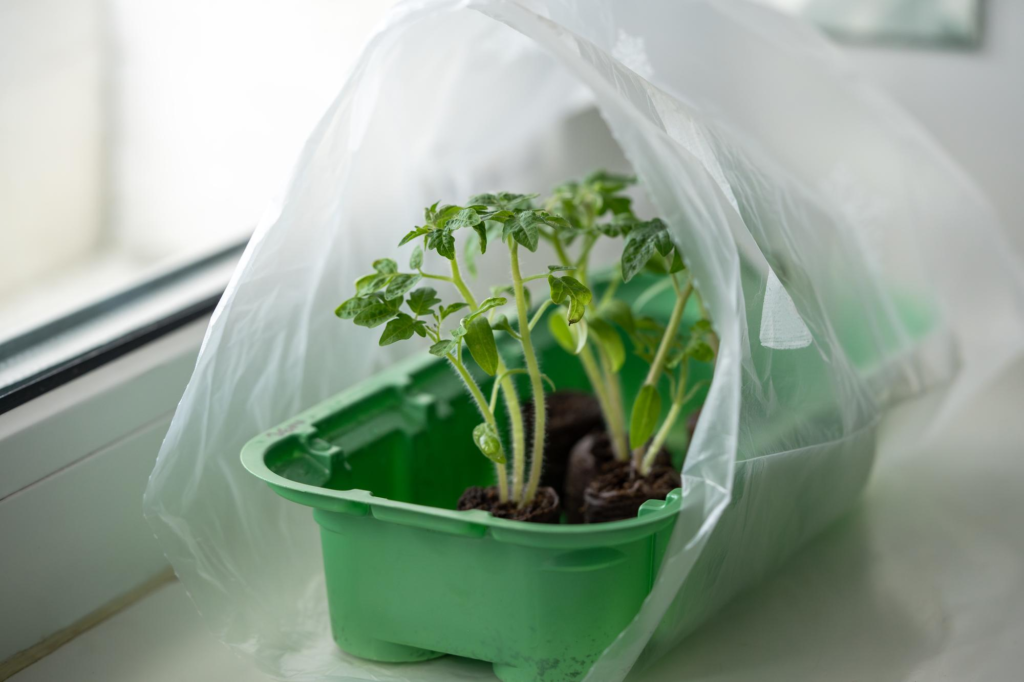
Covering your plants with blankets is one of the most effective ways to protect your plants in the garden. But there are certain things you need to keep in mind if you’re choosing this option.
First of all, if you use a plastic cover, make sure that it doesn’t touch the plant’s surface, as it damages the leaves. Instead, opt for breathable fabrics like old bedsheets or heavy towels, and set it up like a tent over your plants for the best protection.
Otherwise, if you’re looking for a professional solution, look for the best frost covers for plants at the local nursery. These are specialized fabrics that allow light and air to circulate, while trapping heat from the ground.

- Relocate
If you don’t have large plants in your garden, the best way to save them is to relocate them indoors! Your garage, or basement, are some of the perfect places, as they save your plants from the freezing weather, and also isn’t too warm to shock them!
But what if you can’t bring your plants indoors? Well, the best way is to place them close to each other and cover them with a lightweight blanket.
How to Save Frost-Damaged Plants?
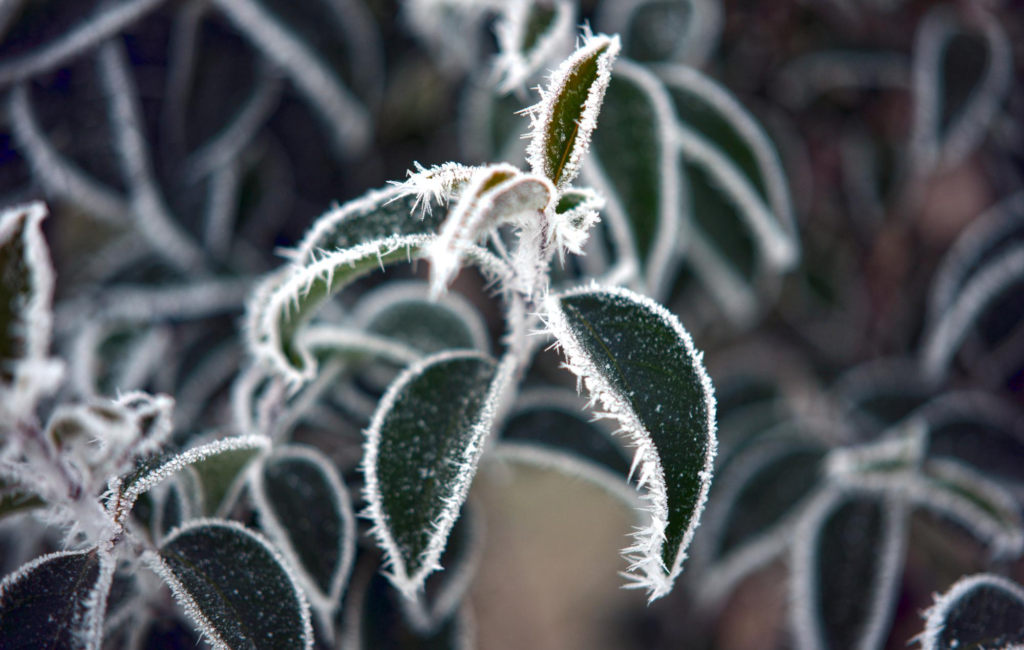
Sometimes, even after taking good care, your plants might suffer from frostbite!
But there’s no reason to be sad. Because there is still hope for you to save your beloved planters. Here’s how-
1. Don’t prune the frostbitten parts immediately
Frostbite causes the affected leaves and branches to die. However, if your plant has been damaged by frost, don’t prune those dead parts right away. These dead parts offer protection while the plant heals. So, if you see that some parts of the plant are alive, give them some time to bounce back. Prune it only when you see new growth.
2. Don’t add fertilizers to the soil
Fertilizers are nutrition-boosting elements that enrich your plants. However, frost-damaged plants need to heal, and not create new growth! So, remember the rule of thumb- wait at least 2 weeks after the frost before you start adding fertilizers to the soil.
3. Continue watering
Watering your plants after frost helps thaw the frozen soil. Not just that, but it also helps in the plant’s recovery. Especially, if you have perennial varieties in your garden, their roots might remain healthy. So, keeping the soil moist can insulate the roots and keep your plants alive.
Before you go: If you’re beginning your journey as a plant parent, consider taking a look at this beginner’s guide to plant parenting to understand the basics.
Wrapping Up
The winter season is indeed tough for phytophiles. However, the adversities must not affect your love for the greens! Therefore, as the temperatures start to drop, observe closely and adapt your winterproofing strategies as and when needed.
Having said that, every garden is different, and you will soon learn which corners of your garden catch the most frost. Once you’ve taken that into account, what’s left for you is to take the aforementioned winter protection hacks for plants and the garden.
F.A.Qs
1. How do you protect garden plants from frost?
Here are some of the most effective ways to protect your garden plants from frost-
- Use professional-grade frost covers or breathable fabrics to cover them up.
- Water the soil at midday and make sure to keep it moist.
- Relocate them inside your house.
- Use mulch to regulate the soil temperature.
2. Can you put frost cloth directly on plants?
Yes, you can place lightweight frost cloths or frost blankets directly on the plants to protect them from the freezing weather.
3. What is the best fabric to cover plants from frost?
Materials like burlap, bed sheets, or frost cloths are some of the best fabrics to cover your plants and protect them from frost.
4. How to properly use a frost cloth?
When draping your plant with a frost cloth, cover it entirely and extend the cloth to the ground. After that, secure the edges with rocks or sticks. This creates a seal that helps keep your plants warm during those freezing nights.
5. How to save plants exposed to frost?
The best practices to save frost-damaged plants are-
- Leave it to bask in sunlight.
- Prune the damaged parts, but only when you see new growth.
- Wait for at least 2 weeks before adding fertilizer to the soil.
- Keep watering.

As a lifelong DIY enthusiast, Alex Barton is never afraid to go the extra mile to save a few bucks! From seamless interior decor hacks to effective DIY home renovation tips, he shares a myriad of his experiences for you to unleash your creativity.