Marble Kitchen Countertops: Colors, Patterns, and Design Tips
Marble can give a kitchen a bright, elegant, and timeless appearance. However, choosing the right marble involves more than selecting a stone that looks beautiful in a showroom. I also consider the color, veining, finish, cabinet style, lighting, and daily maintenance needs. In this countertop guide, I will explain how to choose marble that fits both the kitchen design and the way the space is used.
When I help plan a marble kitchen, I start by studying the complete room rather than looking at the countertop alone. The cabinets, flooring, backsplash, wall color, and hardware should all support one another. Keystone Granite OH is a local brand that can help customers compare marble slabs and understand how different colors may look in their homes.
Before making a final decision, I recommend viewing full slabs of marble countertops for kitchen projects instead of relying on small samples. A small piece may show only one part of the stone, while a full slab reveals the actual veining, color changes, and natural movement. Therefore, seeing the complete surface can help prevent unexpected design results.
Key Takeaways
- Marble color should coordinate with the cabinets, flooring, backsplash, and lighting.
- Soft veining creates a calm appearance, while bold veining makes the countertop a strong focal point.
- Proper sealing, cleaning, and daily care can help marble stay attractive for many years.
Why Marble Remains Popular in Kitchen Design?
Marble has been used in buildings and homes for centuries. Even so, it continues to fit modern kitchen designs. Its natural patterns give every slab a unique appearance, so no two marble countertops look the same.
In addition, marble works with many design styles. It can look traditional when paired with raised-panel cabinets and warm metal fixtures. However, it can also feel modern beside flat-panel cabinets, simple hardware, and clean white walls.
I also like marble because it can add movement without requiring bright colors. The veins create visual interest, while the natural background often remains neutral. As a result, homeowners can change paint colors, furniture, or decorative items without replacing the countertop.
However, marble is not the right material for every household. It can scratch, stain, and react with acidic foods if it does not receive proper care. Therefore, I always explain both its beauty and its maintenance needs before recommending it.
Understanding Marble Countertop Colors
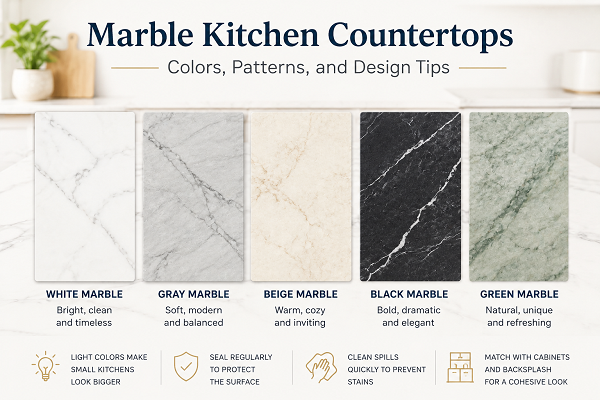
Marble comes in more colors than many people expect. White remains the most familiar option, but homeowners can also choose gray, beige, cream, black, green, brown, and other natural shades.
The best color depends on the kitchen layout and the desired atmosphere. For example, pale marble can brighten a narrow kitchen. Meanwhile, dark marble can create a dramatic focal point in a large room.
I do not choose marble color based only on current trends. Instead, I consider whether the color will still work if the homeowner changes the backsplash, wall paint, or cabinet hardware later.
White Marble
White marble creates a clean, bright, and classic appearance. It can make a small kitchen feel more open because the light background reflects natural and artificial light.
However, white marble is rarely completely plain. It may include gray, gold, beige, or blue-gray veins. Therefore, I compare these undertones with the cabinets and flooring before approving a slab.
White marble works especially well with:
- White, navy, gray, or black cabinets
- Natural wood cabinets
- Brass, black, or polished metal hardware
- Simple tile or slab backsplashes
- Traditional and modern kitchen designs
Although white marble feels luxurious, it can show stains and etching more clearly than darker colors. Therefore, regular sealing and careful cleaning remain important.
Gray Marble
Gray marble creates a softer and slightly more contemporary look. It can range from pale silver to deep charcoal, while its veins may appear white, black, or warm beige.
I often use light gray marble when a homeowner wants more depth than white but still wants the room to feel open. In contrast, deep gray marble can add drama to an island or feature wall.
Gray marble pairs well with white cabinets, natural wood, black hardware, and stainless steel appliances. Moreover, it can connect warm and cool colors when the slab includes mixed undertones.
Cream and Beige Marble
Cream and beige marble bring warmth into the kitchen. These colors work especially well in traditional, Mediterranean, farmhouse, and transitional interiors.
I like cream marble with wood cabinets because both materials have natural warmth. In addition, beige marble can soften a kitchen that includes stainless steel appliances or cool gray flooring.
However, undertones matter greatly. Some beige marble looks yellow, while other slabs include pink, gray, or brown tones. Therefore, I always examine the stone beside the actual cabinet and flooring samples.
Black Marble
Black marble creates a bold and luxurious appearance. It often includes white, gold, or gray veining that stands out against the dark background.
I usually recommend black marble for kitchens with enough natural light. Otherwise, a large dark surface may make the room feel heavy. However, using it on an island while keeping the perimeter counters light can create balance.
Black marble works well with white cabinets, light wood, gold fixtures, and simple backsplashes. Still, it may show dust, crumbs, and water marks more easily than medium-toned stone.
Green Marble
Green marble can add an earthy and distinctive look. It may range from pale sage to deep forest green, while the veins can appear white, gold, black, or brown.
I use green marble carefully because it naturally becomes a focal point. Therefore, I usually pair it with simple cabinets and limited decorative patterns.
Deep green marble looks especially elegant with brass fixtures and warm wood. Meanwhile, lighter green stone can support a soft, nature-inspired kitchen.
How Marble Veining Changes the Design
Color creates the background, but veining gives marble its personality. Some slabs have thin, gentle lines, while others feature large veins that cross the entire surface.
I divide marble patterns into three basic groups: subtle, medium, and dramatic. Although these labels are simple, they help homeowners understand how much visual movement they want.
Subtle Veining
Subtle marble includes thin lines, soft clouds, or small color changes. It creates a calm and balanced appearance.
I often recommend subtle patterns for smaller kitchens because they do not make the room look crowded. In addition, they work well when the backsplash, flooring, or cabinets already contain noticeable patterns.
Subtle marble can also make cleaning appear easier because small marks may blend into the natural movement.
Medium Veining
Medium veining offers a balance between quiet and bold design. The veins are visible, yet they do not control the entire room.
I find this pattern suitable for many family kitchens. It adds character while also allowing the cabinets, lighting, and hardware to receive attention.
For homeowners in Dublin, Columbus, Ohio, medium-veined marble can work well in both older homes and newer kitchen remodels because it adapts to many interior styles.
Dramatic Veining
Dramatic marble features large, strong veins with noticeable contrast. These slabs can turn a countertop or island into the main design feature.
When I use dramatic marble, I simplify the surrounding elements. For example, I may choose plain cabinet doors, a quiet backsplash, and limited decorative accessories.
In addition, I study how the veins will continue across seams and edges. Poor vein placement can make an expensive slab look disconnected. Therefore, careful fabrication and installation become especially important.
Choosing Marble for Different Kitchen Styles
Marble can support many design styles, but the color and pattern should match the overall character of the room.
Modern Kitchens
In modern kitchens, I usually choose marble with a clean background and clear but controlled veining. Flat-panel cabinets and simple hardware allow the stone to become a refined feature.
White marble with gray veins works well in this setting. However, black or deep green marble can create a more dramatic modern look.
For a clean result, I also limit the number of competing materials. Too many colors and textures can reduce the simple appearance that modern kitchens need.
Traditional Kitchens
Traditional kitchens can support warmer marble colors and more detailed veining. Cream, beige, and white marble pair well with raised-panel cabinets, decorative trim, and warm metal hardware.
I may also use a detailed countertop edge, such as an ogee profile, to support the traditional design. However, the edge should remain practical for the household.
Farmhouse Kitchens
Farmhouse kitchens often combine marble with wood, painted cabinets, and simple hardware. Therefore, soft white or cream marble usually works well.
I prefer marble with gentle natural movement rather than perfect uniformity. Small differences in the stone can support the relaxed and lived-in farmhouse look.
Transitional Kitchens
Transitional design combines traditional warmth with modern simplicity. Because of this, marble fits the style naturally.
I often select white, gray, or warm beige marble with medium veining. Then, I pair it with Shaker-style cabinets and simple hardware.
This approach creates a kitchen that feels current without becoming too trendy.
Matching Marble With Cabinet Colors
The cabinet and countertop combination affects the entire kitchen. Therefore, I test both materials together before making a final choice.
White cabinets can work with nearly any marble color. White-on-white creates a bright and seamless appearance, while dark marble adds strong contrast.
Wood cabinets often pair best with warm white, cream, beige, or green marble. These colors complement the natural tones of the wood rather than competing with them.
Gray cabinets work well with white or softly patterned marble. However, I check the undertones carefully because a warm gray cabinet may clash with a cool blue-gray stone.
Black or navy cabinets look attractive with pale marble. The light countertop keeps the room balanced while highlighting the darker cabinetry.
Using White Marble in a Balanced Way
Many homeowners choose white marble countertops because they want a bright and elegant kitchen. However, using too much white can sometimes make the room feel cold or unfinished.
To create balance, I add warmth through wood flooring, brass hardware, woven seating, warm lighting, or soft wall colors. As a result, the marble still looks clean without making the kitchen feel clinical.
I also avoid combining several different white tones without comparing them first. A warm white cabinet may look yellow beside a cool white slab. Therefore, reviewing samples under the actual kitchen lighting remains essential.
Selecting the Right Marble Finish
The finish changes both the appearance and performance of the stone. The two most common choices are polished and honed marble.
Polished Marble
Polished marble has a smooth and reflective surface. It highlights the stone’s color and veining while adding a formal appearance.
Because it reflects light, polished marble can help brighten a darker kitchen. However, it may show scratches, etching, water spots, and fingerprints more clearly.
I recommend polished marble when homeowners want a classic, glossy look and understand the required care.
Honed Marble
Honed marble has a soft, matte surface. It feels more relaxed and often hides small scratches better than polished stone.
However, honed marble may absorb spills more easily if it is not sealed correctly. Therefore, proper sealing remains important.
I often use honed marble in farmhouse, transitional, and modern kitchens because its low-gloss appearance feels natural and calm.
Choosing a Countertop Edge
The countertop edge can change the final design more than many homeowners expect. Simple edges support modern kitchens, while decorative profiles can add detail to traditional spaces.
A straight or eased edge creates a clean and practical finish. It also works well in smaller kitchens because it does not add visual weight.
A beveled edge adds a small angled detail without becoming too decorative. Meanwhile, an ogee edge creates a more formal appearance.
For thick island countertops, a mitered edge can make the stone look more substantial. However, it requires careful fabrication to align the pattern properly.
Marble Backsplash Design Ideas
A marble backsplash can help create a connected and luxurious kitchen. I may continue the same slab from the countertop onto the wall for a smooth appearance.
This approach reduces grout lines and allows the natural veining to become a major design element. However, it can also increase the project cost.
Alternatively, simple subway tile can keep the countertop as the main feature. I often choose a tile color that matches the marble background or one of its softer veins.
For bold marble, I avoid busy backsplash patterns. Otherwise, the two surfaces may compete and make the kitchen feel crowded.
Practical Care and Maintenance Tips
Marble needs more care than some engineered countertop materials. However, simple daily habits can help protect it.
I recommend wiping spills quickly, especially when they involve lemon juice, vinegar, tomatoes, wine, coffee, or other acidic liquids. These substances can react with the stone and leave dull marks called etching.
In addition, I use cutting boards instead of cutting directly on the marble. I also place hot cookware on trivets and avoid harsh cleaners.
A mild stone-safe cleaner and a soft cloth usually work well for daily cleaning. Meanwhile, regular sealing can reduce the chance of stains.
Homeowners in Dublin, Columbus, Ohio should ask their fabricator how often the chosen marble needs sealing because different stones absorb liquids at different rates.
Common Marble Design Mistakes to Avoid
One common mistake is choosing a slab from a small sample. Since marble varies naturally, the complete slab may look very different.
Another mistake is ignoring vein placement. Large veins should flow naturally across seams, corners, and waterfall edges.
I also avoid pairing bold marble with several other strong patterns. Instead, I allow one material to lead the design.
Finally, homeowners should not expect marble to stay perfectly unchanged. Natural stone develops small marks and signs of use over time. Therefore, anyone who wants a completely uniform surface may prefer another material.
Final Thoughts
Marble kitchen countertops can bring natural beauty, brightness, and lasting character into a home. However, the best result depends on choosing the right color, pattern, finish, edge, and surrounding materials.
Throughout this countertop guide, I have focused on creating balance. White and light gray marble can make a kitchen feel open, while beige and cream add warmth. Meanwhile, black and green marble can create dramatic focal points when the rest of the design remains simple.
I recommend viewing full slabs, testing samples beside cabinets, and checking every color under natural and artificial light. In addition, homeowners should discuss vein placement, sealing, edge profiles, and daily care before installation.
With thoughtful planning, marble can become more than a work surface. It can connect the cabinets, flooring, lighting, and backsplash while giving the kitchen a refined and personal appearance.

As a lifelong DIY enthusiast, Alex Barton is never afraid to go the extra mile to save a few bucks! From seamless interior decor hacks to effective DIY home renovation tips, he shares a myriad of his experiences for you to unleash your creativity.