Granite vs. Quartz Countertops: Maintenance, Cost, and Style
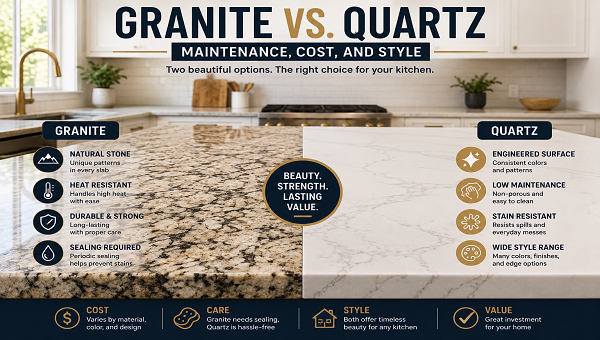
Choosing between granite and quartz can feel difficult because both materials offer beauty, strength, and long-term value. At Badger Granite, homeowners can compare different colors, patterns, finishes, and practical features before making a final choice. Granite offers natural character because every slab has its own veining, mineral marks, and color movement. Quartz, however, provides a more consistent appearance and usually requires less regular maintenance.
The right surface should match more than the kitchen’s design. It should also support the household’s budget, cooking habits, cleaning routine, and daily use. For example, homeowners who often place hot cookware near the counter may prefer the heat resistance of granite. On the other hand, families who want a low-maintenance and stain-resistant surface may find quartz more suitable.
Lighting, cabinet color, flooring, backsplash design, and room size can also affect the final decision. Therefore, I recommend comparing large samples or full slabs inside the planned kitchen design. This step helps homeowners understand how each material will look and perform before investing in a new countertop.
Understanding the Main Difference Between Granite and Quartz
Before comparing appearance and performance, it helps to understand how each surface is made. The cost of Quartz countertops can vary based on the brand, color, slab quality, edge style, installation needs, and project size. Quartz is an engineered surface made with natural quartz minerals, resins, and pigments. Therefore, manufacturers can create more consistent colors and patterns.
Granite, on the other hand, is a natural stone taken from the earth. Each slab contains its own mineral patterns, color movement, and small natural marks. As a result, no two granite countertops look completely identical.
Both materials can become a classic kitchen choice when they match the home’s design and daily needs. However, each option offers different advantages in maintenance, heat resistance, pattern control, and price.
Key Takeaways
- Quartz is easy to maintain because it does not usually require sealing and has a nonporous surface.
- Granite offers natural beauty and strong heat resistance, although it normally requires periodic sealing.
- The best countertop depends on lifestyle, budget, preferred appearance, and how the kitchen is used each day.
Granite Countertops Offer Natural Character
Granite appeals to homeowners who want a natural surface with unique color movement. Each slab develops through natural geological processes, so its veins, specks, and patterns cannot be copied exactly. Some granite slabs have soft and even patterns. Meanwhile, others include bold veins, large mineral clusters, or dramatic changes in color. Because of this natural variation, granite can become the main design feature in a kitchen. For example, a bold granite island may stand out against simple white cabinets. Likewise, a light granite surface can bring texture to a darker kitchen. I recommend viewing the full slab instead of choosing from a small sample. A small piece may not show the complete pattern or color changes that will appear across a long countertop.
Quartz Provides More Predictable Patterns
Quartz countertops offer greater control over color and pattern. Since the material is engineered, manufacturers can produce slabs with a more consistent appearance. This feature can be helpful when a kitchen includes several countertop sections. For example, the island and wall counters can look closely matched without major changes in pattern.
Quartz designs can resemble:
- White marble
- Natural granite
- Soft concrete
- Warm limestone
- Solid neutral surfaces
- Fine-grain stone
- Bold veined marble
Therefore, quartz can work in modern, transitional, farmhouse, and traditional kitchens. Some homeowners prefer a quiet surface with very little movement. Others want large veins that resemble natural marble. Quartz offers both choices, which makes it easier to match a specific design plan.
Comparing Granite and Quartz Maintenance
Daily maintenance is one of the most important differences between granite and quartz. Both materials are easy to clean, but they require slightly different care.
Cleaning Quartz Countertops
Quartz has a nonporous surface, which means liquids do not easily enter the material. Therefore, normal cleaning usually requires only warm water, mild soap, and a soft cloth. Spills should still be cleaned quickly, especially when they involve coffee, cooking oil, food coloring, or dark sauces. However, quartz usually offers strong stain resistance. Homeowners should avoid rough cleaning pads and harsh chemicals. In addition, strong cleaners may affect the surface finish or damage the resin. Quartz does not normally need regular sealing. As a result, it may suit homeowners who want a simple maintenance routine.
Cleaning Granite Countertops
Granite is naturally porous. Therefore, it usually needs a protective sealer to reduce moisture and stain absorption. The exact sealing schedule depends on the stone, sealer, and level of use. Some granite surfaces may need more frequent sealing, while others may remain protected for a longer period. For daily cleaning, mild soap and warm water usually work well. However, homeowners should avoid acidic or rough cleaning products because they may damage the sealer or dull the finish. I recommend wiping spills quickly, especially around coffee makers, cooking areas, sinks, and beverage stations. Proper sealing and regular care can keep granite looking attractive for many years.
Which Countertop Is Easier to Maintain?
Quartz is generally easier to maintain because it does not normally require sealing. Therefore, busy households may prefer it for daily convenience. However, granite maintenance is not difficult when homeowners follow a simple cleaning and sealing routine. Sealing usually takes little time, and many people consider it a reasonable step for the natural beauty granite provides. For families in Milwaukee, the best option may depend on how much maintenance they want to manage. Quartz provides a lower-care surface, while granite provides natural character with a little more upkeep.
Granite and Quartz Durability
Both countertop materials offer strong everyday performance. However, they react differently to heat, impacts, scratches, and sunlight.
Granite Durability
Granite is a hard natural stone that handles normal kitchen use well. It can resist many scratches and impacts, although no countertop is completely damage-proof. Granite also offers strong heat resistance. A warm pan is less likely to damage granite than quartz. However, I still recommend using trivets because sudden temperature changes may affect the stone or sealer. Heavy impacts near edges may cause chips. Therefore, homeowners should avoid striking the countertop with heavy cookware or tools.
Quartz Durability
Quartz is also strong and durable. Its engineered structure provides a smooth and consistent surface that performs well in active kitchens. However, the resin inside quartz can react to high heat. A hot pan placed directly on the surface may cause discoloration, burn marks, or cracking. Therefore, homeowners should always use heat pads or trivets. This small habit can protect the countertop and maintain its finish. Quartz can also chip near exposed edges if struck with a heavy object. Although the material is strong, careful daily use remains important.
Which Material Handles Heat Better?
Granite generally handles heat better than quartz because it is natural stone without resin binders. Therefore, it may appeal to homeowners who frequently cook with hot pans and baking trays. Still, no countertop should be treated as a direct resting place for extremely hot cookware. Using a trivet protects the surface and reduces the risk of damage. Quartz performs well under normal kitchen conditions, but it needs more protection from high heat. Therefore, cooking habits should be considered before choosing a material.
Comparing Granite and Quartz Costs
Countertop prices depend on more than the slab alone. Material grade, color, thickness, edge design, cutouts, installation difficulty, and total square footage can all affect the final cost. Some basic granite colors may cost less than premium quartz. However, rare granite slabs can cost more because of their pattern, origin, or limited availability. Quartz pricing can also vary greatly. Simple designs may fall within a moderate price range, while premium marble-look patterns can cost considerably more. Homeowners researching the cost of granite countertops should consider the full installed project rather than only the material price per square foot. Sink openings, backsplashes, edge upgrades, seams, removal, and installation may change the final estimate.
Factors That Affect the Final Price
Several details can influence the price of granite and quartz:
- Total countertop area
- Number of slabs required
- Material grade
- Slab thickness
- Edge profile
- Sink cutouts
- Cooktop openings
- Faucet holes
- Backsplash height
- Number of seams
- Removal of old countertops
- Cabinet preparation
- Installation access
Therefore, two kitchens with the same square footage may still have different project costs. A simple rectangular kitchen may require fewer cuts and seams. In contrast, a large island with a sink, cooktop, curved edge, and seating overhang may require more fabrication work.
Which Countertop Offers Better Value?
Value should not be measured by price alone. Instead, homeowners should consider appearance, maintenance, durability, and expected years of use. Granite may provide better value for people who want natural stone and strong heat resistance. In addition, each slab offers a one-of-a-kind appearance. Quartz may provide better value for homeowners who want easy maintenance, consistent patterns, and strong stain resistance. Both materials can support long-term home value when they are properly selected and professionally installed. Therefore, neither surface is automatically the better investment for every kitchen.
Granite Style Options
Granite comes in a wide range of natural colors. Some slabs appear light and soft, while others have deep and dramatic patterns.
Common granite color families include:
- White
- Cream
- Beige
- Brown
- Grey
- Black
- Blue
- Green
- Gold
Light granite can make a small kitchen feel open and bright. Meanwhile, dark granite can create contrast with white or natural wood cabinets. Brown and gold granite often work well in traditional kitchens. In contrast, white, grey, and black granite can fit modern or transitional designs. Because every granite slab is unique, homeowners should examine how the full pattern will sit around corners, sinks, seams, and islands.
Quartz Style Options
Quartz provides a wider range of controlled colors and patterns. Manufacturers can create smooth solid shades, small mineral patterns, or bold marble-style veins. White quartz remains popular because it can brighten the room and match many cabinet colors. However, grey, beige, cream, black, and warm neutral surfaces are also widely used. Quartz can support a classic kitchen choice when it uses soft colors and balanced veining. It can also create a modern look through simple patterns and clean edges. I recommend comparing countertop samples with cabinets, flooring, backsplashes, and hardware. A surface may look attractive by itself but still clash with the rest of the kitchen.
Matching Countertops With Cabinet Colors
The cabinet and countertop combination shapes the room’s overall style. Therefore, homeowners should select these materials together.
White Cabinets
White cabinets can pair with almost any granite or quartz color. Dark countertops create bold contrast, while light countertops create a bright and open design. A white quartz surface with soft grey veins can create a clean modern look. Meanwhile, a natural granite with black, cream, and brown minerals can add warmth and detail.
Dark Cabinets
Black, navy, dark grey, or deep wood cabinets often look best with lighter countertops. The contrast helps both materials remain visible. However, dark-on-dark designs can also work in large kitchens with strong lighting. In that case, a light backsplash and warm fixtures may prevent the room from feeling too heavy.
Natural Wood Cabinets
Wood cabinets pair well with warm granite and quartz shades. Cream, beige, brown, and soft white surfaces can support the natural warmth of the wood. However, homeowners should compare undertones carefully. A countertop with strong cool grey tones may clash with cabinets that contain red or orange undertones.
Granite or Quartz for a Busy Family Kitchen?
Busy kitchens need surfaces that support frequent cooking, spills, children, and daily cleaning. Quartz may suit families that want strong stain resistance and no regular sealing. In addition, its smooth surface can make cleaning simple. Granite may suit households that use hot cookware often and prefer natural stone. However, those homeowners should be willing to maintain the sealer. Both options can perform well when they receive proper care. Therefore, the final choice should reflect the household’s normal routine rather than general design trends.
Granite or Quartz for Kitchen Islands?
A kitchen island often becomes the room’s main visual feature. As a result, homeowners may choose a bold countertop pattern for this area. Granite works well when a unique natural slab is desired. Its mineral movement can make the island feel like a one-of-a-kind centerpiece. Quartz works well when the homeowner wants long veins to move across a large surface. Since the pattern is designed, some quartz slabs provide a controlled marble-like appearance. For large islands, slab size matters. A seam may be required when the island exceeds the available slab dimensions. Therefore, this detail should be discussed during planning.
Consider Sunlight and Window Placement
Direct sunlight may affect quartz over time because the resin and pigments can react to strong ultraviolet exposure. Therefore, quartz is generally recommended for indoor applications. ranite usually handles sunlight better, which may make it a stronger option near large windows or in certain outdoor projects. However, the stone and sealer should still be suitable for the exact location. In kitchens with large windows, homeowners should examine samples during different times of the day. Natural light can change how colors and patterns appear. This step is helpful for remodeling projects throughout Milwaukee, where seasonal light levels can make surfaces look warmer or cooler at different times of year.
Think About Seams and Pattern Matching
Most countertop projects require at least one seam. The placement and visibility of that seam depend on the layout, slab size, material pattern, and fabrication plan. Quartz patterns may be easier to coordinate because the design is more consistent. However, strong veins still require careful planning. Granite seams can be more noticeable when two slab sections have different color movement. Therefore, the fabricator should review how the patterns will meet. I recommend discussing seam placement before fabrication begins. Common locations may include corners, cooktop openings, or sections near sinks.
Professional Installation Matters
Even a high-quality slab can perform poorly when it is installed incorrectly. Therefore, professional measuring, fabrication, transport, and installation are essential. The cabinets should sit level and provide proper support. Sink and cooktop openings should also match the selected fixtures and appliances. During installation, the countertop team should place seams carefully and secure the material correctly. In addition, the workers should check overhangs, wall gaps, and surface level. For homeowners in Milwaukee, working with an experienced countertop company can help coordinate material selection, measurements, fabrication, and installation.
Common Mistakes to Avoid
One common mistake involves choosing a countertop from a small online photo. Screen colors may not show the true undertones, texture, or pattern size. Another mistake involves selecting the countertop without cabinet, flooring, and backsplash samples. Although each item may look attractive alone, the full combination may feel unbalanced. Homeowners should also avoid choosing only by price. A lower-cost surface may not provide the preferred appearance or maintenance level. Finally, ignoring daily habits can lead to regret. A homeowner who dislikes sealing may not enjoy granite care. Likewise, someone who regularly places hot cookware on counters may need to adjust habits when choosing quartz.
Which Countertop Is the Better Classic Kitchen Choice?
Granite and quartz can both become a classic kitchen choice, but they achieve that goal in different ways. Granite offers natural variation, strong heat resistance, and unique character. Therefore, it works well for homeowners who value authentic stone. Quartz offers easy cleaning, consistent patterns, and many design choices. As a result, it suits homeowners who want a more controlled look and a lower-maintenance surface. The better choice depends on the household. A countertop should support the way people cook, clean, gather, and use the kitchen every day.
Final Thoughts
Granite and quartz are both strong options for kitchen countertops. However, their differences in maintenance, heat resistance, style, and cost should guide the final decision. I recommend granite for homeowners who want unique natural patterns and strong heat resistance. On the other hand, quartz may be better for people who prefer consistent colors and simple maintenance. Before making a final selection, compare full slabs or large samples under the kitchen’s actual lighting. In addition, review cabinets, flooring, backsplash materials, and hardware beside the countertop. A carefully chosen surface can become a classic kitchen choice that supports everyday use and remains attractive for many years. Whether granite or quartz is selected, proper planning and professional installation will help create a stronger final result.

As a lifelong DIY enthusiast, Alex Barton is never afraid to go the extra mile to save a few bucks! From seamless interior decor hacks to effective DIY home renovation tips, he shares a myriad of his experiences for you to unleash your creativity.