Drought-Tolerant Ideas: The Ones That Save Water

Years ago, as a student, I loved coming home from a tiring day at school to find relief in our yard. My grandfather cared for our lawn, trees, shrubs, and flowers with patience and love. I watched him apply fertilizer, prune dead leaves, and clear weeds—all while using as little water as possible. I often wondered how our garden thrived on so little moisture. Later, I realized his secret: smart landscaping techniques and simple yard modifications that create a stunning garden without wasting water.
The best drought-tolerant landscaping ideas help you design and maintain a thriving yard while conserving water. While plants naturally demand moisture, establishing them with minimal irrigation poses a unique challenge. Smart techniques let you grow a vibrant garden without relying on excess water.
Landscaping Ideas That Are Considered a Smart Choice
From selecting suitable plants for your climate to improving your soil structure, follow the tips below to learn more.
1. Select Native and Drought-Tolerant Plants
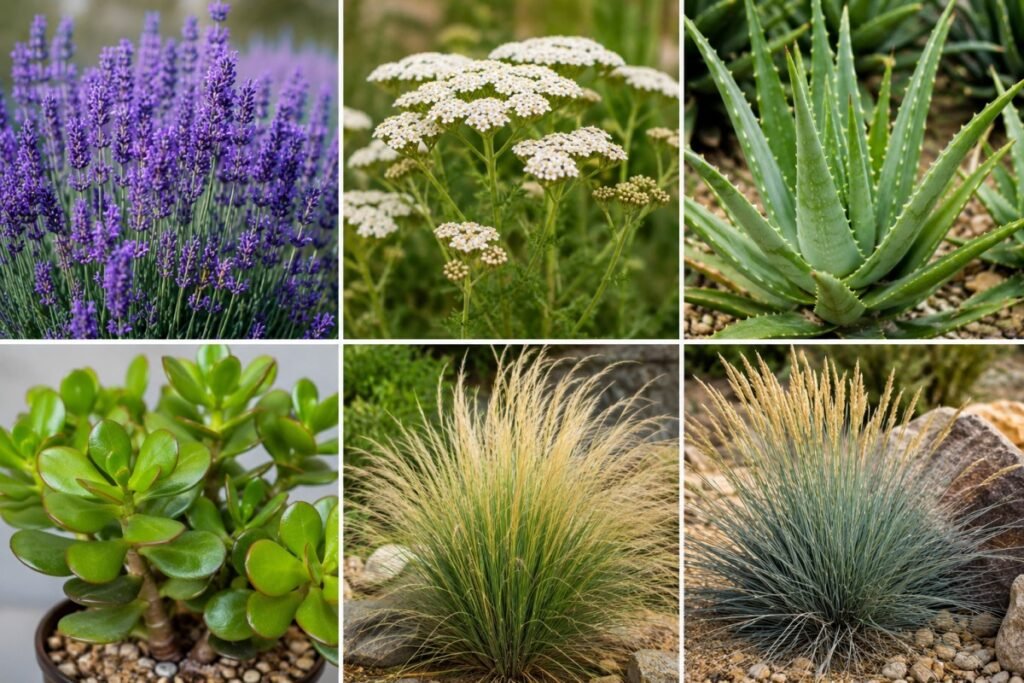
Native plants are sensitive to the local climate and weather. They may require less supplemental water after they are planted. To create a water-efficient landscape, use the best plants for drought-tolerant gardens. Use succulent plants to hold water, and choose flowers and shrubs that don’t require much water as well. Choose water-conserving plants that are well-suited to your local environment, such as:
- Lavender and yarrow: Add color while needing relatively little water once established.
- Aloe vera and jade: Store water in their leaves, making them suitable for dry conditions.
- Drought-tolerant grasses: Add texture and movement while using less water than traditional turfgrass.
2. Minimize Turfgrass and consider Xeriscaping.
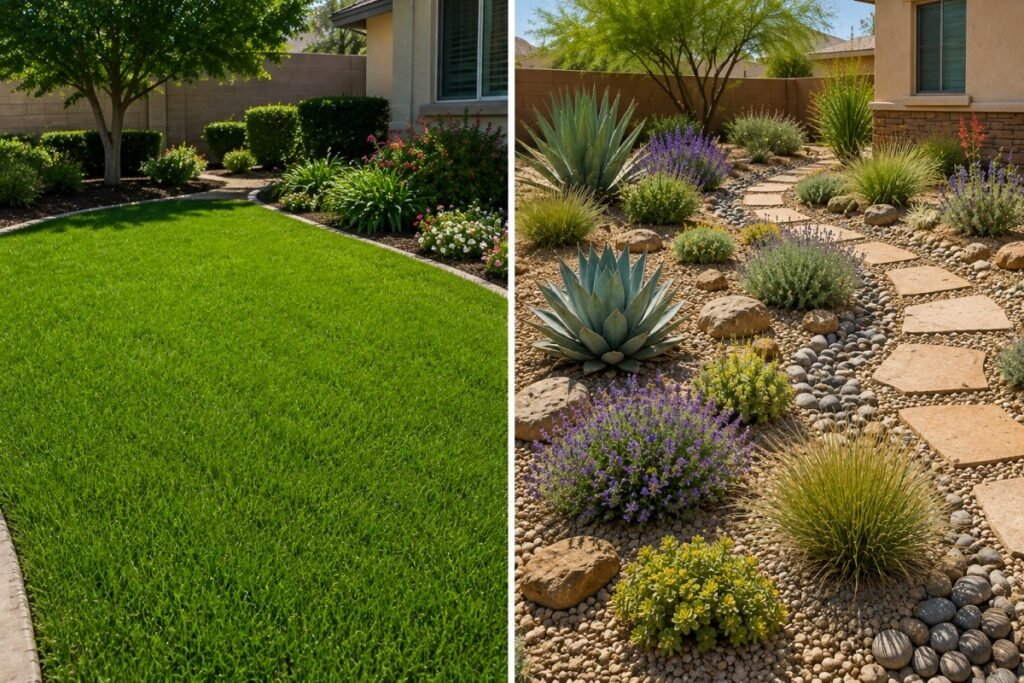
Extra irrigation may be necessary on a large lawn. Avoid using turfgrass in all areas of the yard; use grass only where needed for recreational purposes. In the rest of the landscape, use xeriscaping, a water-efficient approach that uses drought-tolerant plants and minimizes irrigation needs. Incorporate modern xeriscaping design ideas to get an attractive landscape. The ideas include,
- Choosing plants adapted to your local climate so they require less supplemental watering once established.
- Combining ornamental grasses, shrubs, groundcovers, and a few focal plants at different heights for visual interest.
- Using gravel, stone pathways, decorative rocks, mulch, and permeable surfaces to reduce water needs, with minimal waste.
3. Group Plants According To Water Requirements
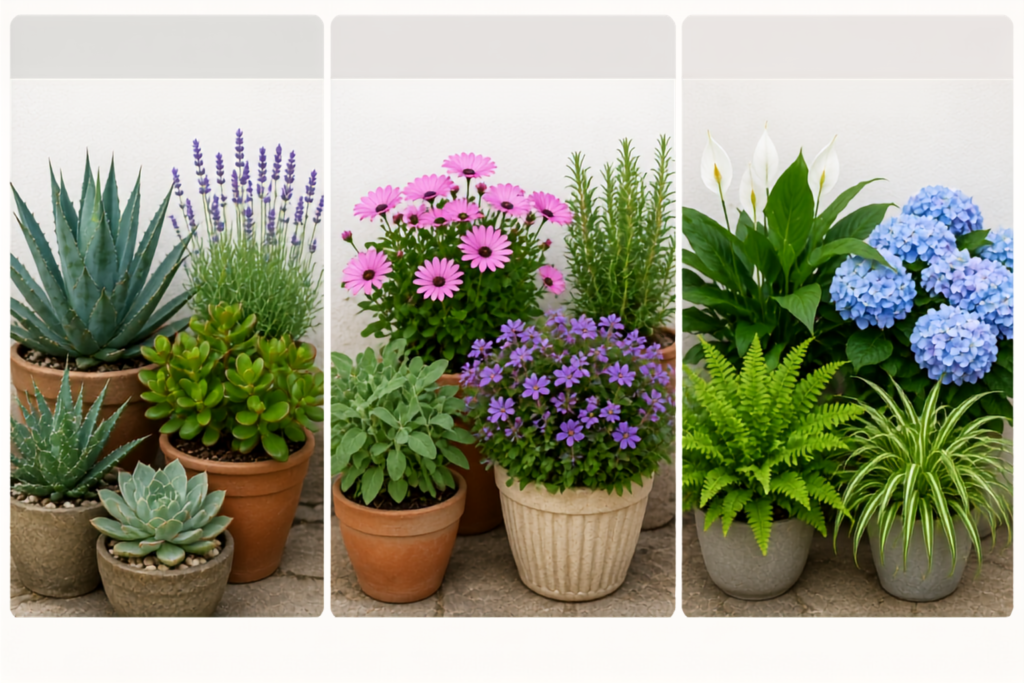
Water each plant in your garden differently. Divide plants into groups of similar water needs (hydrozones). Group plants according to their water retention capacity. Add Low-maintenance, drought-tolerant plants to increase garden structure. In this way, you can supply the required water to each area without wastage. Hydrozoning is specifically recommended by the EPA as a method to minimize water loss.
4. Improve Soil and Add Mulch
Water-efficient landscaping contributes to a healthier soil texture. Add the correct organic material (compost) if the soil quality is bad. Soil condition improvement plays a major role in conserving water in landscaping. A nutrient-rich soil provides moisture to the plant roots with a sufficient amount of water. Next, use mulch to cover soil. Mulch minimises evaporation, maintains soil moisture, reduces soil temperature, and reduces weed growth, thus minimising soil erosion.
5. Good Irrigation Practices
Use micro-irrigation, including drip irrigation, micro-sprays, micro-sprinklers, or even a good watering system. These methods focus on the plant roots, minimizing overspray, runoff, and evaporation. While smart watering methods can elevate your garden’s beauty. Check irrigation systems regularly for broken sprinkler heads, clogged parts, loose connections, and leaks. Smart controllers can also be used to regulate water flow.
6. Make a Rain Garden
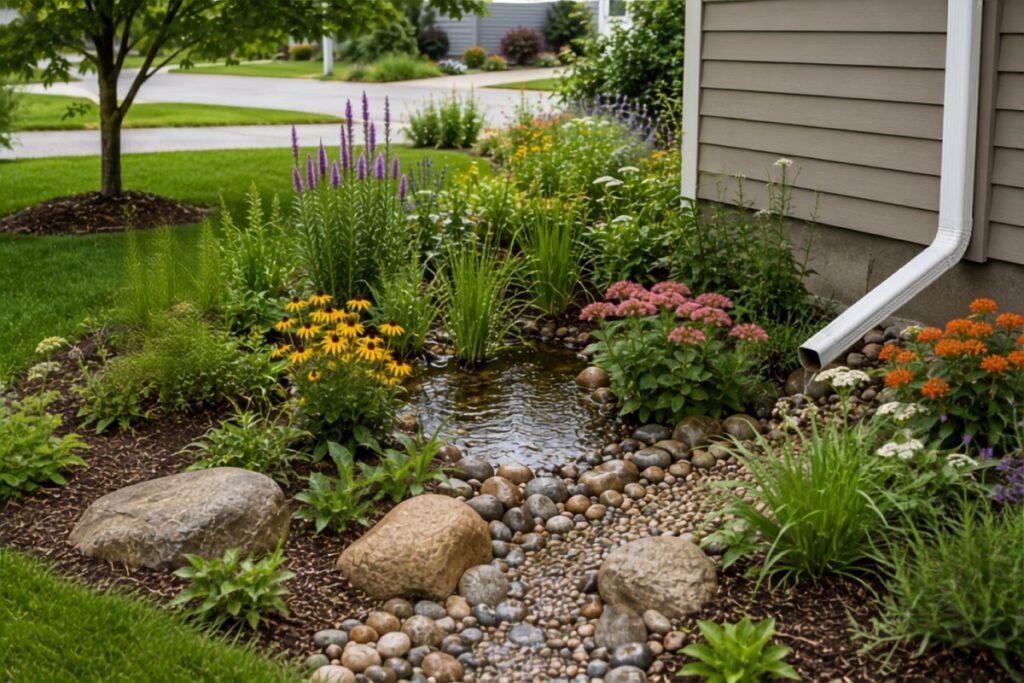
Rainfall and run-off can be a valuable component of your landscape. Sow any moisture-loving plants in a shallow, well-designed area where rainwater will not run off, but can percolate through the soil. This can also be built upon with rainwater harvesting. If you take household water and use it for plants, ensure it is suitable and safe. Don’t use water that has strong chemicals, grease, or other materials that might damage plants or soil.
7. Design Infiltrating a Hardscape Surface
Use permeable materials that allow rainwater to enter the ground rather than running off the surface. Permeable pavers and other appropriate materials can provide attractive pathways, patios and garden borders to promote improved water flow.
8. Create a Rock Garden
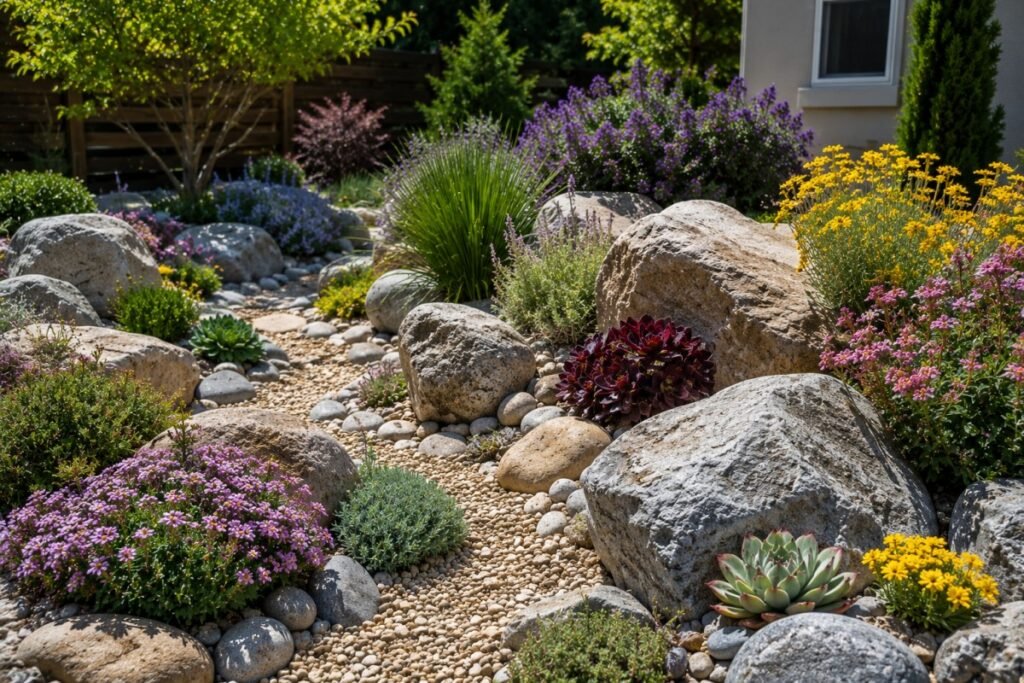
Use rocks, gravel and drought-hardy plants to make a visually interesting rock garden. Wherever possible, use locally appropriate and responsibly sourced materials and avoid excessive bare, heat-reflective surfaces. Add native plants that help with landscaping water conservation. Another idea is to use a dry creek bed filled with stones, gravel, and pebbles. When well designed, a dry creek bed can slow the flow of water.
9. Control Slopes and Runoff
Sloppy yards can let water simply flow off before it can be used for the benefit of plants and soil. Install terraces, place plants, and landscape with groundcovers to slow water movement and reduce soil erosion.
A steep yard can be broken up into manageable portions with terracing to help reduce runoff and soil erosion.
10. Shade Trees and Windbreaks
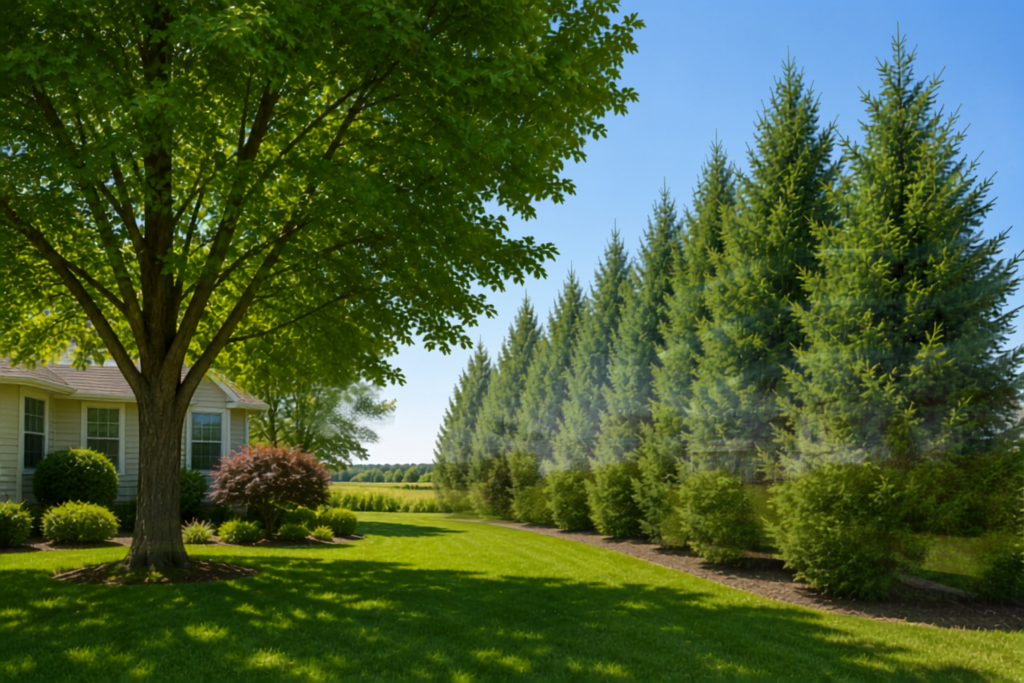
Smaller plants may be shaded by trees for sun protection and help create a pleasant outdoor environment. Trees, shrubs, or other appropriate plants can form a natural barrier. Shade cloth is also recommended as a temporary solution to protect sensitive plants.
11. Use Natural Yard Resources and Organic Matter
Organic materials can contribute to maintaining soil health and feeding the soil as they decompose. EPA also recommends allowing grass clippings to remain on the soil after mowing, as this will help return nutrients to the soil. Don’t over-rely on artificial inputs; develop a more robust soil system with the help of compost and proper mulch.
12. Sustainable Use of Water
Consider the whole yard as a single landscape unit instead of a series of separate components. Use native plants, drought-tolerant flowers, shrubs, succulents, mulch, rock elements, permeable paths, shade trees, and strategic irrigation to make your landscape welcoming. Water-smart landscape design is also considered a way to save water and enhance plant health. Use cost-effective methods for smart results.
Here’s a quick comparison of the most practical drought-tolerant landscaping approaches:
| Strategy | Main Benefit | Best For |
| Native plants | Lower supplemental watering | New planting beds |
| Replace turfgrass | Reduces lawn water use | Large lawns |
| Hydrozoning | Prevents overwatering | Mixed-plant gardens |
| Mulching | Retains soil moisture | Flower beds and shrubs |
| Healthy soil | Improves water retention | New and existing beds |
| Micro-irrigation | Delivers water directly to roots | Planting beds and containers |
| Rain gardens | Captures and manages runoff | Low-lying areas |
| Permeable hardscaping | Improves water infiltration | Paths, patios, and driveways |
| Rock gardens | Reduces irrigated planting area | Dry, sunny spaces |
| Shade trees & windbreaks | Reduces moisture loss | Exposed yards |
| Slope management | Limits runoff and erosion | Sloped landscapes |
| Seasonal maintenance | Prevents unnecessary watering | Established gardens |
The U.S. Environmental Protection Agency states that every gardener must give more attention to climate, soil, and so on. It also states that you should plant local plants as they are better adapted to local climate and conditions.
Final takeaway
Plants have diverse stages of growth. The more you are close to them, the better you understand the plant niche that ultimately helps in making your garden look beautiful. Having said that, making your garden eye-pleasing is not an enormous task. It does not need too much water. Just incorporate proper planting rules and know these small tactics so that your garden undergoes sustainable growth.
FAQ
1. What is the cheapest drought-tolerant landscaping?
There are many considered affordable options for maintaining drought-tolerant landscaping. One of them is planting native plants. They require less maintenance and have a high moisture-locking capacity that reduces water wastage.
2. How can I make my yard drought-tolerant without spending a lot of money?
There are several ways to build a drought-tolerant landscape on a low budget.
Ground covers: Provide greenery while generally using less water
DIY planting: Choosing native plants and doing the installation yourself can reduce costs.
Gravel: Can replace water-intensive lawn areas with minimal upkeep. Avoid using outside equipment. A yard that is well-done and well-designed can be built at a very affordable price.
3. What can I replace my grass lawn with to save water?
Consider using options that require less water and are effective. The options are
Native groundcover: highly adaptable and usually requires less irrigation.
Low-water ornamental grasses: Create a lawn-like appearance that has more water retention capacity.
Mulched beds: Reduces evaporation while providing space for drought-resistant plants.
Gravel or hardscape: Ideal for paths and borders, to cover up the lawn even with fewer plants.
4. How much water does drought-tolerant landscaping actually save?
A savings figure can be hard to determine. The results solely depend on your climate, plant selection, irrigation, soil orientation, size of lawn, and other factors. However, the EPA’s WaterSense program says that converting to a water-smart landscape can reduce outdoor water use, thus saving a lot of water.

As a lifelong DIY enthusiast, Alex Barton is never afraid to go the extra mile to save a few bucks! From seamless interior decor hacks to effective DIY home renovation tips, he shares a myriad of his experiences for you to unleash your creativity.